
Road salt does not wait for spring, and neither do the dull spots, grit, and streaks it leaves behind. The best ways to protect clearcoat come down to removing harmful buildup quickly, avoiding unnecessary friction, and keeping a reliable layer of protection on your vehicle through every New Hampshire season.
Your clearcoat is the transparent top layer over your vehicle’s paint. It gives the finish its gloss and provides a first line of defense against sun exposure, moisture, dirt, bird droppings, tree sap, and road grime. Once it becomes scratched, oxidized, or stained, restoring that smooth shine can take more than a simple wash.
Why Clearcoat Needs Regular Attention
Clearcoat is tough, but it is not invincible. Fine scratches can build up slowly from dirty wash tools, abrasive brushing, or simply rubbing grime across the surface. Chemical contaminants can cause trouble, too. Salt brine, bug residue, bird droppings, and tree sap can sit on the finish and leave marks if they are allowed to bake on or remain in place for too long.
New Hampshire drivers deal with a full lineup of finish-dulling conditions. Winter brings salt and slush. Spring adds mud and pollen. Summer means strong sun, bugs, and sap. Fall can leave a car covered in wet leaves and organic residue. A consistent care routine is much easier, and less expensive, than waiting until the paint looks tired.
7 Best Ways to Protect Clearcoat
1. Wash Away Salt, Sand, and Road Film Promptly
Salt is one of the biggest threats to a vehicle’s finish during a New Hampshire winter. It can collect along lower doors, rocker panels, wheel wells, bumpers, and behind trim. While clearcoat offers protection, letting salty residue sit for weeks gives moisture and grime more opportunity to cling to the surface and work into vulnerable areas.
Wash after major storms, salty commutes, or long drives on treated roads. You do not need to wait until the vehicle looks completely dirty. A quick, thorough rinse and wash removes the material that causes the real problem. Pay extra attention to lower body panels and the areas around the wheels, where road spray builds up fastest.
2. Choose a Touchless Wash to Reduce Friction
Dirt is abrasive. When a brush, mitt, or towel moves over a dirty panel, tiny particles can drag across the clearcoat and leave fine scratches. Those marks may be hard to see at first, but they often become noticeable in direct sunlight as swirls and haze.
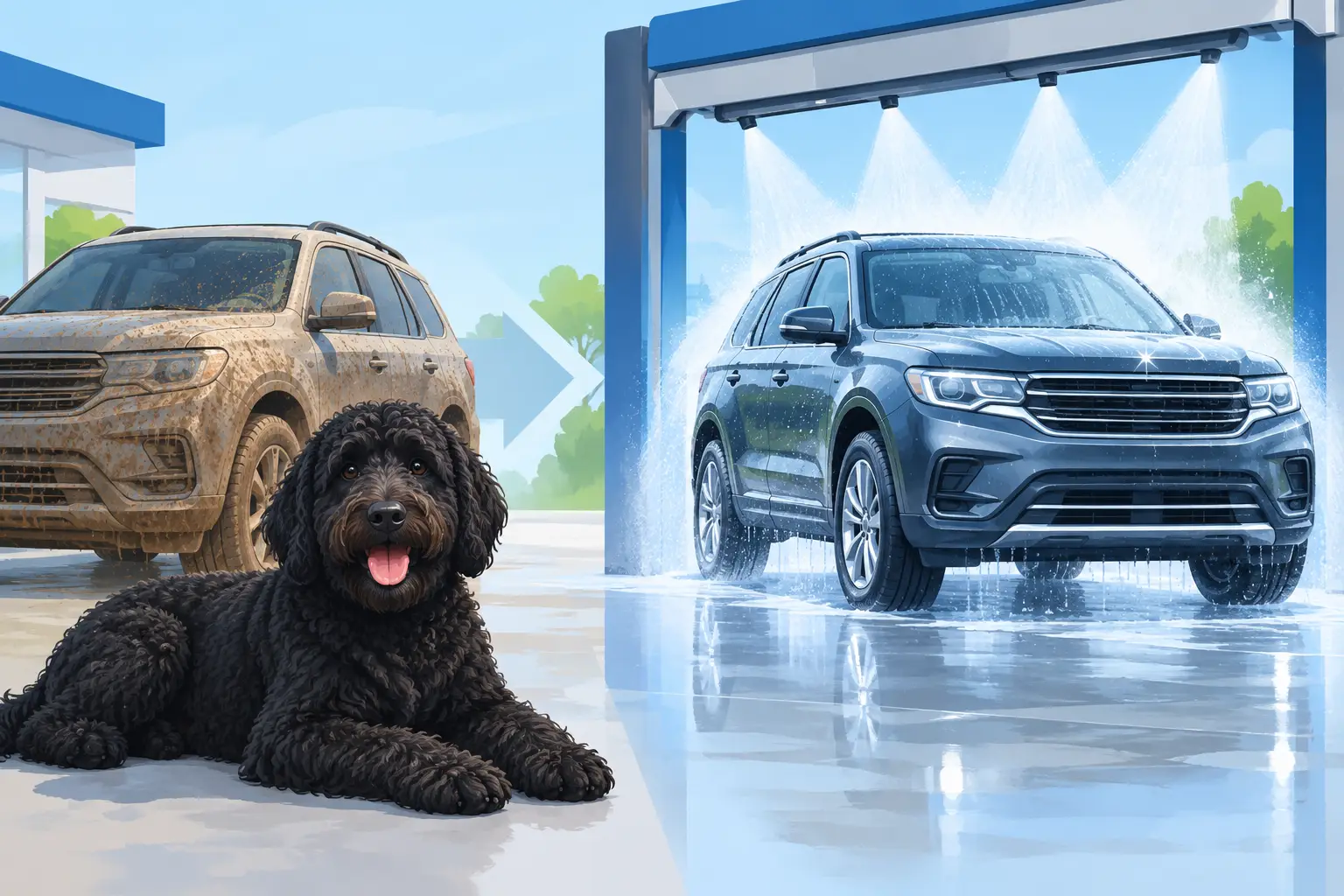
A quality touchless wash uses water pressure and cleaning chemistry to lift and rinse away grime without physical wash equipment contacting the paint. That makes it a practical choice for drivers who want a clean vehicle while limiting unnecessary friction. Black Dog Car Wash offers touchless washing around the clock, which makes it easier to wash off salt, mud, pollen, and road film when your schedule allows.
Touchless does not mean a vehicle can be neglected between washes. Heavy mud or stuck-on residue may require more than one wash, and some contaminants should be addressed as soon as possible. The advantage is that routine cleaning can happen without repeatedly rubbing brushes across the finish.
3. Use Products Made for Automotive Paint
Household cleaners may seem convenient, but they are not designed for clearcoat. Dish soap, degreasers, glass cleaners, and harsh all-purpose products can strip waxes or sealants and may leave the finish less protected. Use car-wash products and paint-safe cleaners when washing at home or treating a stubborn spot.
This matters most when you are trying to remove bugs, bird droppings, sap, or fuel splatter. Soften the residue with a paint-safe cleaner or plenty of water rather than scraping at it with a dry towel, fingernail, or rough sponge. The goal is to lift contamination off the panel, not grind it into the clearcoat.
4. Keep Water Spots From Becoming a Problem
Water spots are more than a cosmetic annoyance. When mineral-heavy water dries on a hot surface, it can leave deposits that become difficult to remove. In some cases, prolonged spotting can etch into the clearcoat and require professional polishing.
Whenever possible, avoid washing a hot vehicle in direct midday sun. If you wash at home, dry the vehicle with clean, soft microfiber towels and use a separate towel for lower panels that collect the most grit. At a self-service vacuum area, do not rest dirty tools, bags, or loose items against painted surfaces while cleaning out the cabin.
5. Apply a Wax or Paint Sealant Regularly
Wax and paint sealants create a sacrificial layer between your clearcoat and the elements. They can improve gloss, help water bead, and make it easier to rinse away dirt before it sticks. Wax often delivers a warm shine but may not last as long, while synthetic sealants generally offer longer-lasting protection.
How often you apply protection depends on where the car is parked, how much it is driven, and the product you use. A garage-kept weekend vehicle has different needs than a commuter parked outside every day. For many daily drivers, refreshing protection a few times a year is a practical starting point, especially before winter and after the harshest part of the season.
6. Consider a Ceramic Coating, With Realistic Expectations
Ceramic coatings can offer durable chemical resistance, strong water behavior, and a glossy finish. They are a good option for owners who want long-term paint protection and are willing to invest in proper preparation. The surface typically needs to be corrected before coating, because a coating can preserve the appearance of existing swirls and scratches rather than hide them.
A ceramic coating is not a force field. It will not prevent rock chips, eliminate every scratch, or make washing unnecessary. Coated vehicles still need regular cleaning, particularly after exposure to salt and road grime. Think of a coating as an added layer in a good maintenance plan, not a replacement for one.
7. Park Smart and Remove Contaminants Quickly
Where you park can affect your clearcoat more than you might expect. Extended sun exposure contributes to oxidation over time, while parking under certain trees can mean sap, pollen, berries, and bird droppings. A garage or covered spot helps, but even a little awareness can reduce exposure.
If bird droppings, sap, or bug residue lands on the vehicle, remove it as soon as you can. These materials can be acidic or sticky, and heat makes them harder on the finish. Keep a clean microfiber towel and a paint-safe quick-detail product in the vehicle if you regularly park outside. Beau’s practical advice: the faster you clean up the mess, the less likely your paint is to have a bad day.
Clearcoat Mistakes That Cause More Harm Than Help
The most common mistake is wiping a dusty or dirty car with a dry towel. That quick swipe can create scratches because the towel is moving grit over the paint. If the vehicle needs attention, rinse it first or use enough lubricating product to safely lift the contamination.
Another problem is using worn-out towels, dirty wash mitts, or the same towel on wheels and paint. Wheels hold brake dust, sand, and road debris. Keep wheel-cleaning materials separate from anything that touches painted panels. Clean microfiber towels should be washed without fabric softener, which can leave residue and reduce their ability to absorb water safely.
Avoid using automatic wash equipment with physical brushes if your priority is minimizing paint contact. Brush systems can be effective at removing dirt, but the trade-off is friction. For drivers focused on keeping clearcoat as smooth as possible, touchless cleaning is the safer routine choice.
A Simple Clearcoat Routine for New Hampshire Drivers
You do not need a complicated detailing schedule to protect your vehicle’s finish. During winter, wash often enough to prevent salt buildup, especially after storms and highway commuting. In spring and summer, stay ahead of pollen, bugs, mud, and tree residue. Before winter returns, apply or refresh a wax or sealant so the finish has added protection when conditions get rough again.
Check your vehicle in bright sunlight every few weeks. If the paint feels rough after washing, looks less glossy, or no longer beads water, it may be time for a deeper clean or another layer of protection. Catching changes early gives you more options than waiting for stains, oxidation, or swirls to become obvious.
Clearcoat protection is mostly about consistent, sensible habits. Keep the grit off the vehicle, limit friction, maintain a protective layer, and give salt the short stay it deserves. Your car will look better now, and its finish will have a better chance of holding up for the miles ahead.