That white crust on your doors and wheel wells is not just ugly. It is the part of winter driving that quietly works against your paint, underbody, and visibility every single day. In New Hampshire, winter car wash road salt removal is less about keeping your vehicle shiny and more about protecting it from the kind of buildup that sticks around long after the storm is over.
Salt, sand, slush, and road grime create a rough mix. It clings to lower panels, collects behind wheels, and gets packed into the places most drivers do not see. If you wait for a warm spring day to deal with it, that buildup has had weeks or months to sit on the vehicle. That is why regular washing during winter matters, even when the weather says otherwise.
Why winter road salt is harder on your car than it looks
Road salt helps keep New Hampshire roads safer, but it is hard on vehicles. It sticks best when the car is wet, and winter roads give it plenty to grab onto. Snowmelt, spray from other cars, and slushy parking lots keep that salt active. It gets pulled into seams, around trim, and under the vehicle where moisture lingers longer.
The biggest issue is not a single dirty day. It is repeated exposure. A light coating of salt one morning turns into layers after a week of commuting. Add freezing nights and daytime thawing, and you get a cycle that keeps grime bonded to the surface. By the time your car looks completely gray, there is usually more going on underneath than what you can see from a few feet away.
Salt also affects the practical parts of driving. Dirty windows reduce visibility. Headlights get filmed over. Backup cameras and sensors can get coated. Door jambs collect grit. Even if you are not worried about appearance, winter buildup can make everyday driving more frustrating.
What winter car wash road salt removal should focus on
A good winter wash is not just about the hood and roof. The real trouble spots sit lower and out of sight. Rocker panels, wheel wells, the back of the vehicle, and the underbody usually take the worst of it. That is where salt spray collects and stays put.
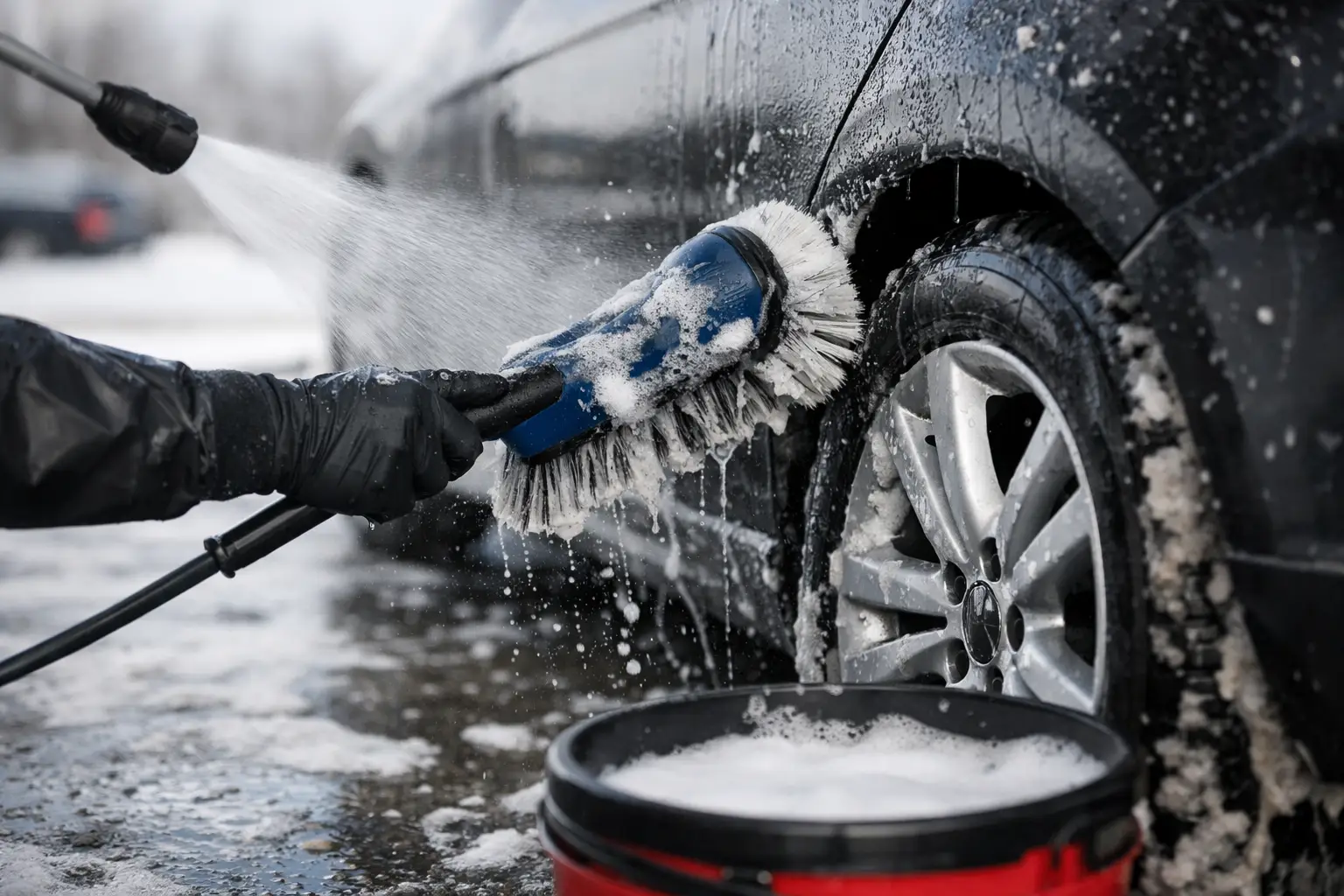
The wheels matter too. Brake dust mixes with road salt and slush, creating a stubborn film that can hang on through cold snaps. If you drive a lot of highways or back roads, the rear of the vehicle often gets hit especially hard because dirty spray wraps around and sticks to the tailgate or trunk.
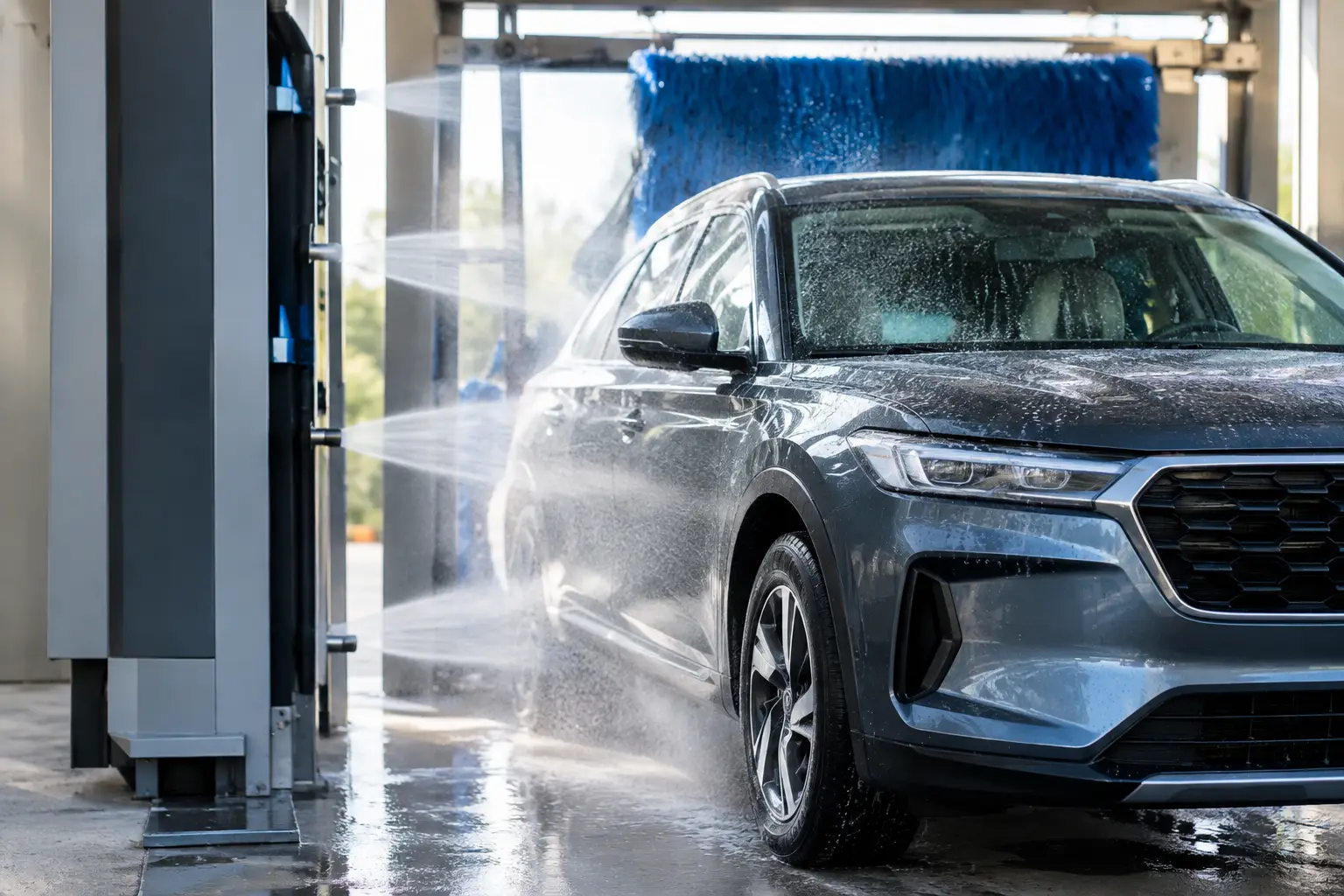
Touchless washing makes sense here because winter grime often needs strong detergents, pressure, and consistent coverage more than physical contact. When temperatures are cold and surfaces are gritty, many drivers prefer a wash method that does the work without brushes touching the finish. It is a practical choice for drivers who want effective cleaning while being careful with paint.
When to wash in winter
The best time to wash is not always right after a storm. Sometimes the roads are still being treated, and your car will be coated again before you get home. A better window is often within a day or two after the roads start to clear, especially when temperatures rise enough to help loosen grime.
That said, there is no perfect rule. If we are in a stretch of frequent storms, waiting for ideal conditions can mean not washing for weeks. In that case, it is better to get the salt off when you can. A decent wash now usually beats a perfect wash later.
If your commute includes highways, bridges, and heavily treated roads, you may need to wash more often than someone who drives shorter local trips. The same goes for drivers who park outside, since melting snow and overnight refreezing can keep salt sitting on the vehicle longer.
How often should you wash off road salt?
For most winter drivers in New Hampshire, every one to two weeks is a solid target during salt season. If conditions are especially messy, once a week is not excessive. If roads have been dry and cleaner for several days, you may be able to stretch it a bit.
The key is consistency. Letting salt build up for a month and then doing one big wash is not the same as staying ahead of it. Frequent removal keeps buildup from getting deeply set and makes each wash more effective.
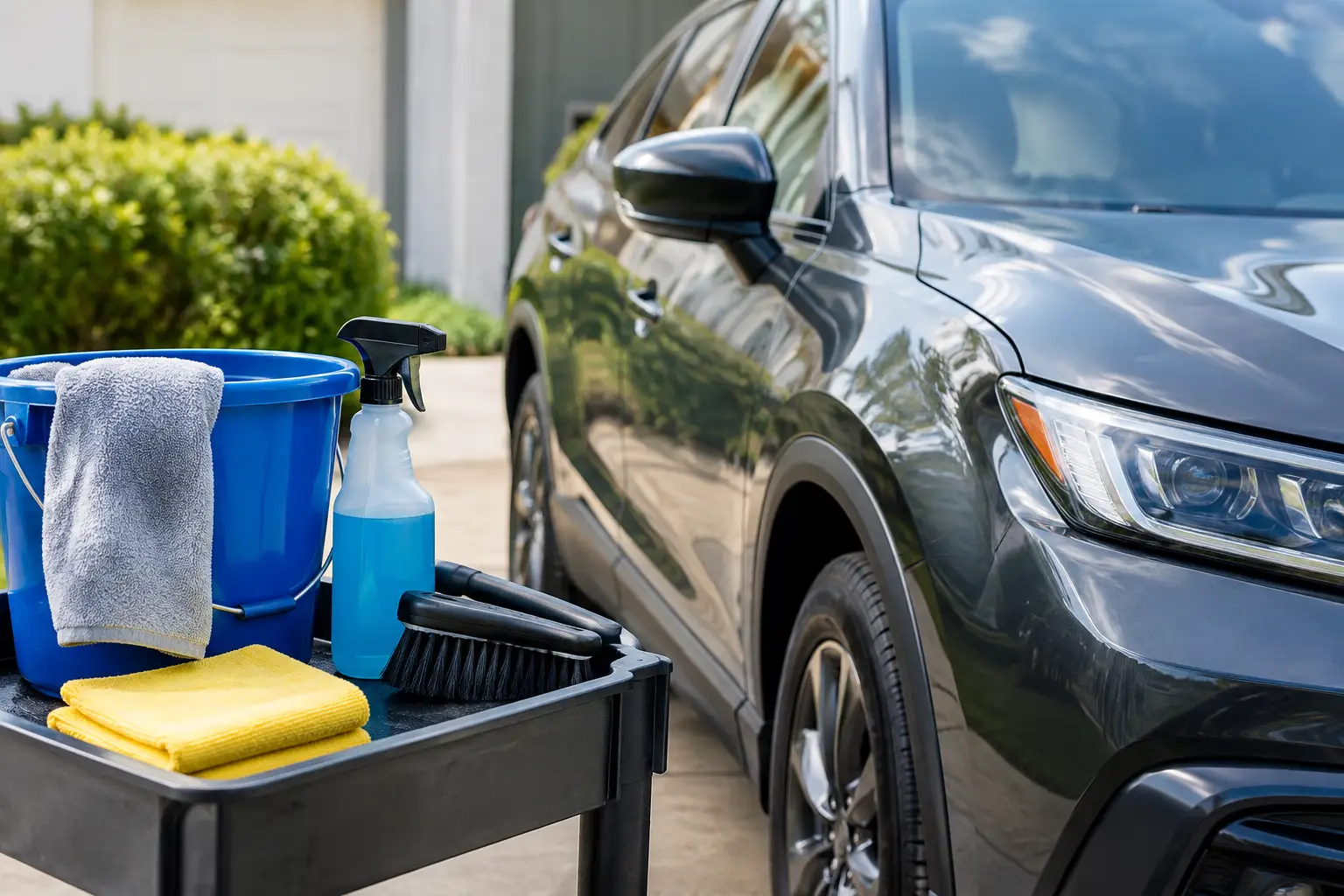
There is also a convenience factor. A fast wash you can fit into your normal routine is more likely to happen than a full at-home cleanup that depends on good weather, free time, and a driveway that is not a sheet of ice.
Why touchless washing works well in winter
Winter grime is stubborn, but winter conditions are also hard on wash routines. At-home washing is not always realistic when hoses freeze, temperatures drop, and runoff turns into ice. That is where a touchless wash has a real advantage. It is quick, available when you need it, and designed to handle the kind of road film that builds up in cold weather.
For drivers who care about vehicle safety and convenience, touchless technology checks both boxes. It uses water pressure and cleaning solutions to target buildup without physical brushes contacting the surface. For many people, that matters even more in winter, when road grit is part of the mess.
It also helps make regular washing easier to stick with. If you can get in, get clean, and get back on the road without turning it into a project, you are much more likely to wash often enough to keep salt under control.
Cold-weather washing concerns drivers often have
A common question is whether washing in freezing weather can cause problems. It depends on conditions, but avoiding washes all winter is usually the bigger risk. Salt left on the car is not harmless just because the temperature is low.
The practical move is to wash when conditions are reasonable and then take a few small steps after. Wipe door seals if needed, make sure windows are clear, and avoid letting puddled water sit where it can freeze immediately. Most drivers know the routine. The goal is not perfection. It is reducing buildup before it has time to settle in.
Another concern is whether one wash can remove everything. Sometimes yes, sometimes not. Heavy accumulation around wheel wells and lower panels may take repeated washes, especially after long stretches of storms. That is normal. Winter maintenance works best as an ongoing habit, not a one-time fix.
The spots drivers miss most often
Most people notice the body panels first, but some of the worst buildup hides in plain sight. The underbody is the big one. Out of sight does not mean out of trouble. Salt collects there constantly, especially after wet commutes.
The back end of SUVs, crossovers, and trucks is another common problem area. Road spray gets pulled onto the rear surface fast. Side mirrors, wiper areas, and lower door edges also tend to hold grime longer than drivers expect.
And then there is the inside of the vehicle. Winter boots bring in salt residue too. If you are already stopping for an exterior wash, a quick vacuum helps keep the cabin from turning into a gravel pit. Beau would probably say your floor mats have seen enough of winter by now.
A better winter routine for busy drivers
The best winter wash plan is the one you can actually keep. For most people, that means watching road conditions, washing regularly during heavy salt periods, and paying attention to the lower half of the vehicle instead of just the visible panels.
It also means being realistic. Some weeks your car will get dirty again almost immediately. That does not make the wash pointless. Removing salt today still beats letting it sit until next week. In winter, maintenance is about reducing exposure, not staying spotless.
If you want a simple rule, think of washing as part of cold-weather vehicle care, right alongside checking tires and topping off washer fluid. Drivers around Londonderry, Belmont, and across New Hampshire deal with enough winter road mess already. Keeping salt off your car should be the easy part.
A clean car in January feels good. A protected one in March feels even better. When the roads are white and your vehicle is wearing the evidence, do not wait for perfect weather. Get the salt off, keep it moving, and make winter a little easier on your car.