Road salt does its job on New Hampshire roads, but it does your vehicle no favors once the drive is over. If you have ever wondered when to wash salt off, the short answer is this: sooner than most drivers think. Salt starts working on metal, brake components, and hard-to-see areas right away, especially when the weather swings above freezing and everything turns into wet slush.
That timing matters because salt is not just sitting on the surface waiting politely for your next free Saturday. It sticks underneath the car, packs into wheel wells, clings to rocker panels, and mixes with moisture. That combination is what speeds up corrosion. If your car already looks white and chalky, Beau would say the salt has officially made itself a little too comfortable.
When to wash salt off in winter
The best time to wash salt off is within a day or two of driving on heavily treated roads. If you commute daily, that usually means washing regularly through the winter rather than waiting for a visible buildup. Once salt has been sprayed up under the vehicle a few times, it does not take long for grime to layer over it and hold moisture in place.
If temperatures are below freezing for days at a time, you may not always get ideal washing conditions at home. That does not mean you should wait until spring. A quality wash during winter is still worth doing, especially after storms, long highway drives, or any stretch where roads were heavily salted ahead of snow or ice.
For most local drivers, a practical rule is to wash after every storm cycle or every one to two weeks during active salt season. If the roads are dry and cold for several days, you may have a little more flexibility. If they are wet, slushy, or repeatedly treated, you do not.
The 24 to 48 hour rule
A good target is 24 to 48 hours after exposure, especially when temperatures rise above freezing. That is when salt becomes even more active because moisture helps it spread and stay in contact with metal surfaces. If you wait until the next storm, you are often just layering fresh salt over old residue.
This is one of those cases where perfect timing is less important than consistency. One wash does not solve winter. Regular washes are what make the difference.
Why waiting too long costs more later
Most people think first about paint, but the bigger issue is often what you cannot easily see. Salt can affect the undercarriage, exhaust components, brake lines, suspension parts, and the edges around doors and hatches. Modern vehicles are better protected than older ones, but they are not immune.
The problem is not simply salt by itself. It is salt plus water, temperature changes, and repeated exposure. A dry crust of salt is bad enough. A wet, slushy mix trapped in seams and underneath the vehicle is worse. That is why midwinter thaws can be rough on cars. Everything melts just enough to keep the corrosion process moving.
It also depends on how and where you drive. Highway commuters usually pick up more road spray than drivers sticking to short local trips. If you park in a warmer garage, that can help melt packed-on buildup, but it also means salty moisture may stay active longer unless you wash it away.
Signs your car should be washed now
Sometimes the calendar is less useful than the condition of the vehicle. If your lower doors, wheel arches, or rear hatch are coated in white film, do not wait. If your wheels are caked with gray grime, your underbody has likely collected plenty too.
You should also wash soon if you have driven through slush for several days in a row, traveled on major roads right before or after a storm, or noticed salt spray collecting on your windshield and mirrors. Those are good signs the rest of the vehicle has taken the same hit.
Another clue is the weather forecast. If a milder day is coming with temps above freezing, that is a smart time to get the salt off. You do not need a heat wave. You just need conditions that let the wash work effectively and help remove buildup instead of freezing it in place.
Does weather change when to wash salt off?
Yes, quite a bit. The best winter wash days are often the ones that feel only slightly better than miserable. If it is above freezing, even by a few degrees, that is usually enough to make a wash worthwhile. Salt loosens more easily, rinse performance improves, and doors are less likely to freeze afterward.
That said, you do not need to obsess over finding the perfect day. If roads are currently dry after a storm and your car is loaded with residue, go wash it. If another storm is rolling in that night, it can still be worth cleaning off the old salt first rather than letting it sit for another week.
The one trade-off is timing right before muddy slush returns. If you know you will drive through a fresh mess within hours, some drivers prefer to wait a bit. Fair enough. But waiting three or four extra days in wet conditions is usually harder on the vehicle than getting one more layer of grime the next day.
What kind of wash works best for salt?
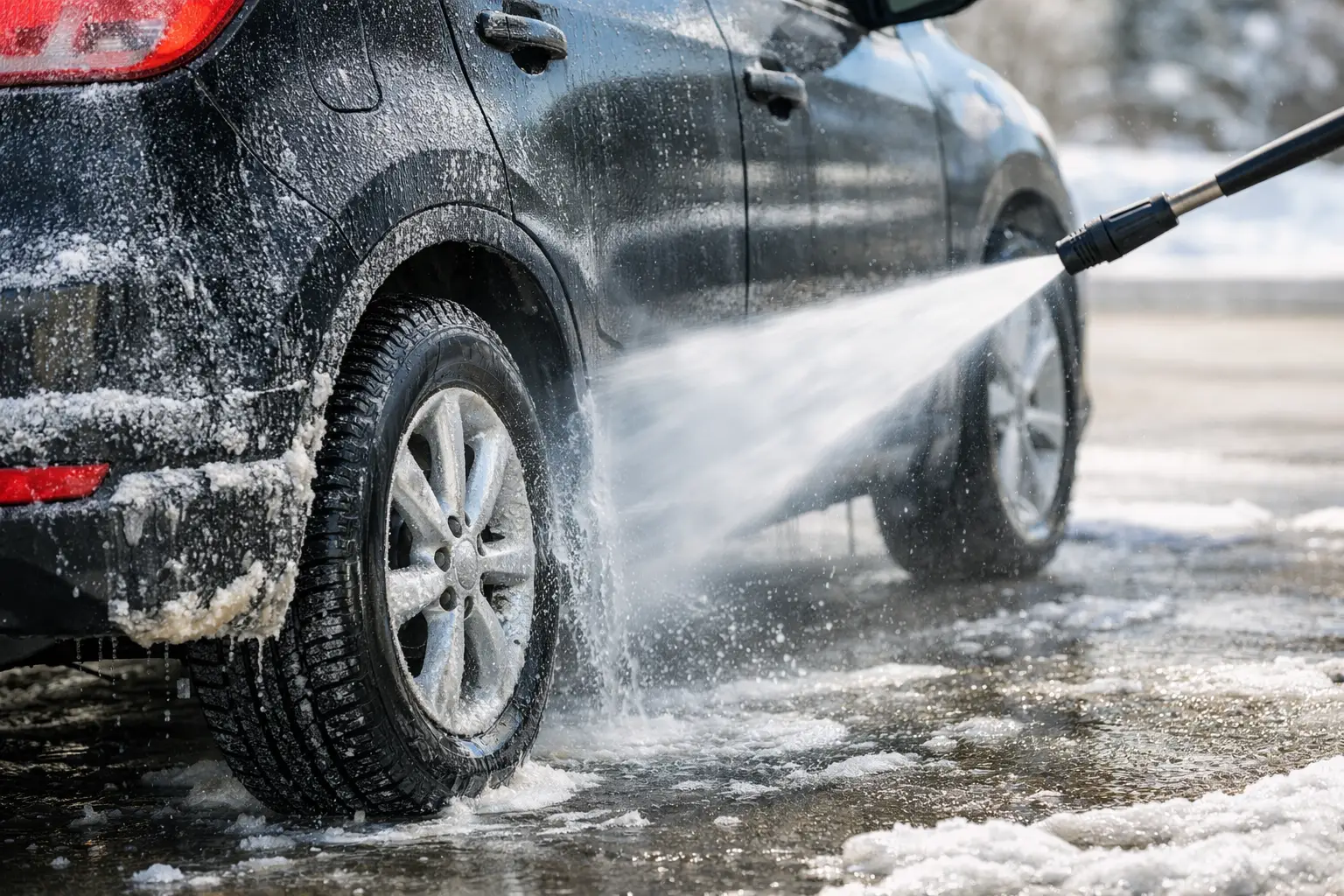
For salt, the goal is not just making the paint shine. You want a wash that can clean the exterior thoroughly and help flush buildup from the lower parts of the vehicle. Touchless washing is a strong fit here because it uses high-pressure water and detergents to remove grime without brushes contacting the finish.
That matters in winter, when salt and grit can sit on the surface like sandpaper. A touchless approach helps clean the vehicle while reducing the risk of friction against trapped debris. It is a practical option for drivers who want regular winter washing without second-guessing whether physical contact is doing the paint any favors.
If available, pay attention to underbody cleaning as well. That is where salt does some of its most expensive work. The outside of the car may bother your eyes first, but the underside is where prevention really pays off.
How often should New Hampshire drivers wash in salt season?
There is no one schedule that fits every vehicle, but for most drivers in southern and central New Hampshire, every one to two weeks is a solid winter baseline. If you drive daily, commute on treated roads, or spend a lot of time on highways, lean closer to weekly. If conditions have been dry and cold with lighter exposure, you may be fine stretching it a bit.
During major storm stretches, you may need to wash more often. During calmer periods, you may not. The point is to make winter washing routine instead of reactive. Once you start asking whether the salt has been there too long, the answer is usually yes.
For busy families and commuters, convenience matters here. A car wash only helps if it fits real life. That is one reason many local drivers prefer a fast touchless option they can work into a normal week instead of turning winter car care into a project.
A few mistakes to avoid
The biggest mistake is waiting until spring. A post-winter cleanup is great, but it should not be your first real wash after months of salt exposure. By then, the damage risk has had plenty of time to build.
Another mistake is focusing only on appearance. If the hood and doors look decent, that does not mean the undercarriage is clean. Winter grime hides where it matters most.
And finally, do not assume one wash after one storm is enough for the season. Salt season is a repeat problem. It needs a repeat habit.
The smarter approach to salt
If you want the simplest answer to when to wash salt off, here it is: wash it off as soon as you reasonably can, then keep doing that through the winter. Aim for within 24 to 48 hours after heavy exposure when possible, use above-freezing days when they come, and do not wait for your car to look terrible before taking action.
Around here, winter roads are part of life. The good news is that regular washing is one of the easiest ways to protect your vehicle without adding much time to your week. At Black Dog Car Wash, that is exactly why touchless, convenient, around-the-clock washing makes sense for New Hampshire drivers. Salt is stubborn, but it should not get the last word on your car.