The plows have passed, the roads look clear, and your vehicle is wearing that familiar gray-white film from bumper to roof. That is the moment many New Hampshire drivers ask whether they should wash car after snowstorm right away or wait for better weather. In most cases, sooner is better. Road salt and brine are useful for winter driving, but they do not belong on your paint, wheels, underbody, or door jambs any longer than necessary.
A quick wash after a storm is not just about looking better in the driveway. It is routine winter maintenance that helps remove corrosive residue before it has more time to sit on exposed metal and finished surfaces. The right timing depends on road conditions and temperature, but waiting for a perfect winter day can mean carrying salt around for weeks.
Why You Should Wash Car After a Snowstorm
New Hampshire road crews use salt, sand, liquid brine, and other treatments to keep roads safer. Your tires throw that material onto the lower panels of the vehicle, behind the wheels, into wheel wells, and underneath the car. Meltwater carries it into seams and crevices that are easy to overlook.
Salt attracts moisture. When it remains on your vehicle, especially through repeated wet-and-dry cycles, it can speed up corrosion on exposed metal components. The undercarriage, brake lines, suspension pieces, exhaust components, and wheel areas take the hardest hit. Paint and clear coat offer protection, but they still benefit from regular rinsing when winter grime builds up.
There is another practical reason to wash: visibility. Slush film can dull headlights and taillights, coat backup cameras and sensors, and turn windows into a streaky mess. A clean windshield and clear lights matter when daylight is short and conditions change quickly.
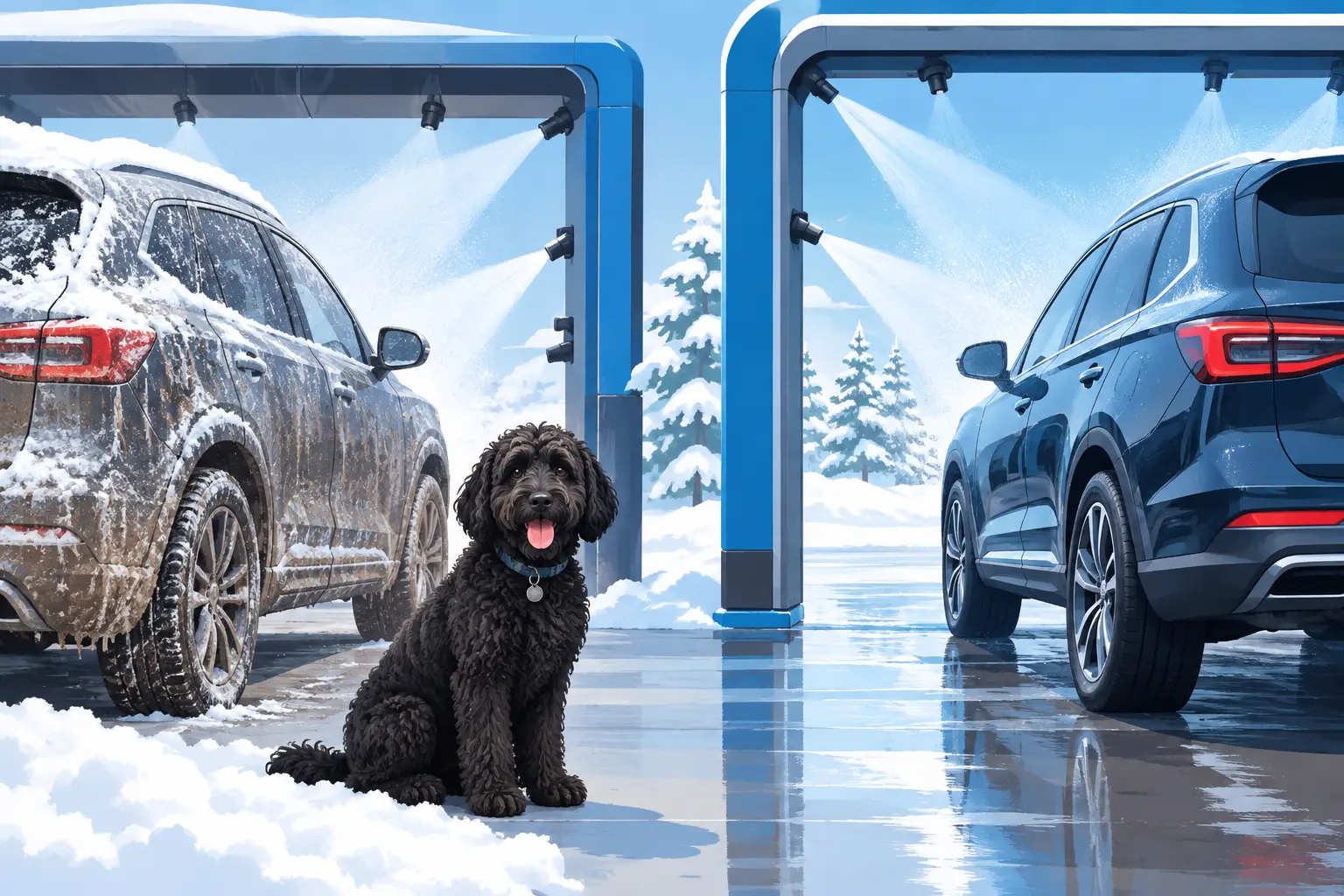
Beau, Black Dog Car Wash's resident black labradoodle, would put it this way: salt belongs on sidewalks, not on your side panels.
Do Not Wait for Perfect Weather
The best time to wash is usually after the roads have been plowed and treated, when you can safely drive to the wash without immediately covering the car in fresh slush. If the storm is still active and your route is messy, it makes sense to wait. If the roads are dry or mostly clear the next day, that is a good opportunity to remove the buildup.
Many drivers delay because the car will get dirty again. That can happen, especially during a week of repeated snow showers. Still, there is a difference between ordinary winter dust and a thick layer of salt brine sitting on the vehicle. A wash now can reduce the amount of residue that stays in contact with the car, even if another rinse is needed later in the week.
Think of winter washing as a reset, not a once-and-done event. During heavy snow periods, regular washes are often more useful than one detailed cleaning at the end of the season.
Temperature Matters, but It Is Not the Only Factor
A wash on a cold day can be reasonable when the wash is operating properly and you take a few simple precautions afterward. Extremely low temperatures can create issues with doors, locks, wipers, and seals, particularly if water remains trapped around them. If the forecast is well below freezing and your vehicle cannot be parked where it can dry out, use good judgment.
When conditions allow, choose a wash that effectively rinses the exterior and underbody areas without relying on physical brushes against your finish. After washing, take a minute to open and close each door, wipe any visible moisture from door edges, and clear water from mirrors if needed. A short drive can also help shed standing water from exterior surfaces.
If your vehicle has a power liftgate, folding mirrors, or recessed door handles, check those areas before parking overnight. The goal is simple: remove salt while minimizing the chance of water freezing in places that affect normal operation.
Focus on the Areas Winter Hits Hardest
Not every part of the car collects winter grime the same way. The lower half of the vehicle does most of the work, which is why a basic rinse that reaches more than the hood and roof is valuable. Give special attention to the wheel wells, rocker panels, wheels, front grille area, and rear hatch or trunk lip.
The undercarriage deserves attention as well. You may not see it every day, but it is where slush and salt accumulate after every commute. A wash with a strong underbody rinse is especially helpful after driving on heavily treated highways, through deep slush, or after several days of thawing and refreezing.
Inside the vehicle, winter leaves its own evidence. Rubber mats collect salt crystals, wet boots leave moisture behind, and vacuuming prevents sand and grit from getting ground into carpeting. Exterior washing should be the priority after a storm, but a few minutes at a high-powered vacuum station can make the whole vehicle feel back to normal.
Why Touchless Washing Makes Sense in Winter
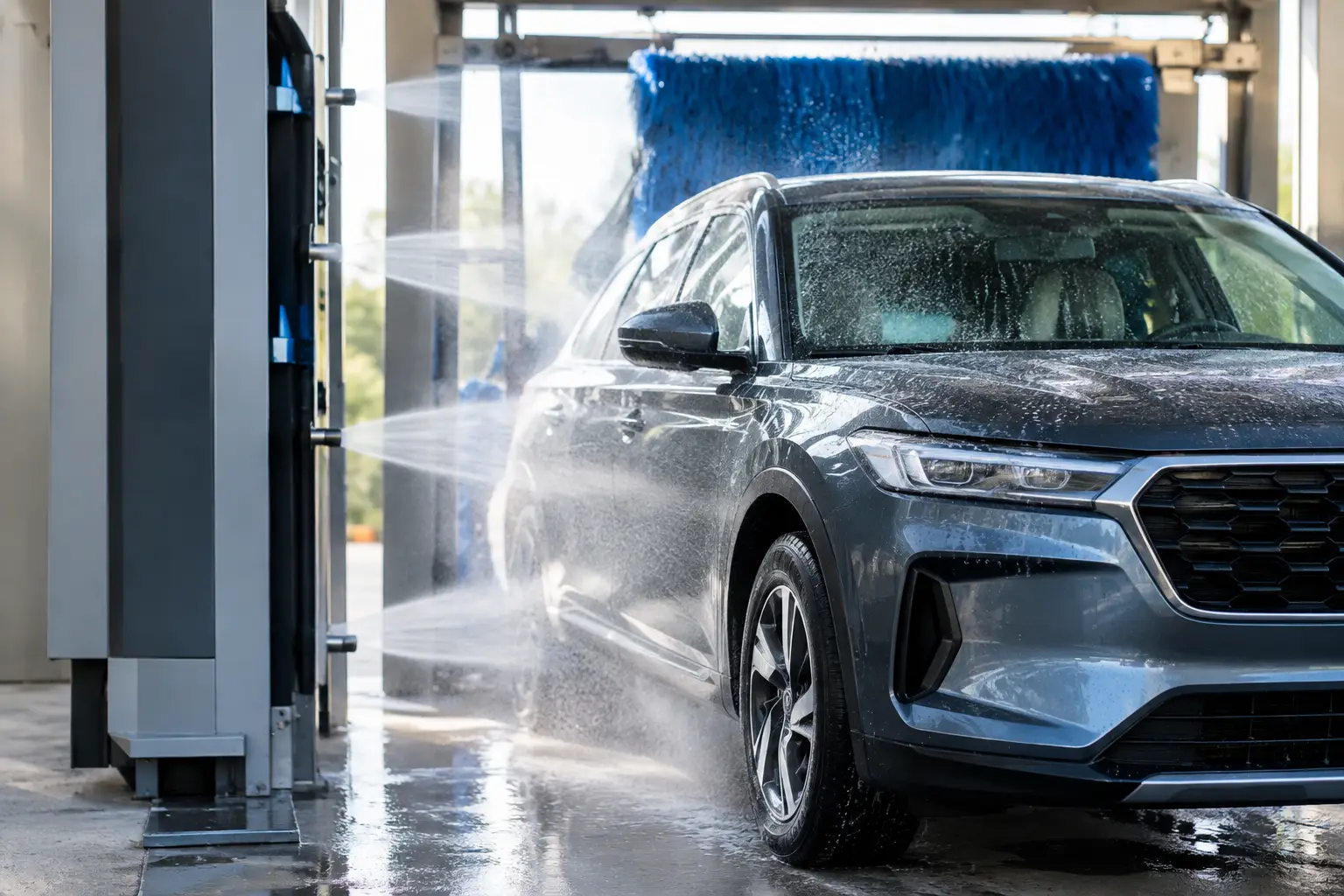
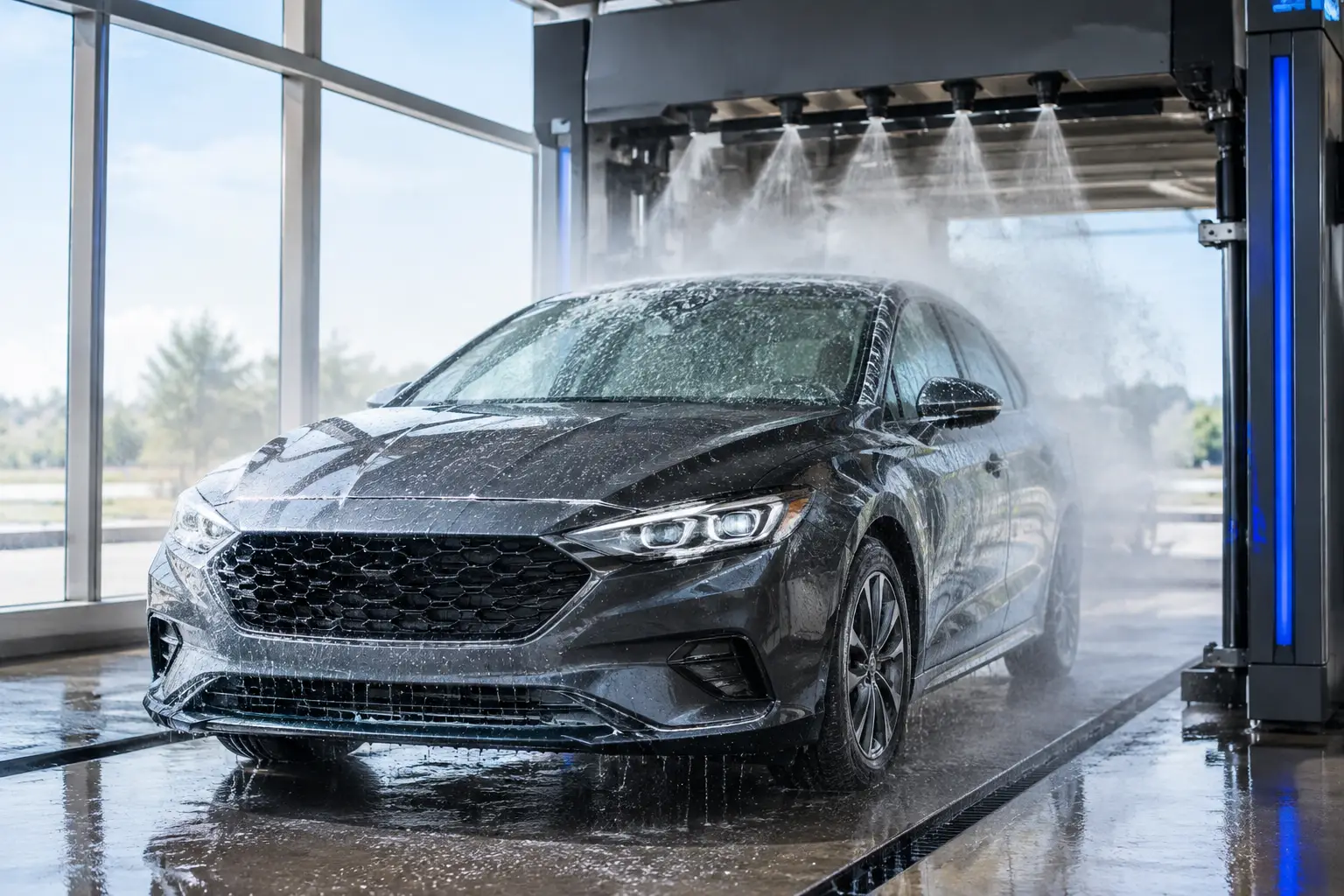
Winter grime can contain sand, grit, and fine road debris. That is one reason many drivers prefer a touchless wash. A touchless system uses high-pressure water and cleaning solutions to loosen and rinse away buildup without brushes physically contacting the vehicle's exterior.
That does not mean every wash situation is identical. Very heavy, baked-on mud may require another visit or a more thorough cleaning once temperatures improve. But for routine salt, brine, slush, and road film, a quality touchless wash is a practical way to clean the vehicle while avoiding friction from wash brushes.
For car-conscious owners, that difference matters. It is a convenient option for keeping up with winter maintenance without adding one more chore to an already busy week.
A Simple Post-Storm Wash Routine
After each significant storm, start by checking whether the roads near you have cleared enough for safe travel. Once they have, wash the vehicle within a day or two when possible. If another storm is approaching, a wash before it arrives can also help remove old salt and leave the exterior in better shape for the next round of road treatment.
During long stretches of winter weather, consider washing every one to two weeks, or more often if you drive daily on treated roads. Commuters, delivery drivers, and anyone who travels on highways may need more frequent rinses than a vehicle that mostly stays parked.
A practical routine looks like this: remove the exterior salt after storms, rinse the underbody regularly, clear the glass and lights for visibility, and vacuum out tracked-in sand when the interior needs it. It is not glamorous, but it is easier than dealing with neglected winter buildup later.
When It Makes Sense to Wait
There are times when waiting is the smarter call. If roads are actively icing, visibility is poor, or travel is discouraged, stay put. A clean vehicle is never worth an unsafe drive. It can also be wise to hold off during severe cold if you know your vehicle has trouble with frozen door seals or locks and you cannot dry it properly afterward.
But waiting for spring is rarely the best plan. By then, salt may have spent months working its way into the areas you cannot easily inspect. Winter is when your wash routine does the most protective work.
For drivers near Londonderry and Belmont, Black Dog Car Wash offers 24/7 touchless washing, so you can fit a post-storm rinse around your schedule instead of planning your day around business hours. When the roads clear, give your vehicle the same favor you give your driveway: clear off the winter mess and keep moving.