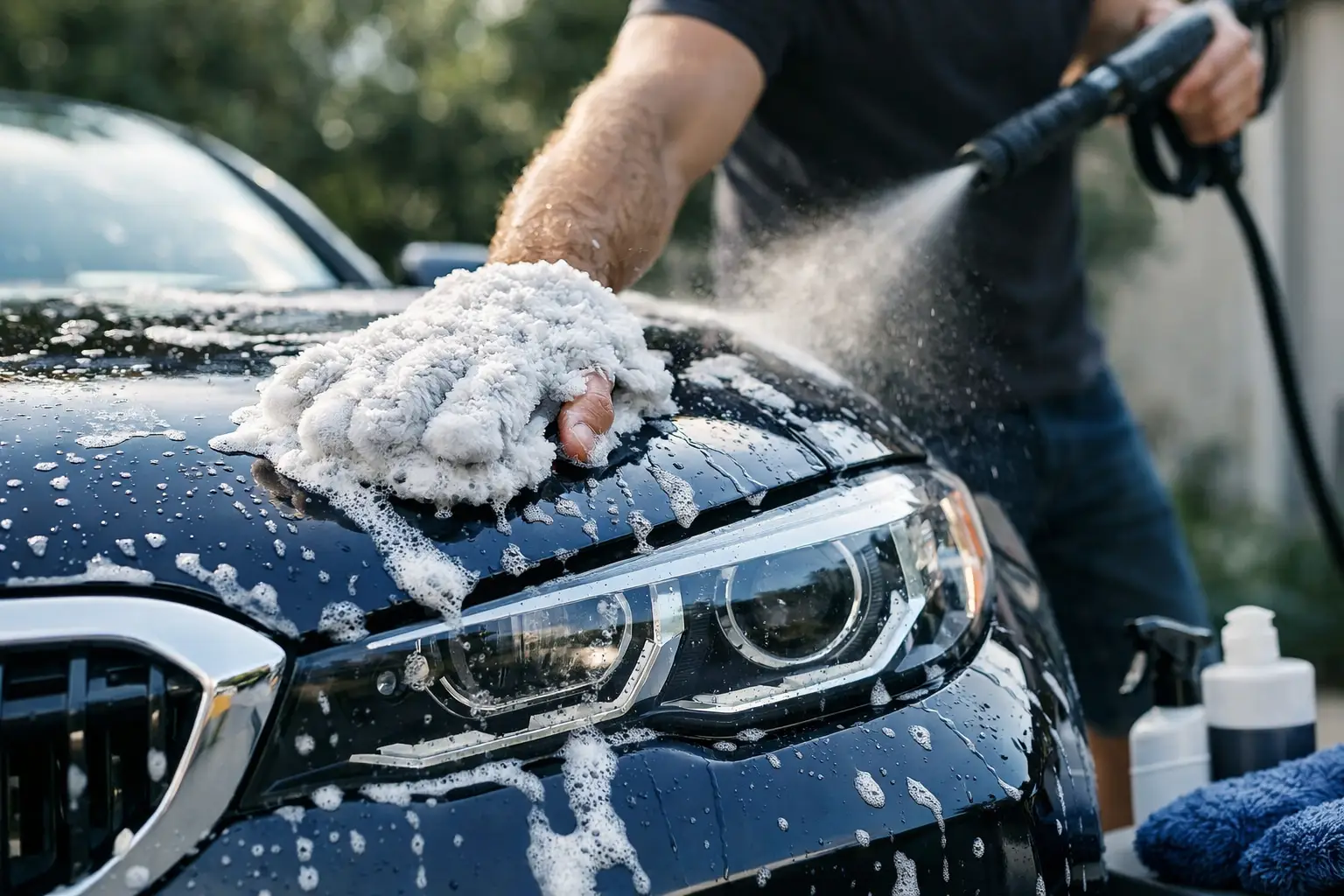
Road salt does not care that your vehicle is brand new. Neither does spring pollen, muddy slush, brake dust, or the film that builds up after a week of commuting on New Hampshire roads. A safe wash for newer cars is about getting that contamination off quickly without adding unnecessary friction, harsh chemicals, or avoidable wear to the finish.
New vehicles have plenty worth protecting: fresh clear coat, glossy black trim, cameras, sensors, wheel finishes, decals, and sometimes matte paint or protective film. The good news is that regular washing is one of the simplest ways to preserve that new-car look. The key is choosing a wash method that cleans effectively while treating the exterior with care.
Why Newer Cars Need a Careful Wash
Modern paint is durable, but it is not invincible. The clear coat on a newer car protects the color underneath, yet it still picks up fine scratches and swirl marks when dirt is rubbed across the surface. This is why the question is not just whether your car gets washed. It is how the grime comes off.
A vehicle that looks only lightly dirty can still carry abrasive material. Winter roads leave behind salt and sand. Wet weather throws grit onto the lower panels. Pollen can cling to paint and glass. If that debris is dragged across the vehicle by dirty brushes, towels, or a hurried driveway wash, it can leave behind marks that show up clearly in direct sunlight.
Newer vehicles also have more exterior technology than older cars. Backup cameras, parking sensors, radar areas, and carefully designed trim are built for everyday weather, but they still benefit from a wash process that avoids hard contact and removes buildup from around those areas.
What Makes a Safe Wash for Newer Cars?
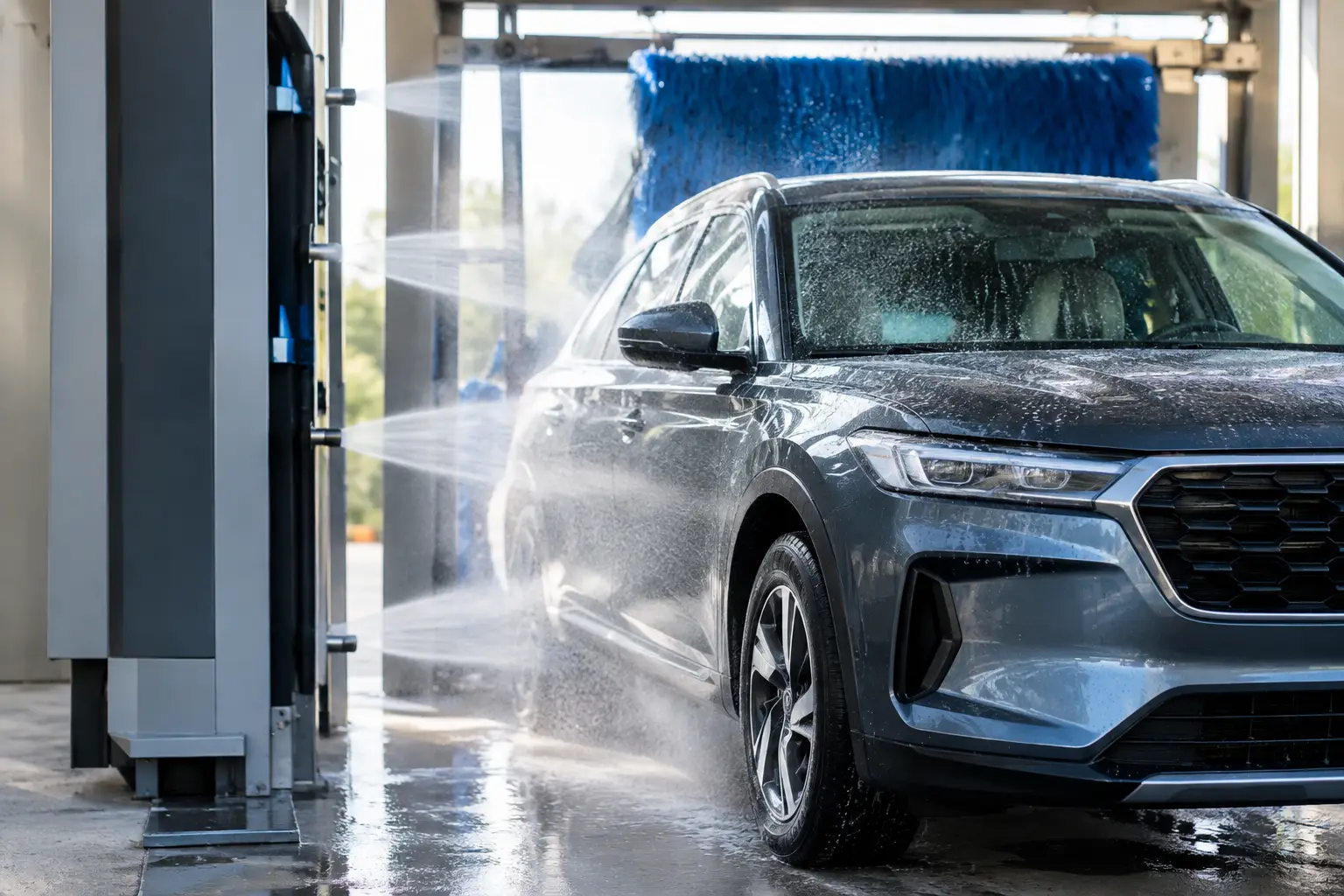
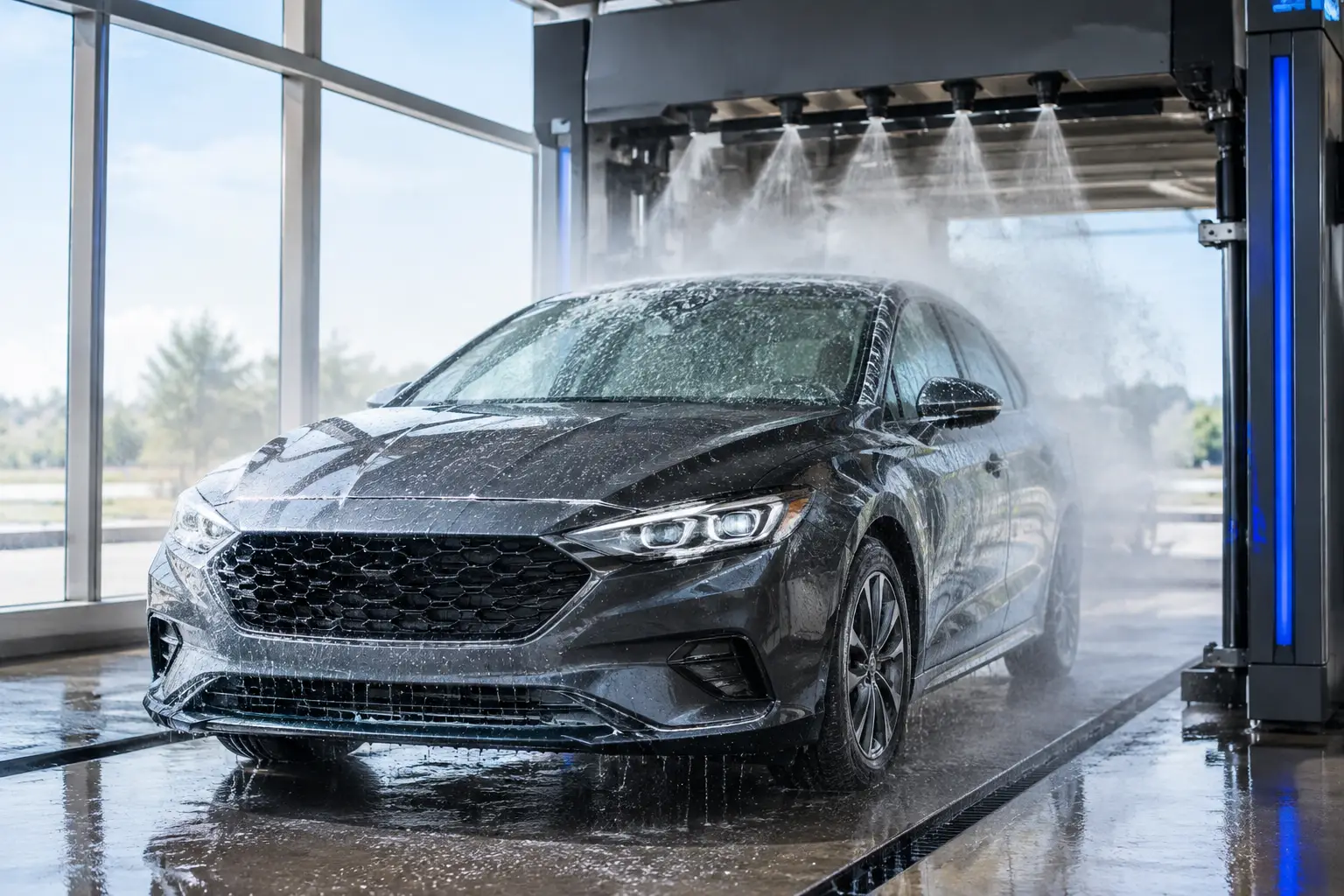
The safest approach starts with removing loose dirt before anything touches the paint. In practical terms, that means water pressure and cleaning solutions should do most of the work. A touchless wash uses high-pressure water and formulated detergents to loosen and rinse away road film, salt, and everyday grime without physical brushes contacting the vehicle.
That lack of direct brush contact is a major advantage for drivers who want to limit unnecessary friction on their paint. It does not mean every touchless wash will solve every cleaning problem on every vehicle. Heavy mud, neglected wheel wells, tree sap, or baked-on bug residue may need more attention. But for routine maintenance, a quality touchless wash is a sensible choice for protecting a newer finish.
Cleaning chemistry matters, too. A wash needs enough strength to break down road grime, especially after a New Hampshire winter. At the same time, the products should be intended for automotive surfaces and properly rinsed away. Strong cleaners used incorrectly can dull certain finishes or leave residue. A professionally maintained wash system takes the guesswork out of dilution, timing, and rinsing.
Touchless Does Not Mean Skipping Maintenance
A touchless wash handles the exterior cleaning step, but vehicle care goes beyond the wash bay. Vacuuming the interior, clearing leaves from cowl areas, cleaning floor mats, and wiping down door jambs when needed all help keep a newer vehicle in good shape.
For the paint itself, a protective wax or sealant option can be useful. It can help water bead, make dirt easier to rinse away, and give the finish extra defense against the elements. Protection is not permanent, and it is not a substitute for washing. Think of it as a helpful layer between regular cleanings.
How Often Should You Wash a New Vehicle?
For most local drivers, every one to two weeks is a practical routine. That schedule changes with the season and where you drive. If you commute daily, park outside, travel on treated roads, or regularly drive near construction and dirt roads, your vehicle may need attention more often.
Winter deserves special attention. Salt can collect along rocker panels, behind wheels, and underneath the vehicle. Waiting until spring to deal with it gives that buildup months to sit where it does not belong. Washing after storms and during warmer winter stretches is one of the best habits a New Hampshire driver can have.
Spring brings pollen and muddy shoulders. Summer adds bugs, dust, and bird droppings. Fall piles up leaves and damp organic debris. A newer car does not need to be spotless every day, but it should not spend long stretches coated in material that can cling to paint, trim, and glass.
Pay Attention to These Areas
The body panels get most of the attention, but a complete wash should address the places where grime likes to hide. Wheels and lower panels take the hardest hit from brake dust, slush, and road spray. Glass, cameras, and sensors need a clear view to do their jobs well. Door handles, mirrors, and license plate areas can also hold salt and dirt after winter driving.
Be thoughtful with specialty surfaces. Matte paint, satin wraps, paint protection film, and ceramic coatings can have specific care instructions from their manufacturer or installer. A touchless wash is often a good fit because it avoids brush contact, but it is still smart to follow the recommendations for your particular finish. Avoid using rough towels or abrasive cleaners on those surfaces unless they are specifically approved.
If your vehicle has a rear camera, do not be surprised if water spots or a little remaining road film affect the image after a stormy drive. The camera lens is exposed to the same conditions as the rest of the car. Regular washing helps, and a quick visual check before backing out is always a good habit.
Common Mistakes That Can Mark Up a New Finish
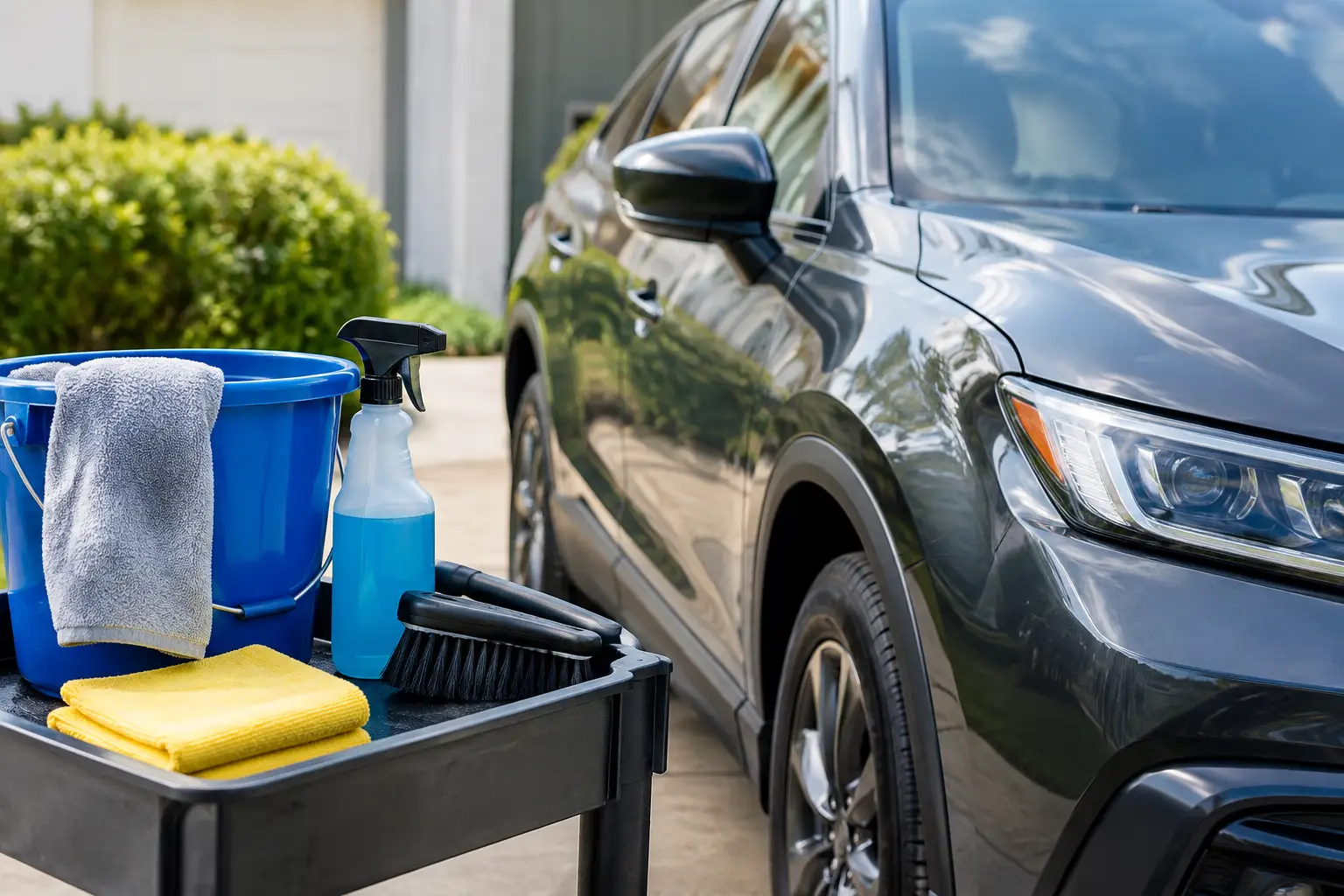
The biggest mistake is wiping a dirty car dry with a towel. Even a soft towel can become abrasive when there is grit underneath it. If the vehicle is dusty or salty, rinse it first. The same rule applies to using a dry brush on the paint or aggressively scrubbing a dirty panel.
Another mistake is waiting too long after the roads have been treated. Salt is easier to remove when it is fresh than after it has had repeated wet-dry cycles. Regular washes are less of a chore than one major cleanup after months of buildup.
Drivers can also overfocus on the paint and forget the practical details. A clean windshield, mirrors, camera lens, and headlights improve visibility. Clean wheels and wheel wells make it easier to spot damage, leaking fluids, or a tire problem before it becomes a bigger issue.
Finally, be wary of the idea that a newer car is too new to need routine care. New paint may look great from the dealership, but that is exactly when a consistent wash habit has the most value. Protecting a finish is easier than correcting one later.
A Convenient Routine Is the One You Will Keep
The best wash plan is not complicated. It is one you can actually fit into your week. A dependable 24/7 touchless wash makes it easier to stop in after work, before a weekend trip, or after driving through salty slush. Add a quick vacuum when the interior needs it, and your vehicle stays easier to live with without turning car care into an all-day project.
Black Dog Car Wash offers touchless washing and high-powered vacuum stations for drivers who want that practical balance of effective cleaning and vehicle-safe care. For households with more than one vehicle or commuters who wash often, wash bundles, gift certificates, and reloadable account options can also make regular maintenance simpler.
A new vehicle will eventually see rain, grit, paw prints, and the occasional coffee mishap. That is part of owning it. Keep the road grime from becoming a long-term problem, choose a wash method that respects the finish, and make a clean car the easy stop on your way home.