Road salt is one of winter’s necessary evils in New Hampshire. It helps keep roads safer after snow and ice, but every drive through slush can leave a salty, gritty coating on your vehicle. That buildup is not just an appearance problem. Left in place, it can contribute to corrosion in places you may not see until repairs get expensive.
A quick rinse after a storm is good. A consistent wash routine through the winter is better. Here is what road salt does to your car, where it hides, and how local drivers can stay ahead of it.
Why Road Salt Is Tough on Vehicles
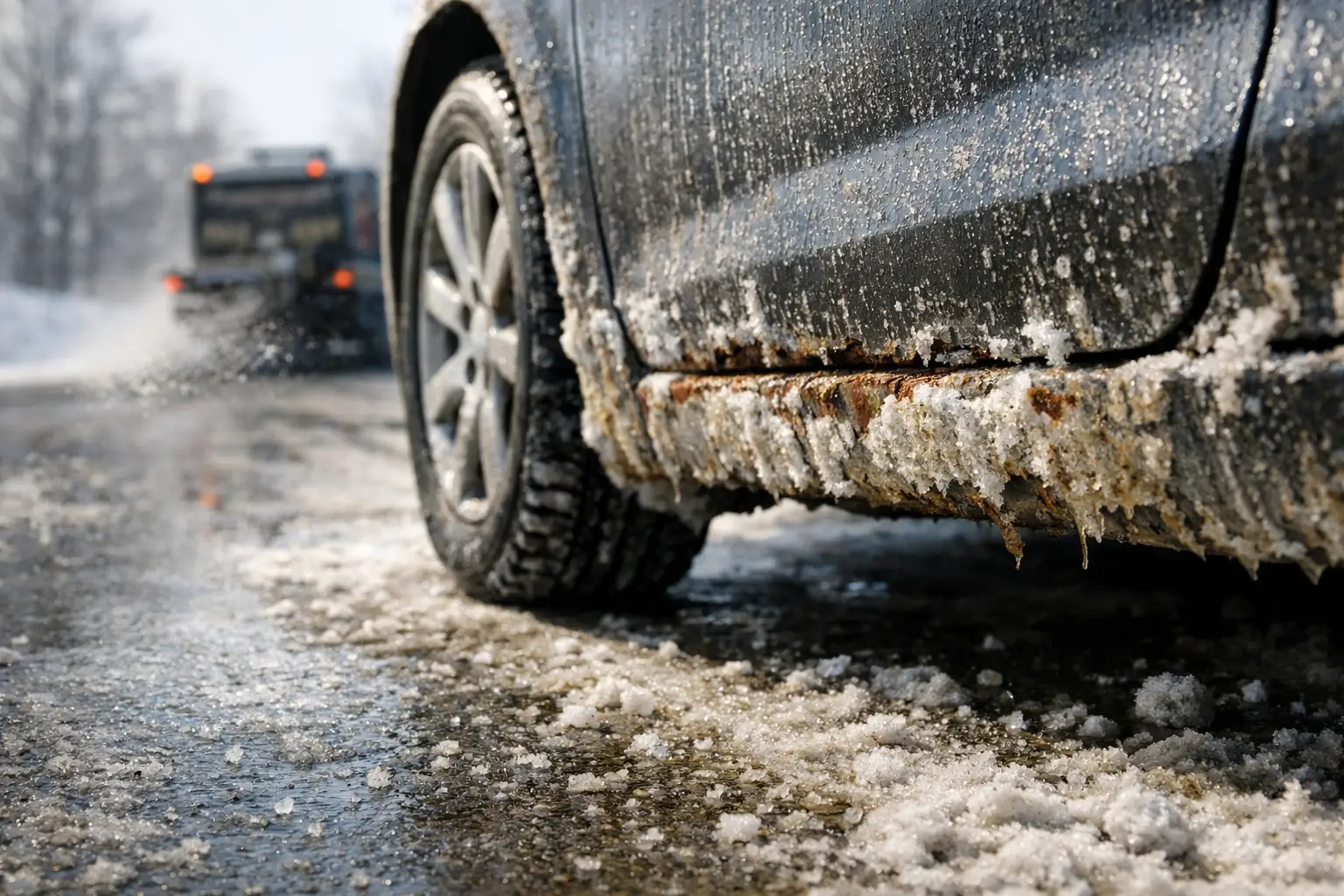
Road salt lowers the freezing point of water, helping melt ice and improve traction on treated roads. Once it mixes with snow, water, dirt, and road grime, though, it becomes a wet, clingy film that collects across the exterior and underneath the vehicle.
Salt speeds up corrosion when moisture is present. Metal components are most vulnerable, particularly if paint, protective coatings, or underbody finishes have been chipped by gravel or normal road wear. The issue is not that your car will rust after one snowy commute. The concern is repeated exposure over a long New Hampshire winter, followed by days of damp weather that keep salty residue active.
That is why a clean-looking car can still have a problem. Salt often dries to a light, dusty film on doors and panels, but much of it settles below the visible bodywork.
Where Road Salt Hides on Your Car
The lower half of your vehicle takes the worst of winter driving. Tires spray slush into wheel wells, and air movement pushes grime into seams, joints, and the undercarriage. A basic rinse of the hood and windshield is helpful, but it does not reach every area that needs attention.
Pay particular attention to the wheel wells, rocker panels, lower door edges, bumpers, and the area behind mud flaps. Salt can also collect around the trunk seam, fuel door, license plate area, and wiper cowl. If you notice white crust near these spots, assume there is more residue nearby.
Underneath the vehicle, road salt can settle on suspension components, brake lines, exhaust parts, fasteners, and protective shields. Modern vehicles have better corrosion protection than older models, but that protection is not a reason to ignore winter washing. Chips, worn coatings, and tight spaces can still give salt and moisture a place to work.
How Often Should You Wash Off Road Salt?
There is no single schedule that fits every driver. It depends on how often you drive, how heavily roads have been treated, where you park, and whether temperatures have been mild enough to keep the roads wet.
As a practical rule, wash your vehicle after major storms, extended periods of wet slushy driving, or several days of treated-road commuting. Many drivers find that every one to two weeks during active winter weather is a sensible rhythm. If your vehicle has been through deep slush or you can see salt streaks on the doors and rear bumper, do not wait for the next warm weekend.
A sunny 40-degree day is a great time to wash, but you do not need perfect weather to remove salt. Waiting too long simply gives residue more time to sit in damp areas. If temperatures are safely above freezing and the wash is operating normally, a rinse can be worthwhile.
Beau’s winter rule is simple: if your car looks like it has been wearing gray socks up to the doors, it is time for a wash.
A Better Winter Wash Routine
The goal is not to make your vehicle look showroom-perfect after every commute. The goal is to remove salt before it has a chance to linger. Start with a thorough high-pressure rinse that reaches the lower body panels, wheels, and wheel wells. This step matters because loose salt and grit should be flushed away before cleaning solutions do their job.
Then use a quality exterior wash to remove the grimy film that holds salt against painted surfaces. Touchless washing is a practical choice for winter because high-pressure water and cleaning products do the work without brushes repeatedly contacting a finish that may already be carrying abrasive grit.
Do not skip the wheels. Brake dust, slush, sand, and salt create a stubborn layer around rims and behind spokes. Clean wheels are not only about looks. They make it easier to spot damage, corrosion, or a tire issue before it becomes a bigger problem.
After the wash, dry your door jambs and rubber seals if possible. In freezing weather, lingering water can cause doors, fuel doors, or hatch seals to stick. A microfiber towel in the vehicle is useful for quick touchups around handles and door edges. Avoid pouring hot water on frozen handles or locks, since sudden temperature changes can create their own problems.
Why the Undercarriage Matters
Drivers naturally focus on the windshield, hood, and sides because that is what they see. The undercarriage deserves just as much attention during winter. It absorbs spray from every treated road, especially on highways and behind other vehicles.
An underbody rinse helps remove loose contaminants from the parts that do not get attention in a driveway wash. It is especially useful after trips through heavy slush, repeated highway commuting, or a stretch when local roads have been aggressively treated.
If your preferred wash offers undercarriage cleaning, use it during salt season. If it does not, a thorough wash focused on the lower vehicle and wheel wells is still far better than leaving salt in place. For older vehicles or cars with visible rust, consider having a trusted technician inspect the underside periodically. They can identify trouble spots before a small issue turns into a failed line, bracket, or exhaust component.
Common Winter Washing Mistakes
One mistake is waiting until spring. By then, your car may have carried salt for months through freeze-thaw cycles, rain, and wet parking lots. Spring cleaning is still worthwhile, but it should be the final reset after a season of regular washing, not the first wash since December.
Another mistake is washing only the visible paint. Salt tucked into wheel wells and lower seams can remain after the rest of the vehicle looks clean. Take an extra moment to inspect the lower doors, wheels, and rear bumper before leaving the wash.
It also helps to avoid relying on a home hose during freezing conditions. Driveway washing can leave ice around your vehicle, create slick surfaces, and make it difficult to rinse effectively. A properly maintained car wash gives you a more convenient way to clean off winter grime without turning your driveway into a skating rink.
Finally, do not confuse wax or protectants with a replacement for washing. A protected finish can make grime easier to remove and may add a layer of defense, but salt still needs to be rinsed away. Protection works best when it is paired with regular cleaning.
Keep Winter Grime From Becoming Spring Damage
Winter vehicle care is mostly about consistency. Washing after every single drive is unnecessary for most people, but ignoring weeks of salt buildup is a gamble that rarely pays off. A few minutes spent removing grime now can help preserve paint, hardware, wheels, and the underside of your vehicle over time.
For drivers in Londonderry and Belmont, Black Dog Car Wash provides a convenient touchless option when treated roads leave your vehicle coated in slush and salt. A quick stop can fit into a commute, an errand run, or the time between snowstorms.
The next time the roads turn white with salt, give your car the same consideration you give your windshield. Clear it off while the mess is fresh, and your vehicle will be better prepared for the miles ahead.