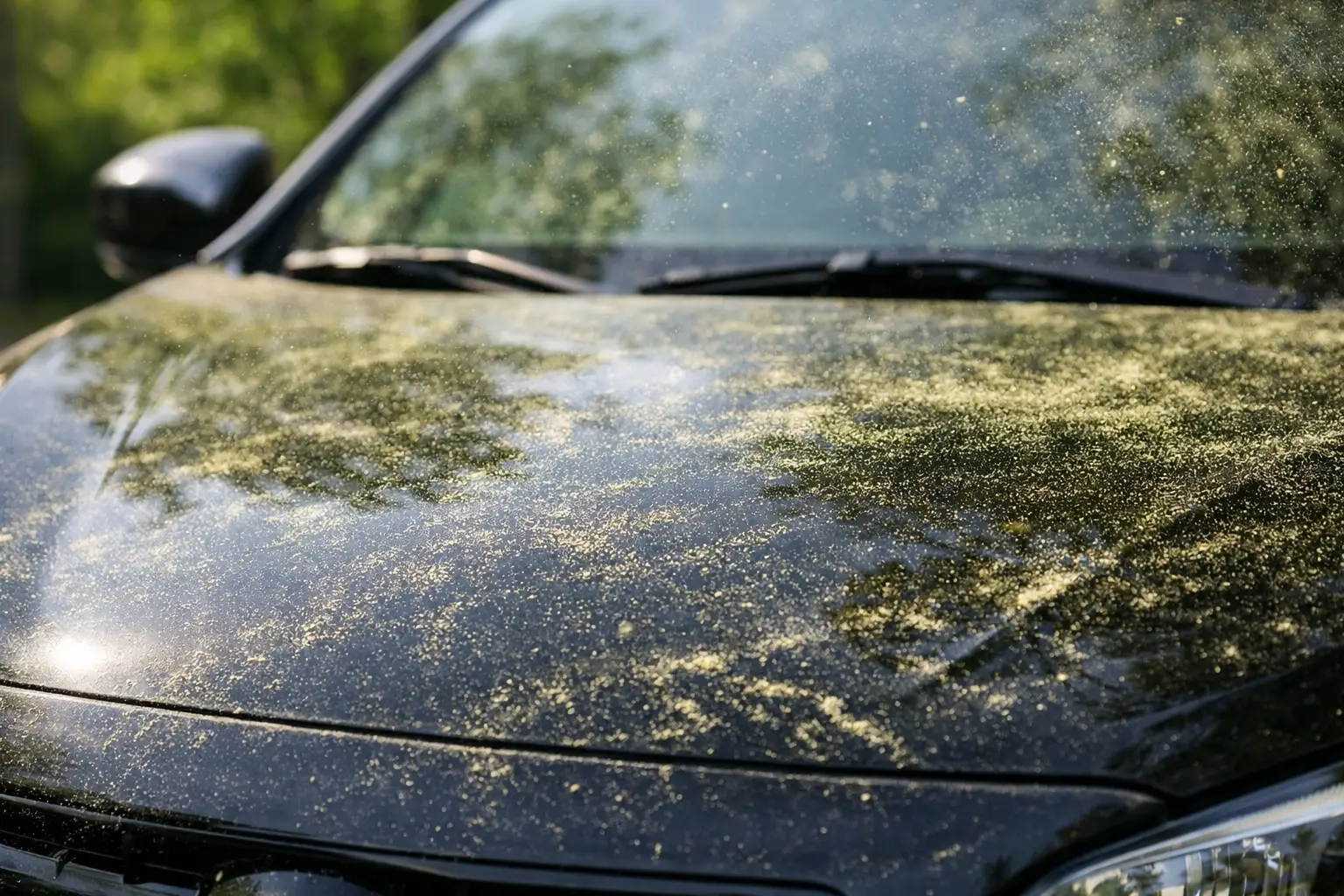
That yellow-green film on your car can show up overnight in New Hampshire, especially after a dry, breezy day. It may look harmless, but pollen paint damage is a real concern when heavy buildup sits on a vehicle through heat, rain, and changing weather. The good news: pollen does not usually ruin healthy paint after one day outside. The trouble starts when it is left to bake on, get wet, and grind against the finish during a rushed cleanup.
For drivers in Londonderry, Belmont, and surrounding towns, spring pollen is just one more layer in the year-round grime lineup. Road salt, sand, mud, tree sap, and pollen all ask for the same basic response: remove contaminants before they have time to cling to your vehicle's finish.
Can Pollen Actually Damage Car Paint?
Pollen is made of tiny plant particles, and those particles have a textured outer shell. Under a close look, pollen grains are not soft little balls of dust. They can have ridges and pointed surfaces. When dry pollen is rubbed across paint, glass, or clear coat, that texture can contribute to fine scratches and swirl marks.
The bigger issue is what happens when pollen mixes with moisture. Rain, morning dew, and humidity turn the dry coating into a paste that can stick more firmly to the surface. Add direct sun or a warm hood, and the residue can dry in place. On a dark-colored car, it is especially easy to notice the dull haze or uneven spots that follow.
Pollen is not as aggressive as bird droppings, bug splatter, or tree sap, but it should not be ignored for weeks. Think of it as a contaminant that creates risk over time, not an instant paint disaster. A vehicle with sound clear coat and regular washing is far less likely to have lasting problems than one that stays coated all season.
Why Spring Weather Makes Pollen Paint Damage More Likely
New Hampshire spring weather rarely stays predictable for long. A dry day can coat your vehicle in pollen, then a quick shower turns that layer into yellow streaks. The next sunny afternoon can dry those streaks onto the paint. This repeated wet-dry cycle is why a car that looked merely dusty on Monday can look grimy and spotted by Friday.
Heat matters, too. A dark vehicle parked in direct sunlight can get much warmer than the air around it. Pollen and moisture sitting on a hot hood, roof, or trunk are harder to remove gently once they have dried. The clear coat is designed to protect the color underneath, but it still benefits from regular care.
There is another risk that has nothing to do with pollen chemistry: wiping. A driver sees the yellow film, reaches for a dry towel, and gives the hood a quick wipe. That drags countless particles across the finish. Beau would probably call that a bad fetch routine. The instinct is understandable, but dry wiping is one of the fastest ways to turn a pollen problem into visible marring.
The Safe Way to Remove Heavy Pollen
The safest approach is simple: use plenty of water and avoid friction until the pollen has been rinsed away. You do not need to wash your vehicle every time a few grains land on it. But when you can clearly see a coating on the paint or can write your name in it, it is time for a proper rinse and wash.
Start by rinsing the vehicle thoroughly, including the roof, windshield, hood, mirrors, grille, and panel gaps. Pollen settles everywhere, and the spots you skip can run down the paint later. Let the water carry away loose particles before any cleaning step touches the surface.
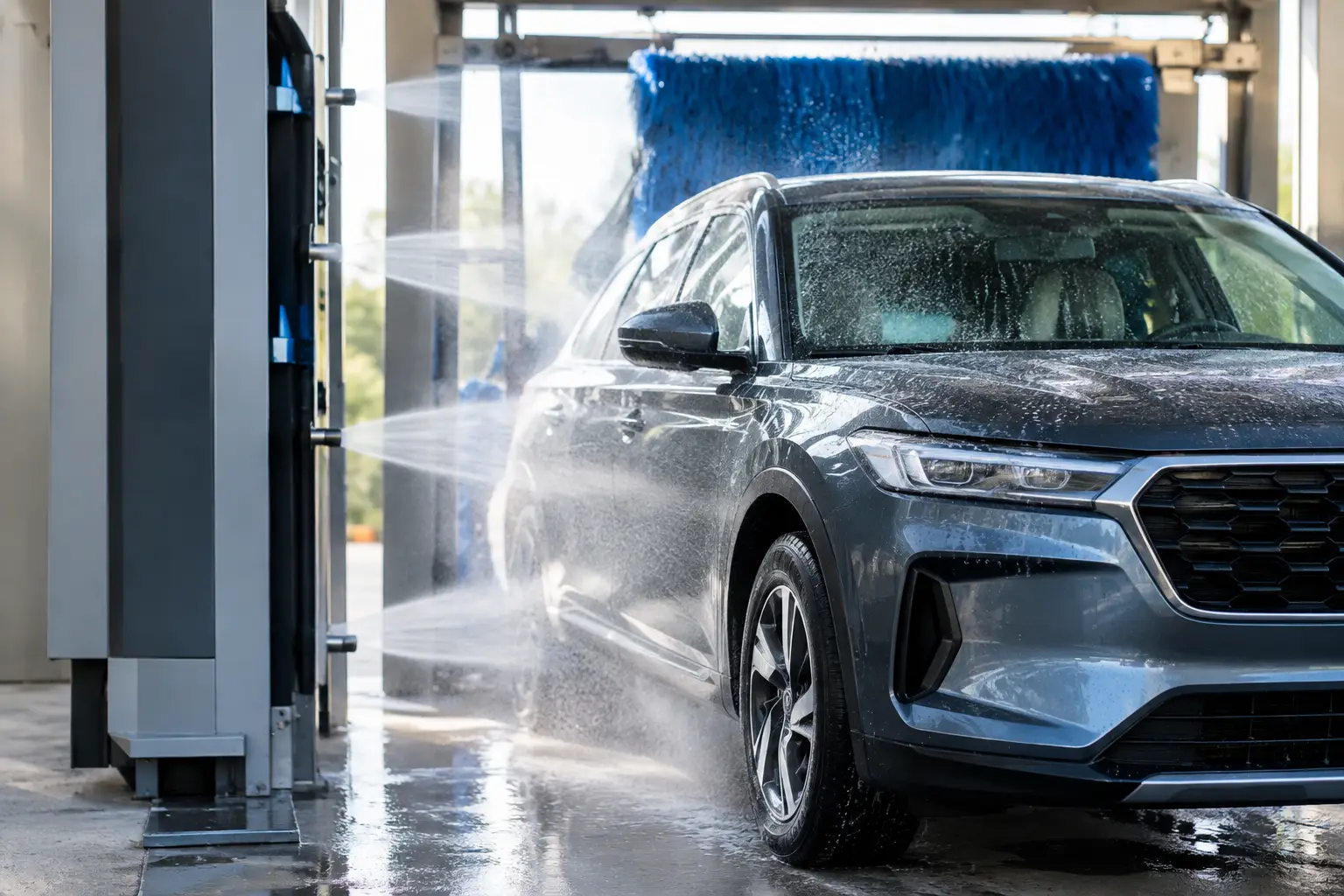
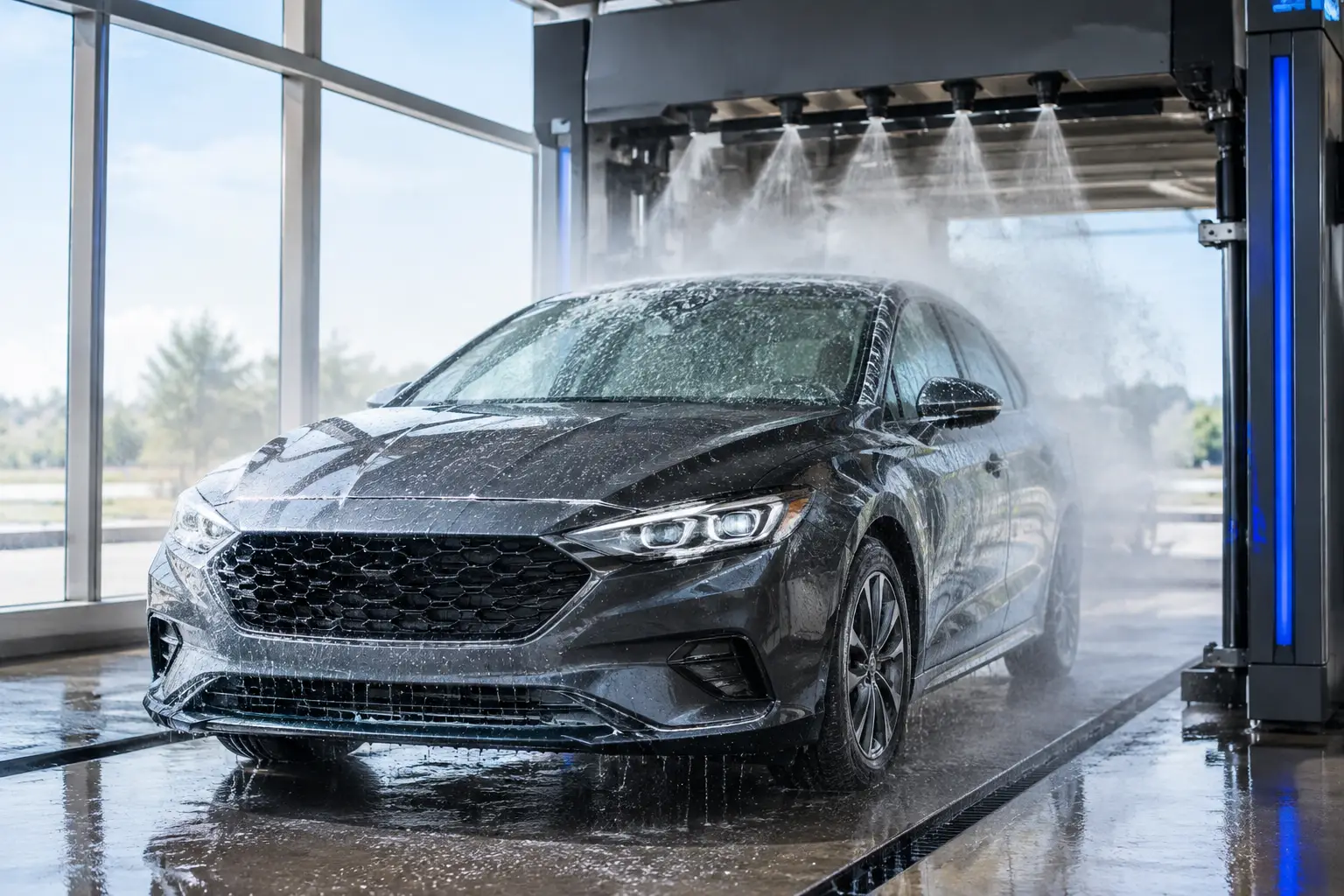
Next, use a quality car wash process that applies cleaning solution and rinses it away effectively. A touchless wash is a smart choice during pollen season because it relies on water pressure and cleaning chemistry rather than brushes contacting the vehicle. That helps reduce the chance of pollen grit being pressed and dragged across the paint.
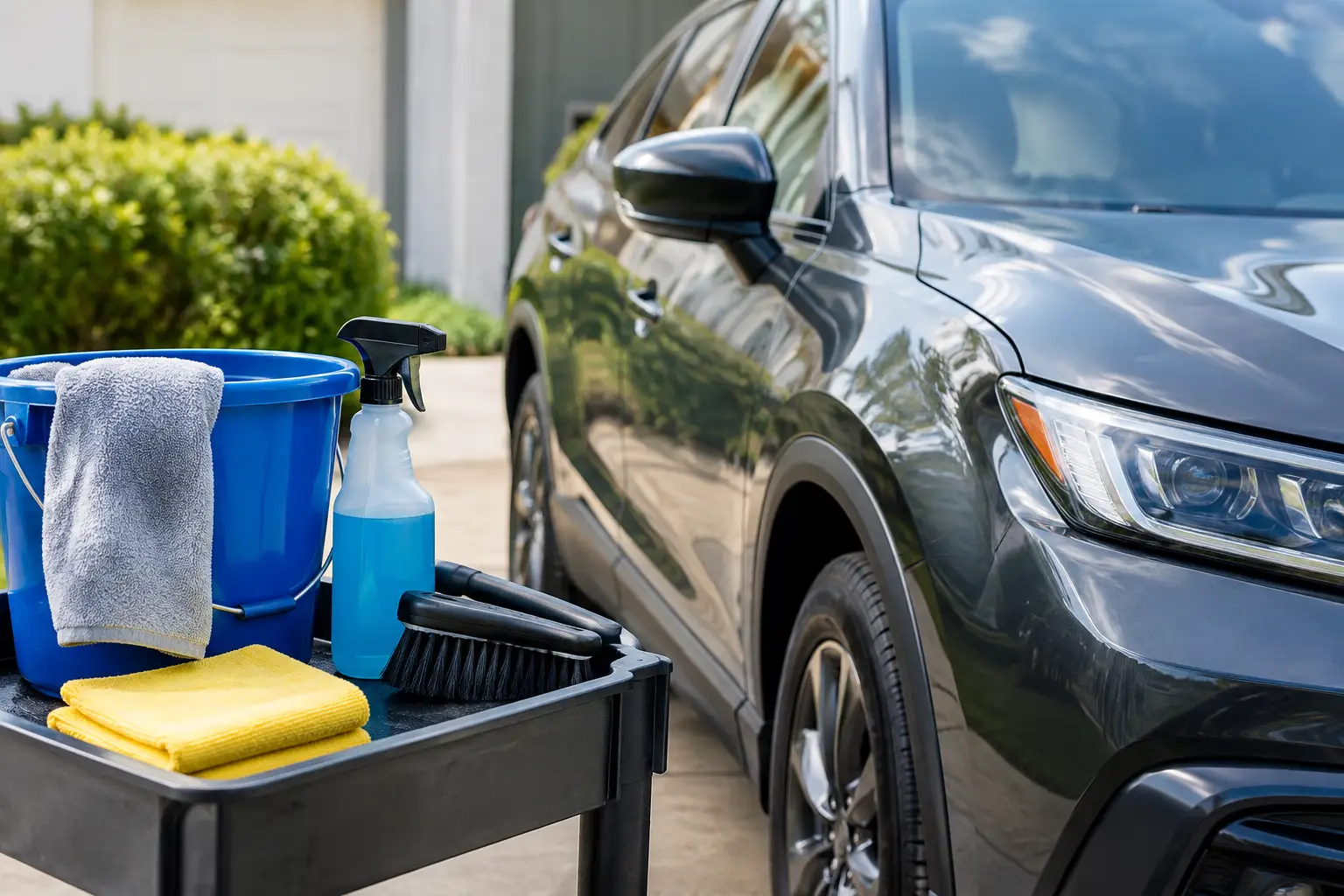
After washing, avoid using a dirty towel or an old sponge to chase the last few drops. If you hand-dry at home, use clean microfiber towels and gentle blotting or light passes. If the car is heavily coated again the next morning, do not panic. A frequent safe wash is better than aggressive spot-cleaning.
When You Need More Than a Normal Wash
Most pollen comes off with a thorough wash. If you still see yellow residue, water spots, or a rough feeling after the surface is clean, the vehicle may have additional contamination from sap, dust, industrial fallout, or road grime. Pollen may be the visible culprit, but it is not always the only thing on the paint.
A few signs deserve closer attention. Look for cloudy patches that remain after washing, etched-looking spots near dried bird droppings, or roughness that does not improve with a normal wash. Those issues may require professional detailing, decontamination, polishing, or paint correction. Trying to scrub them away with more pressure can make matters worse.
It also depends on the condition of your vehicle. Older paint, fading clear coat, and neglected surfaces are more vulnerable to staining and dullness. A newer vehicle with a well-maintained protective coating has a stronger line of defense, although it still needs pollen removed regularly.
A Practical Pollen-Season Routine
You do not need a complicated detailing schedule to care for your vehicle through spring. The key is responding before buildup becomes baked-on residue. For most daily drivers, a regular wash every one to two weeks during high-pollen periods is reasonable. If your car sits outdoors under trees, near construction dust, or along a busy road, you may need to wash more often.
Use this quick routine when pollen is at its worst:
- Rinse or wash after a visibly heavy coating, especially before a hot day.
- Never dry-wipe pollen from paint, even if you are only clearing the windshield area.
- Clean bird droppings, sap, and bug residue promptly because they can cause more serious finish damage.
- Keep a protective wax, sealant, or ceramic coating maintained so pollen is easier to release during washing.
Protection helps, but it is not a free pass to let grime sit. Wax and sealants create a sacrificial layer that can make washing easier and improve water beading. They will not stop pollen from collecting, and they will not prevent scratches caused by wiping a dirty car with a dry cloth.
Touchless Washing Makes Sense During Pollen Season
Pollen season is exactly when wash method matters. A brush can pick up debris from previous vehicles, while any friction against a dirty finish can increase the chance of fine marks. No wash method can promise a vehicle will never get a scratch, but reducing unnecessary contact is a practical way to protect the clear coat.
Black Dog Car Wash provides a convenient touchless option for drivers who want to remove seasonal buildup without brushes contacting their vehicle. With 24/7 access in Londonderry and Belmont, it is easier to fit a proper wash into the time you actually have - before work, after practice, or when that yellow layer has made your car look like it spent the night in a pine forest.
Do not wait for pollen to become the base layer under the next round of rain, dust, and road grime. A thorough touchless wash when buildup is visible keeps the job simple, helps your finish look better, and gives you one less spring mess to carry into summer.