A quick rinse and a bucket can do more harm than most drivers realize. If you want to know how to wash car safely, the real goal is not just making it look clean for a day - it is removing grime without grinding it into the paint, drying out trim, or leaving behind water spots and streaks.
That matters even more in New Hampshire, where road salt, sand, pollen, mud, and winter residue can build up fast. A safe wash is part appearance, part maintenance. Done right, it helps protect your finish, keeps buildup from sticking around too long, and saves you from the kind of avoidable wear that shows up later.
What safe car washing really means
A safe wash is one that cleans the vehicle while reducing risk to the clear coat, trim, wheels, and glass. That sounds simple, but a lot of common habits work against it. Using an old sponge, washing in direct sun, reusing dirty water, or scrubbing hard on dry panels can all leave marks behind.
The biggest mistake is friction on dirt. Paint is most likely to get scratched when debris is dragged across the surface. That is why the safest approach always starts with loosening and rinsing away as much contamination as possible before any hand contact happens.
If your car is lightly dusty, the risk is lower. If it is covered in salt crust, caked mud, or gritty road film, you need to be even more careful. In those cases, less touching is usually better.
How to wash car safely at home
If you are washing at home, technique matters more than enthusiasm. Start by parking in the shade or washing early or late in the day. Hot panels cause soap and water to dry too fast, which can leave spots and residue before you have time to rinse properly.
Begin with a thorough pre-rinse. Use a steady stream of water to knock off loose grit from the roof down. Pay extra attention to lower doors, wheel wells, bumpers, and behind the tires, since those areas collect the heaviest grime. If the vehicle is especially dirty, a second rinse is not overkill.
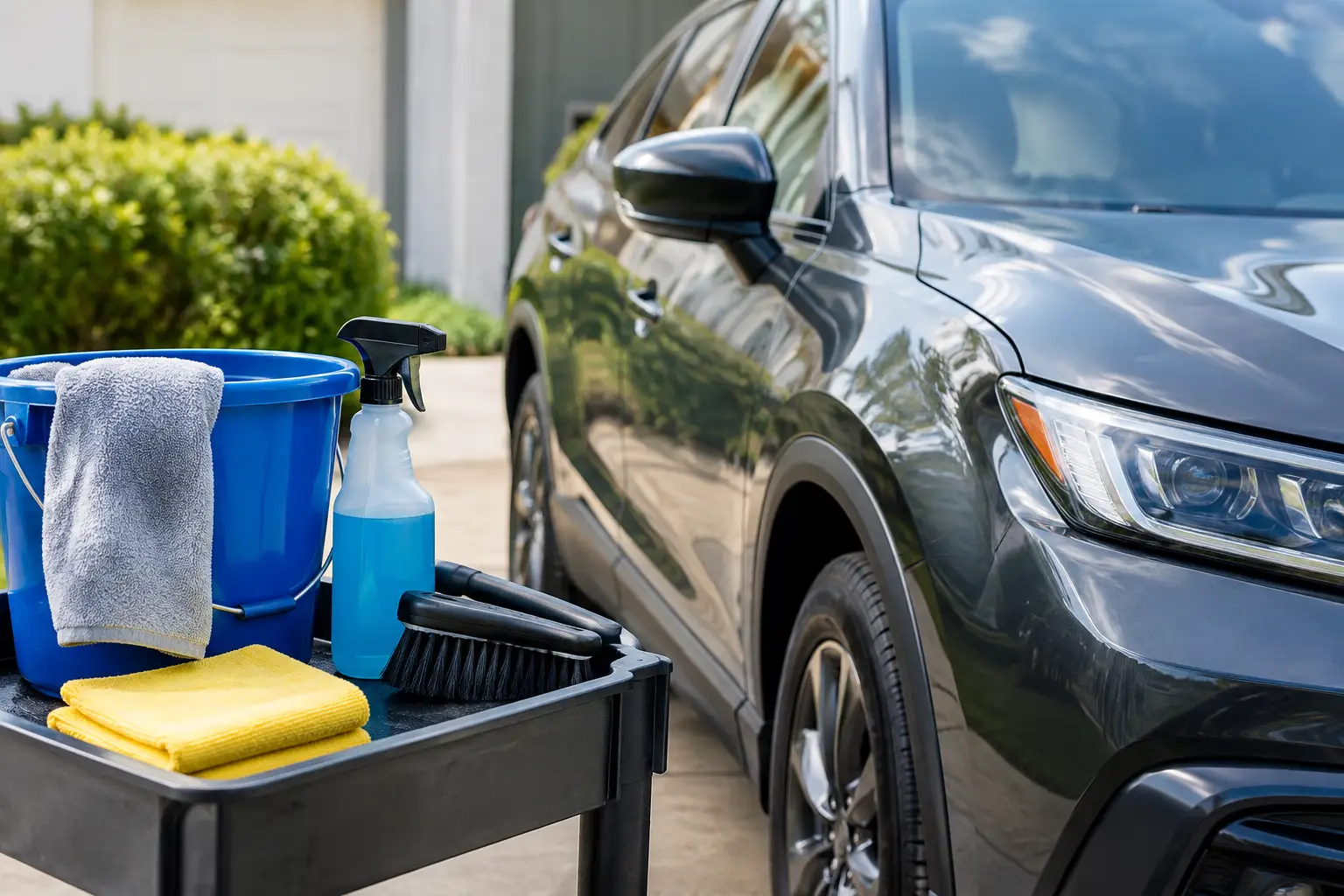
Use a car-specific soap rather than dish soap or household cleaners. Strong degreasers and kitchen soaps can strip protection and dry out exterior materials. Car wash soap is made to lift dirt while being gentler on paint, trim, and coatings.
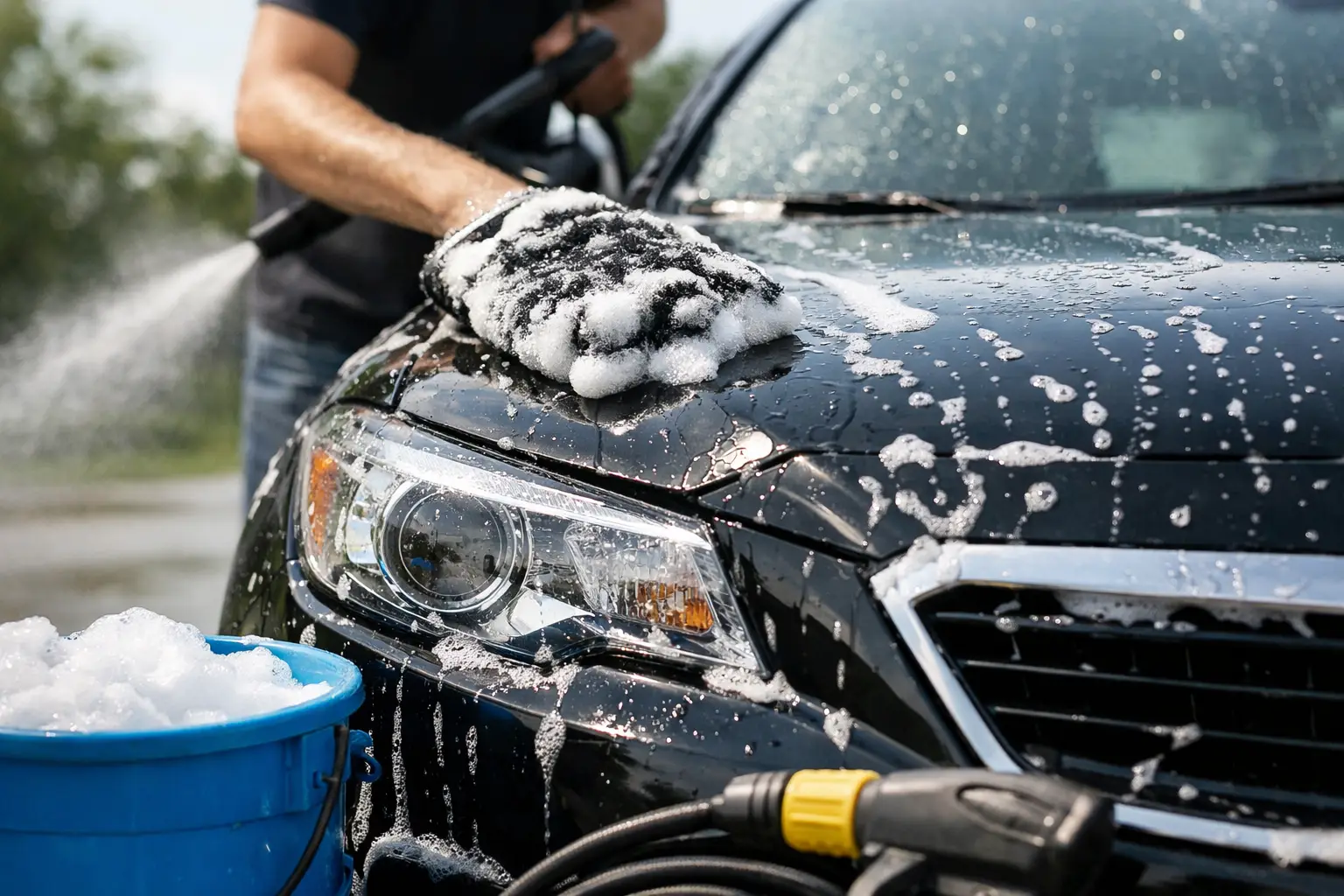
A two-bucket setup is still one of the safest at-home methods. One bucket holds clean soapy water, the other is for rinsing your wash mitt after each section. That way, the grit you pull off the lower panels does not go right back onto the hood. Use a clean microfiber mitt instead of a sponge, because microfiber tends to trap particles away from the surface a bit better.
Wash from the top down in straight passes, not tight circles. The roof, glass, hood, and upper doors are generally cleaner than rocker panels and rear lower sections. Saving the dirtiest areas for last helps keep the wash media cleaner through the process.
Rinse often. If soap starts drying on the vehicle, you are moving too slowly for the conditions. It is better to wash one section at a time than coat the whole car and race the sun.
Drying is part of washing safely too. Letting a car air dry can leave mineral spots, especially if your water is hard. Use clean microfiber drying towels or a vehicle dryer if you have one. Patting or lightly pulling the towel across the surface is safer than pushing hard.
Where drivers get into trouble
Most paint damage does not come from one dramatic mistake. It usually comes from repeated small ones. Using the same towel on paint and wheels is a classic example. Wheels collect brake dust and road grit that should stay far away from painted panels.
Another problem is over-scrubbing stuck-on debris. Bug splatter, bird droppings, and spring pollen film can be stubborn, but pressure is not the answer. Let soap dwell for a short time, rinse again, and repeat if needed. Aggressive scrubbing can leave marks that are much harder to fix than the original mess.
Automatic brush washes can also be a concern for drivers trying to protect their finish. Friction-based systems may clean aggressively, but they also increase the chance of fine scratches and swirl marks, especially when brushes are carrying leftover debris from previous vehicles. That trade-off is not worth it for many car owners.
A safer option for busy drivers
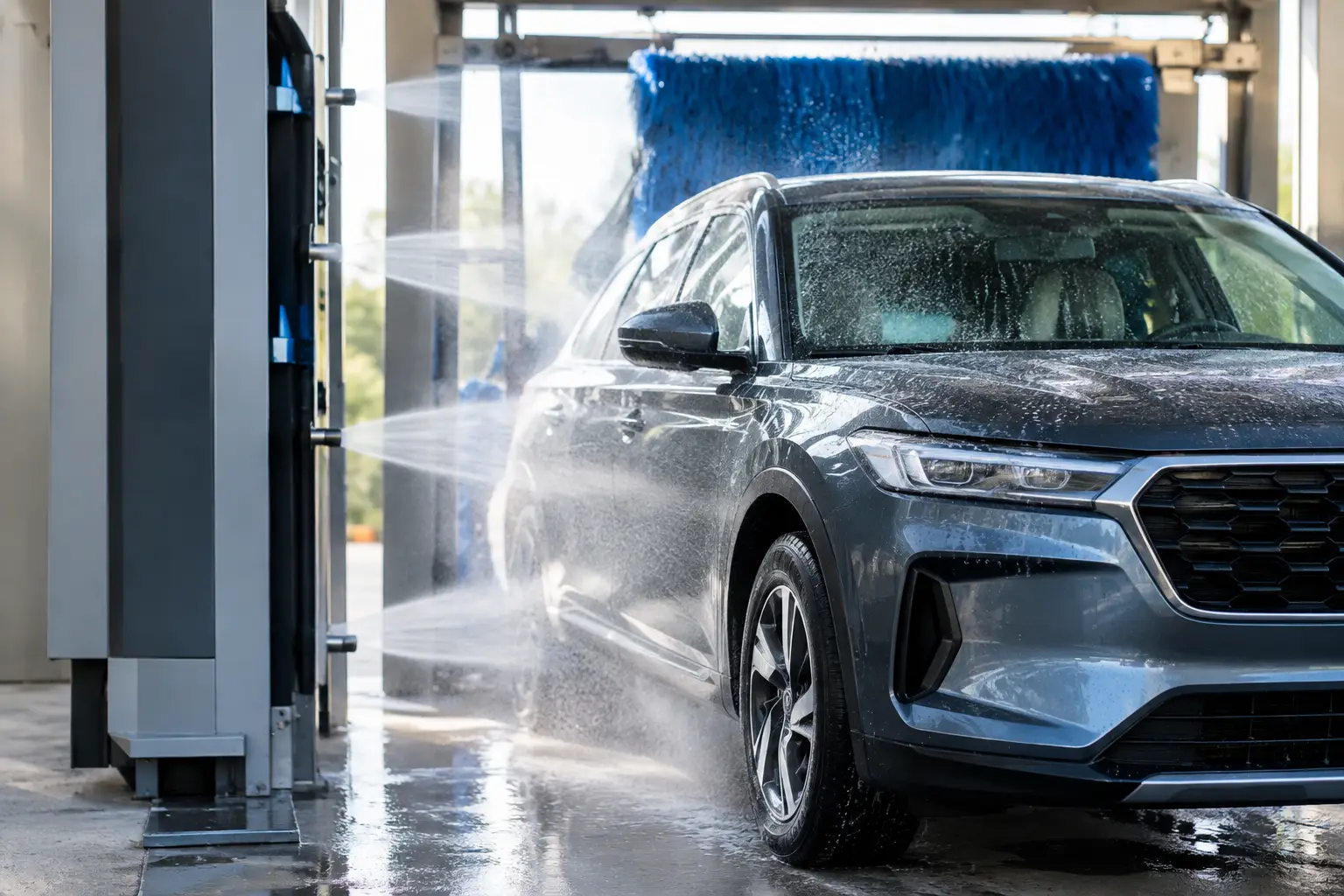
For a lot of people, the safest and most practical answer is not a driveway wash at all. Touchless washing reduces direct contact with the vehicle, which helps lower the chance of friction-related paint damage. Instead of relying on brushes to do the work, it uses cleaning solutions, pressure, and rinse cycles to remove grime from the exterior.
That approach makes a lot of sense during New Hampshire winters and muddy shoulder seasons, when vehicles pick up heavy contamination fast and most people do not want to hand wash in freezing temperatures anyway. If your schedule is full, a touchless wash is often the easier way to stay consistent. And consistency matters. Salt and grime are easier to remove when they are not left baking onto the surface for weeks.
Black Dog Car Wash is built around that idea - safe, effective exterior cleaning without brushes touching your vehicle. For drivers who want a dependable wash without the guesswork, touchless service can be the right middle ground between a careful hand wash and a more abrasive automatic option.
How to wash car safely in winter
Winter changes the rules a bit. The priority is not perfection. It is getting salt and slush off the vehicle before they sit too long. Focus on frequent rinsing and exterior cleaning, especially after storms or long highway drives.
If you wash at home in cold weather, watch the temperature. Water can freeze on seals, handles, and pavement quickly. That creates both a vehicle issue and a safety issue for you. In many cases, a professional wash is simply the smarter move during freezing conditions.
Try not to wait until the car looks terrible. Salt can be harder to remove once it dries and layers up. Regular washes are safer than rare, aggressive scrubbing sessions. Your lower panels, wheel arches, and rear end usually need the most attention.
How often is safe enough
It depends on where and how you drive. A commuter on treated highways in winter may need more frequent washes than someone making short local trips in mild weather. During pollen season, you might wash more often for visibility and surface care. During muddy spring thaws, buildup on the lower body can happen almost overnight.
As a general rule, washing every couple of weeks is a solid baseline for many drivers, then adjusting based on weather and road conditions. In winter, more often is usually better. In dry summer stretches, you may have a little more flexibility.
A few final details that matter
Use separate tools for wheels and paint. Replace worn towels and mitts before they become part of the problem. Avoid washing in direct sun when you can. And if a surface feels gritty, your first move should be more rinse, not more pressure.
If your vehicle has delicate trim, matte finishes, or aftermarket wraps, check care recommendations before using any product. Safe washing is never one-size-fits-all. The right method depends on your vehicle, the level of grime, and how much time you realistically have.
The best wash is the one you can do regularly without beating up your finish. Keep it simple, stay gentle, and remember Beau would probably approve of anything that keeps mud off the doors and scratches off the paint.