A New Hampshire road can make a clean car look neglected in a hurry. One commute after a winter storm can leave behind salt spray, slush, and sandy grit. Spring brings pollen, summer brings bug residue, and fall has a way of depositing leaves and mud everywhere. Learning how to wash car regularly is less about chasing a showroom shine and more about keeping everyday buildup from sitting on your vehicle longer than it should.
A regular wash routine protects the look of your car, helps you spot issues early, and makes each visit faster. The right schedule depends on the season, where you drive, and where you park. What matters most is being consistent - especially when the roads are working against your finish.
Why regular car washing matters in New Hampshire
Road salt is one of the biggest reasons to keep up with washing during winter. Salt and brine are effective for safer roads, but they can cling to wheel wells, rocker panels, bumpers, and the underside of your vehicle. Left in place, that residue holds moisture and can contribute to corrosion over time.
Dirt is not always harmless, either. Fine road grit can rub against paint when wiped by hand, while bird droppings, tree sap, and bug splatter can become tougher to remove the longer they sit. A wash does not make a vehicle invincible, but it clears away contaminants before they have more time to cause trouble.
There is also the practical side. A clean windshield, mirrors, backup camera, headlights, and taillights make driving easier. When the weather turns gray, wet, or snowy, clear visibility is worth more than a nice-looking exterior.
How often should you wash your car?
For many local drivers, every two weeks is a realistic baseline. If your car is garage-kept, used lightly, and driven mainly on clean roads, you may be able to stretch that schedule a bit. If you commute daily, park outside, travel on treated roads, or live near dirt roads, weekly washing may make better sense.
During winter, wash more often when salt is visible on the lower half of the car or after repeated storms. You do not need to wait for a warm, sunny day. Removing fresh salt and grime is generally more helpful than letting it build up until spring.
In spring, pollen can coat paint and glass quickly. In summer, focus on bugs, dust, and sap. Fall washing helps remove leaf residue and mud before freezing temperatures arrive. Your routine does not need to be rigid. Let the conditions tell you when the vehicle needs attention.
Choose a wash method that respects your finish
Not all car washes clean the same way. Traditional friction washes use brushes or cloth materials that physically contact the vehicle. While these systems can be effective, some vehicle owners prefer to avoid that contact, particularly when there may be road grit on the paint.
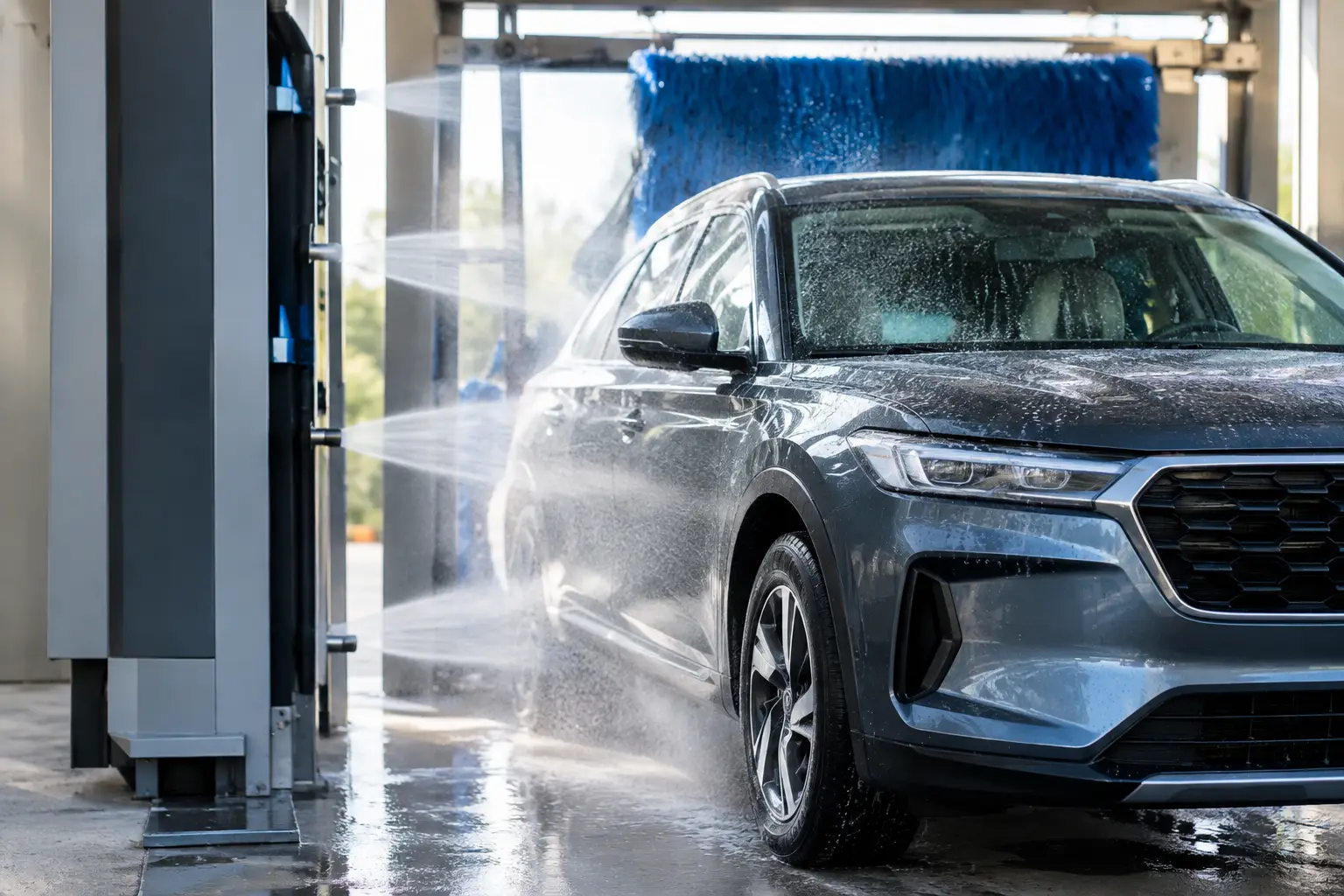
A touchless wash uses high-pressure water and cleaning solutions to lift away dirt without brushes touching the exterior. That makes it a practical option for drivers who want regular cleaning without added friction from wash materials. It is especially useful when you need to get winter residue off the car quickly and safely.
Touchless does have a trade-off: heavy, baked-on grime may occasionally need more than one pass, and it cannot correct scratches, oxidation, or old stains in the paint. Still, for routine maintenance, it offers a simple way to keep contaminants from accumulating between more involved detailing services.
A simple routine for regular washes
Before entering a wash, take a quick look around your vehicle. Close all windows and the sunroof, fold in mirrors if your vehicle manufacturer recommends it, and remove loose items from truck beds or roof racks. If there is thick mud packed around the wheels, a pre-rinse can help loosen it.
Choose a wash level that fits the condition of your car. A basic wash may be enough after a light rain or dusty commute. After salty roads, muddy travel, or several weeks without cleaning, use a wash that provides a more thorough exterior rinse and underbody attention when available.
After the exterior wash, do not overlook the places you touch and look through every day. Vacuum floor mats and seats, clear trash from door pockets, and wipe interior glass with an automotive-safe cleaner. A few minutes at a vacuum station can make the whole vehicle feel better maintained, not just cleaner from the curb.
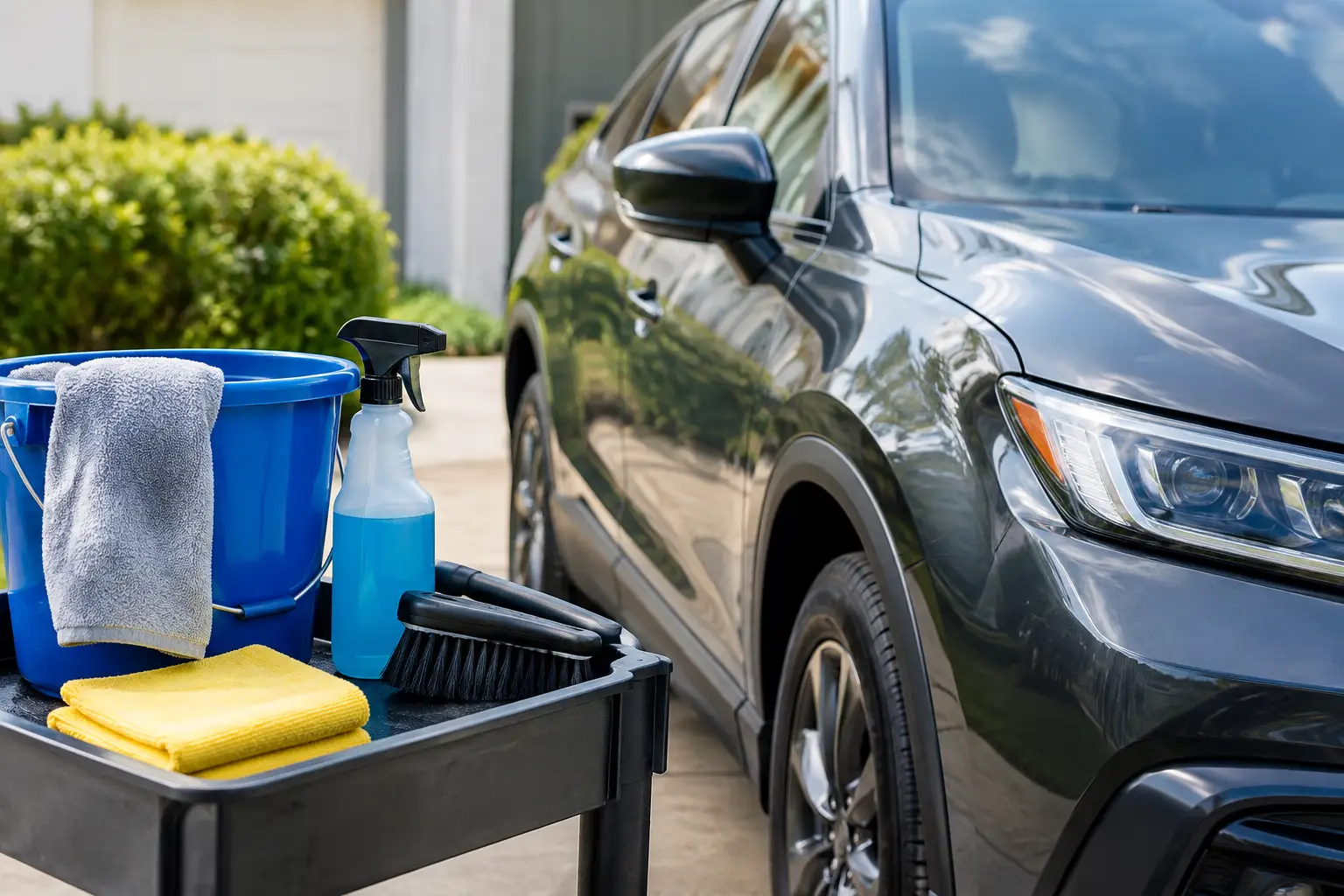
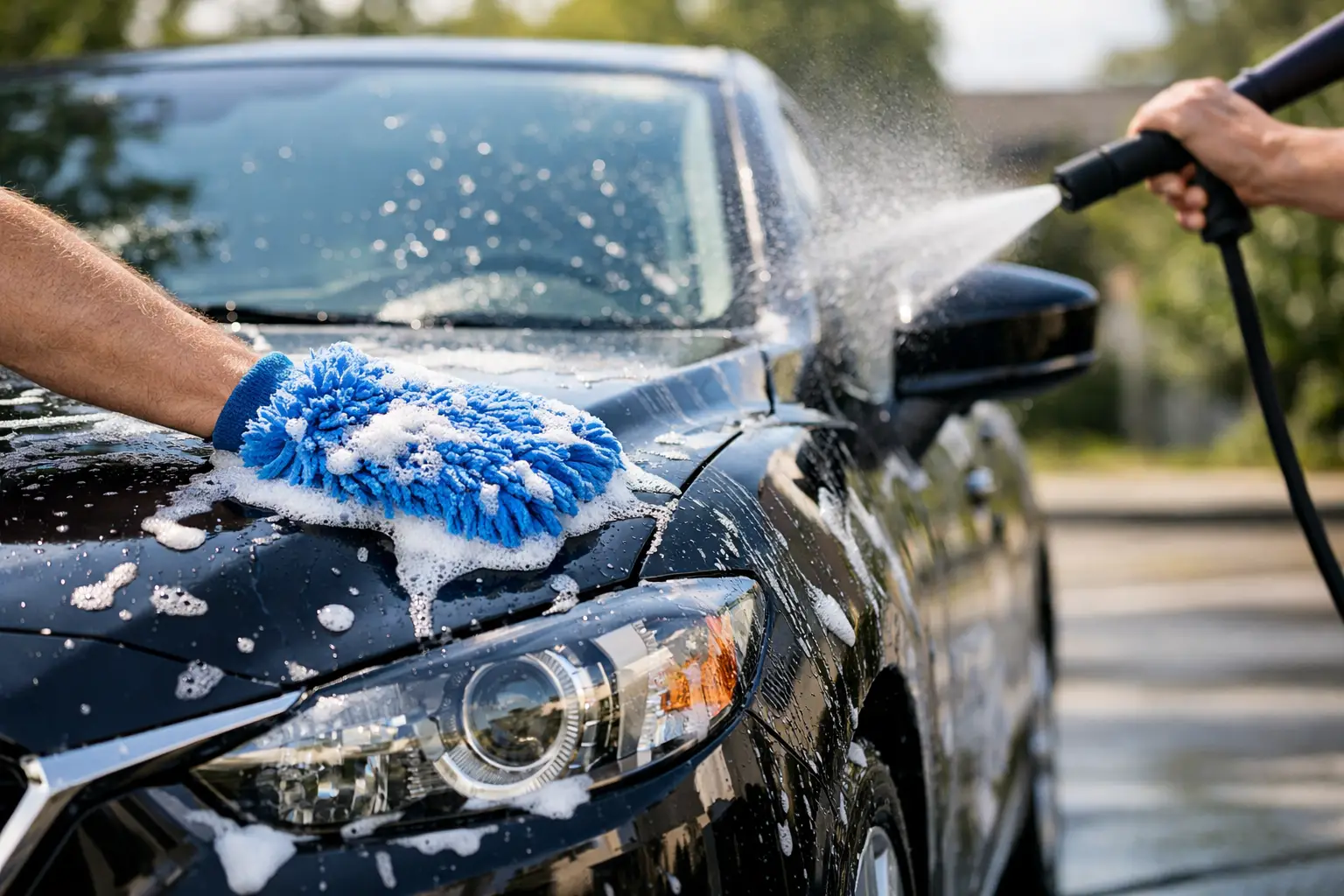
If you wash at home, use car-specific soap, clean microfiber towels, and separate tools for wheels and paint. Household dish soap can strip protective products, and a single dirty sponge can drag grit across the finish. Avoid washing in direct sun when possible, since water and soap can dry too quickly and leave spots.
Pay attention to the lower areas of the vehicle
The paint on the doors gets most of the attention, but the lower surfaces take the hardest hit. Rocker panels, wheel wells, bumpers, and behind the tires collect salt, sand, and slush. These are the areas to watch after winter driving and wet spring roads.
Do not forget license plates, cameras, sensors, headlights, and windshield wipers. A dirty backup camera is frustrating at best, and a salt-coated headlight lens can reduce useful light when you need it most. Cleaning these small areas regularly is part of taking care of the car, not an optional extra.
For vehicles with specialty finishes, aftermarket accessories, or known paint concerns, check the owner's manual or consult a detailing professional. Some finishes and protective films have specific care instructions. Regular washing should be easy, but it is always smart to follow the guidance for your particular vehicle.
Make the routine convenient enough to keep
The best wash schedule is the one you will actually follow. Build it into errands, your commute, or a weekend reset rather than treating it as a major project. A 24/7 wash is useful when your calendar does not leave room for a daytime stop - or when a late-night look at the salty side panels tells you the car has had enough.
For households with multiple vehicles, prepaid wash bundles or reloadable wash accounts can make routine visits easier to manage. Instead of debating whether the car is dirty enough, you can make regular exterior care part of your normal vehicle maintenance rhythm, right alongside fuel, tire checks, and oil changes.
Black Dog Car Wash gives Londonderry and Belmont drivers a touchless option for fitting that routine around real life, with high-powered vacuums available when the inside needs attention too. Beau would likely agree: mud belongs on paws, not on the side of your car.
When a wash is not enough
A car wash is excellent for routine dirt, salt, pollen, and road film, but it is not a substitute for every type of vehicle care. Deep scratches, paint chips, leaking seals, rust spots, stubborn sap, and interior stains may need specialized attention. The sooner you notice those issues, the easier they are usually to address.
That is another quiet benefit of washing regularly. You become familiar with the condition of your vehicle. A new chip on the hood, a loose trim piece, or uneven tire wear is easier to see on a clean car than one covered in winter grime.
Keep the routine simple: wash when conditions call for it, give extra attention to salt and lower panels, and use a cleaning method that fits how you want to care for your finish. Your next drive will feel better when the view through the windshield is clear and the road's leftovers are no longer riding along.