A car interior can look fine at a glance, then surprise you with a layer of sand under the mats, cracker crumbs in the seat seams, and enough pet hair to knit a sweater. If you want to know how to vacuum car interior spaces properly, the trick is not brute force. It is working in the right order so you do not keep knocking dirt from one spot into another.
For New Hampshire drivers, this matters even more than it does in milder climates. Winter salt, spring mud, summer sand, and fall leaves all find their way inside. A quick pass with a vacuum helps, but a more deliberate approach gives you a noticeably cleaner cabin and helps the interior wear better over time.
How to vacuum car interior without wasting time
The fastest way to get good results is to do a little prep before you turn the vacuum on. Take out the floor mats first. Remove bottles, receipts, charging cords, and anything stuffed into cup holders or door pockets. Slide both front seats all the way back, then all the way forward, so you can reach the tracks and the carpet underneath.
This step feels basic, but it saves time. Dirt loves to hide under loose items, and seat rails trap more debris than most people expect. Beau would probably say crumbs are sneaky little hitchhikers, and he would not be wrong.
Once the interior is cleared, start at the highest points and work down. Vacuum the dashboard edges, vents if your attachment allows it, and the seat surfaces before moving to the carpet. Gravity is not on your side if you begin with the floors. Dust and grit will just fall back onto the areas you already cleaned.
Start with the right vacuum setup
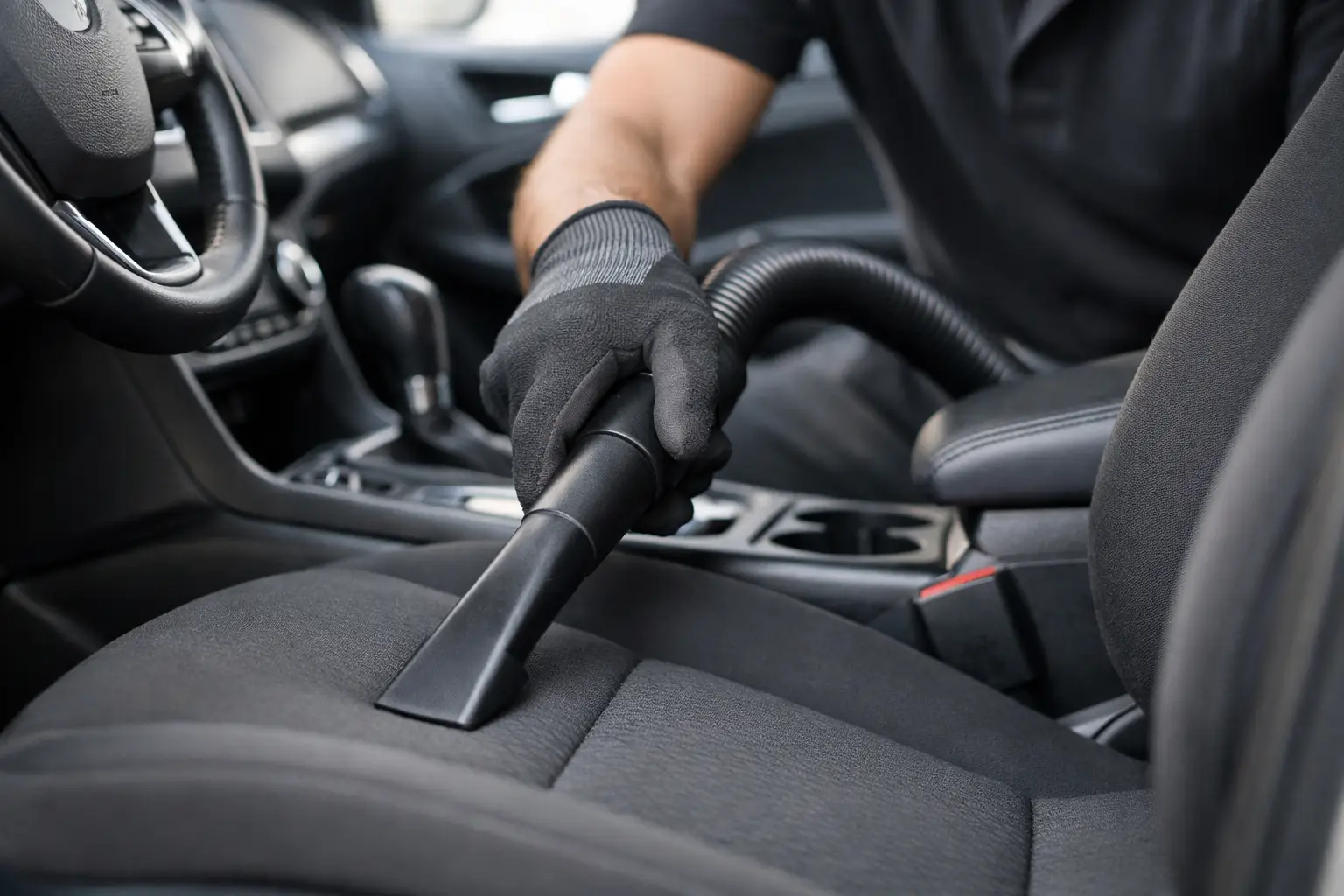
Not every vacuum does the job equally well. A strong hose vacuum with a crevice tool is usually the best option for car interiors because it reaches between seats, around the console, and into tight corners. A brush attachment helps on fabric seats and carpet because it loosens dry debris without grinding it deeper.
If you are using a household vacuum, suction matters more than size. A large machine with weak pull is less useful than a smaller vacuum with a narrow attachment and steady power. If you are at a self-serve vacuum station, take a second to check hose suction before you settle in. It is a small move that can save a lot of frustration.
There is also a trade-off with attachments. A wide head covers open carpet faster, but it misses edges and seams. A crevice tool is slower over large areas, but it is the only way to pull out the grit packed beside the seat brackets and center console. Most interiors need both.
The order that works best
Work in sections instead of bouncing around the cabin. Do the driver area completely, then the passenger side, then the back seat and cargo area. That makes it easier to track what is done and what still needs attention.
For each section, vacuum in this order: seats, seams, side pockets, floor area, then mats. If you vacuum the mats first and set them aside nearby, you may shake loose more dirt onto the floor you just cleaned.
Don’t skip the seat seams
Seat seams hold onto crumbs, dust, and pet hair like they were designed for it. Use the crevice tool slowly and pull the fabric seam open slightly with your free hand if you can do it safely. On cloth seats, short overlapping passes work better than one quick sweep. On leather or synthetic seats, use lighter pressure around stitched areas so you are not scraping the surface with a hard plastic tip.
How to vacuum car interior carpet and mats
Car carpet takes the worst abuse. It catches salt in winter, grass clippings in spring, dust in summer, and whatever your shoes dragged in after the last soccer game, grocery run, or coffee stop. The goal is to loosen embedded debris, not just skim the top.
Start by shaking out the floor mats away from the vehicle. If they are rubber, a few firm hits against the ground can knock out a surprising amount of dirt before vacuuming. If they are carpeted mats, vacuum both sides. Dirt often filters through and settles underneath, especially near the driver footwell.
Inside the car, use slower strokes than you think you need. Quick passes usually leave behind the fine grit that causes carpet to look dull and worn. Go against the carpet grain, then come back in the opposite direction. That helps lift crushed fibers and gives the vacuum a better shot at grabbing what is packed in.
The edges matter most. Run the crevice tool along the door sills, around seat mounts, and where the carpet meets the center console. Those are the places where sand and salt build up first. If your interior still looks dirty after vacuuming, chances are the problem is in the edges, not the middle.
Pet hair, salt, and stubborn debris
Some messes need more than suction alone. Pet hair is the classic example. It weaves into cloth seats and carpet, and a vacuum may only lift part of it. A rubber pet hair brush or even a damp rubber glove can help gather hair into clumps before vacuuming it away.
Road salt is another challenge for local drivers. Once it dries, it settles into carpet fibers and leaves a dusty residue behind. Vacuuming removes the loose material, but heavy salt stains may need a carpet cleaner afterward. If you are only vacuuming, focus on repeated passes and use a brush attachment to break up the crusted areas first.
For sand, patience beats force. Sand is heavy, and it slips into every crease. Tapping the carpet lightly with your hand or brush while vacuuming can help bring it to the surface. The same goes for dried mud once it has fully hardened. Let it dry, break it up gently, then vacuum. Wet mud just smears.
Small details that make a big difference
Cup holders, door pockets, and the gap beside the front seats are easy to ignore because they are awkward to reach. They are also where coins, crumbs, and mystery debris tend to collect. A narrow nozzle works best here, and if something is wedged deep in a seat gap, moving the seat through its full range can expose more of the space.
The trunk or cargo area deserves the same attention as the cabin, especially if you carry sports gear, strollers, work supplies, or groceries. Remove bins and loose items first, then vacuum the corners and around the hatch opening. Cargo areas often collect leaves and dirt that get dragged back into the passenger area later.
If you use your car hard every day, perfection is not the point. A clean, maintained interior is. Even a ten-minute vacuum done in the right order will beat a rushed twenty-minute job where half the dirt gets moved around instead of removed.
When to do a quick vacuum vs. a full interior reset
It depends on how you use the vehicle. If you commute, drive kids around, or deal with muddy boots and winter grit, a quick vacuum once a week keeps buildup under control. That kind of maintenance clean is usually enough to keep the interior from getting out of hand.
A full reset makes more sense every few weeks or after a rough stretch of weather, a road trip, or a season change. That is when you take out the mats, move the seats, hit every seam, and clean the cargo area too. The difference is not just visual. It helps with odors, keeps dirt from grinding into fabric, and makes the whole car feel better maintained.
For drivers who want a fast, effective option, high-powered vacuum stations can make the job much easier. Black Dog Car Wash offers that kind of straightforward convenience, which is especially useful when New Hampshire weather has left your interior looking like it had a long week.
A few mistakes to avoid
The biggest mistake is rushing the dirtiest areas. Seat tracks, mat edges, and seams need slower passes than open carpet. Another common one is vacuuming around clutter instead of removing it first. That almost guarantees missed spots.
Using the wrong attachment can also slow you down. Wide tools feel efficient, but car interiors are full of tight spaces. And if you are dealing with pet hair or caked salt, expecting suction alone to solve it usually leads to disappointment. Some debris needs to be loosened first.
A final one is waiting too long. Once dirt gets ground deep into carpet and upholstery, cleaning takes longer and results are never quite as good. Regular vacuuming is easier than rescue work.
A clean interior does not require a full afternoon or showroom-level obsession. It just takes a smart routine, decent suction, and a little attention to the spots most drivers miss. Do that consistently, and your car will feel better every time you get in.