A clean exterior gets noticed, but the inside of your vehicle is where daily life shows up. Sand from the soccer field, coffee grounds near the console, winter salt on the floor mats, dog hair in the cargo area - it all adds up fast. When you use self service vacuum stations with a simple plan, you can get a noticeably cleaner interior without turning a quick car wash stop into a major project.
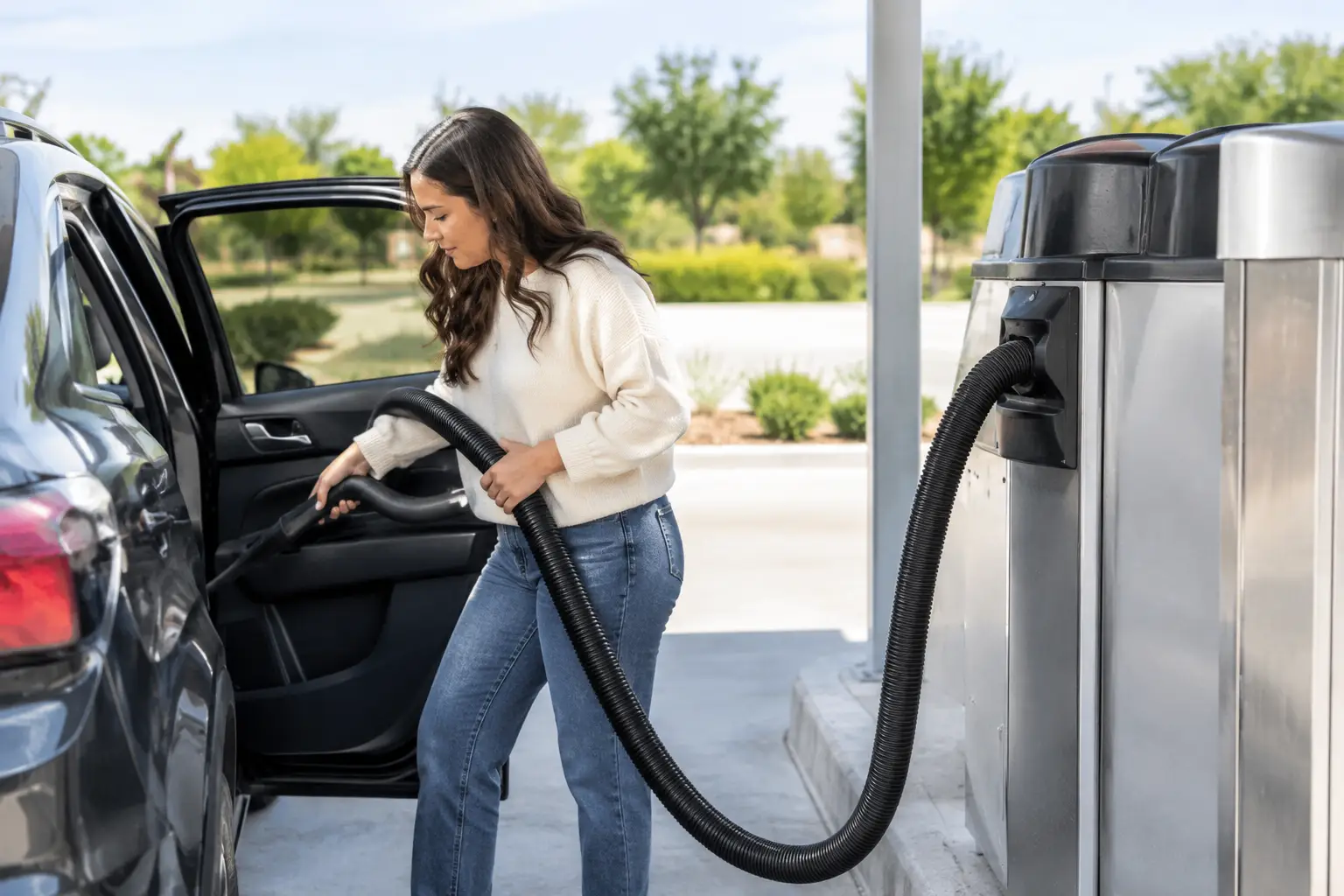
At Black Dog Car Wash, our high-powered vacuum stations give New Hampshire drivers an easy way to finish the job after a touchless wash. The key is not spending more time. It is using the time you have in the right order.
Start by clearing the interior
Do not begin vacuuming around clutter. Before you pick up the hose, remove trash, empty bottles, receipts, wrappers, and anything stored on the seats or floor. Check under the front seats, door pockets, cup holders, and the center console. Those small areas tend to collect the mess that makes an otherwise clean car feel neglected.
Take out the floor mats next. This gives you access to the carpet beneath them and lets you clean each mat separately. If the mats are dry, shake them out away from the vacuum bay before you vacuum. That quick step removes loose dirt and pebbles so the vacuum can focus on finer debris.
If you have a child seat, a work bag, sports equipment, or pet supplies in the vehicle, move them temporarily if practical. You do not need to empty your entire car every visit, but clearing the main floor area makes a meaningful difference. It also helps you avoid vacuuming around the same loose dirt twice.
Use self service vacuum power in the right order
Start high and work down. Vacuum the seats first, then the dash and console areas if loose debris has collected there, followed by the door pockets, carpets, and floor mats. Gravity does some of the work for you. If you vacuum the floor first and then brush crumbs off the seat, you have created another task.
Move the nozzle slowly over carpet and upholstery. Fast passes can miss dirt that has settled into fibers, especially on floor areas near the pedals and under the front seats. A slow, overlapping motion works better than repeatedly sweeping the hose back and forth at top speed.
Use the edge of the nozzle to reach seams in the seats, around the seat tracks, and along the trim. These are common hiding places for crumbs, gravel, pine needles, and pet hair. In winter, pay extra attention to the driver and passenger footwells, where sand and salt can collect after just a few trips.
Do not forget the trunk or cargo area. It is easy to focus on the seats and call it done, but cargo areas often hold muddy boots, grocery bags, sports gear, and pet blankets. A quick pass can make a big difference, particularly if you use your vehicle for work or family errands.
Give floor mats their own pass
Once the vehicle carpet is clean, vacuum the mats separately. Lay each mat flat and work across it in sections. Rubber and all-weather mats usually need attention in the grooves, where dried mud, sand, and road grit settle. Carpeted mats benefit from slow passes in more than one direction.
If the mats are wet from snow, rain, or melted ice, vacuuming will not remove the moisture. It can still remove loose grit, but let the mats dry when possible before putting them back in the vehicle. Keeping wet mats in place for long periods can leave your interior smelling stale and can make cleanup harder later.
Focus on the spots that affect comfort
A full interior detail is great when you have the time, but routine vacuuming is about staying ahead of buildup. Give priority to the areas you see and use every day: the driver’s footwell, front seats, rear seat floor area, cup holders, and cargo space.
For families, the back seat deserves a few extra minutes. Snacks, school projects, and weekend activities have a way of leaving evidence behind. For commuters, focus on the driver’s area, console, and front passenger seat. If you travel with a dog, vacuum the seating and cargo surfaces regularly before hair becomes packed into the fabric. Beau would likely say that a little fur is a signature, but even he would agree there is such a thing as too much.
Car owners who want to protect their interior should also pay attention to salt and grit. Road salt can be abrasive, and it gets tracked into carpets and mats throughout a New Hampshire winter. Removing it regularly helps prevent that dirty, worn look from taking hold before spring arrives.
When to use self service vacuum stations
The best time to use self service vacuum equipment is after an exterior wash, when your vehicle already looks refreshed and you want the interior to match. It is also useful between washes when the outside is still reasonably clean but the cabin needs attention.
Frequency depends on how you use your vehicle. A solo commuter may only need a quick vacuum every few weeks. Families, pet owners, rideshare drivers, and anyone who spends a lot of time on muddy roads may benefit from a weekly reset. During winter and mud season, more frequent visits can keep salt, sand, and moisture from becoming a larger cleanup job.
There is a trade-off between speed and thoroughness. A five-minute vacuum is enough to remove visible trash and fresh debris. A more complete clean takes longer because you are lifting mats, reaching under seats, and cleaning the cargo area. Both are worthwhile. The best routine is the one you can keep up with.
Avoid the mistakes that slow you down
Vacuuming before removing trash is the most common time-waster. So is trying to force the nozzle into every tight gap. Use the vacuum effectively on the areas it can reach, then handle small compartments with a cloth or by removing loose items by hand.
Avoid vacuuming up large objects, coins, or anything that could obstruct the equipment. If a piece of debris is too big for the hose, pick it up instead. It is better for the vacuum station and helps keep it ready for the next driver.
Also, do not overlook the space beneath and behind the seats. It is easy to skip because it requires bending down, but this is where small objects and loose dirt tend to gather. Slide the front seats forward and back as needed, then make one focused pass. You do not need to chase every speck to get a cleaner result.
Build a routine that fits your drive
The easiest way to maintain a clean car is to pair vacuuming with something you already do. After a touchless wash, take a few extra minutes for the floor mats and front seats. After a weekend trip, clean out the cargo area before Monday. After a snowy commute, remove the salt and sand from the driver’s footwell.
Keep a small trash bag or reusable container in the vehicle so wrappers and receipts do not migrate under the seats. If you carry pets, sports gear, or kids’ supplies, consider keeping a towel or cargo liner on hand. These small habits reduce the amount of work waiting for you at the vacuum station.
A clean cabin does not require a perfect detailing schedule. It takes a quick reset before the mess becomes permanent. Visit when it is convenient, work from the seats down to the mats, and leave with an interior that feels ready for the next mile.