The white crust along your rocker panels is not just ugly. It is the start of corrosion, stained wheels, and a winter-long fight that gets harder the longer salt sits. If you are wondering how to remove road salt from your car without wasting half your day, the short answer is simple - rinse it off early, wash it thoroughly, and pay extra attention to the spots you cannot easily see.
In New Hampshire, that matters more than most drivers would like. Salt, brine, sand, slush, and freeze-thaw cycles keep working long after the roads look dry. A car can seem clean from ten feet away and still be carrying a layer of salt underneath that keeps chewing away at metal parts. Beau would probably call it a bad habit with a wagging tail - it sticks around unless you make it leave.
Why road salt is such a problem
Road salt helps keep roads safer in winter, but it is rough on vehicles. When salt mixes with moisture, it creates the conditions that accelerate rust and corrosion. That affects more than paint. Brake lines, suspension parts, exhaust components, wheel wells, and the undercarriage are all in the line of fire.
The biggest mistake drivers make is waiting until spring to deal with it. By then, salt has had weeks or months to settle into seams, cling to underbody surfaces, and build up around wheels and trim. Regular removal is not about keeping your car pretty. It is basic maintenance.
How to remove road salt the right way
If you want results, start with plenty of water. Salt needs to be dissolved and flushed away, not just smeared around with a mitt or towel. That is why a strong rinse is step one every time.
Start with a full exterior rinse
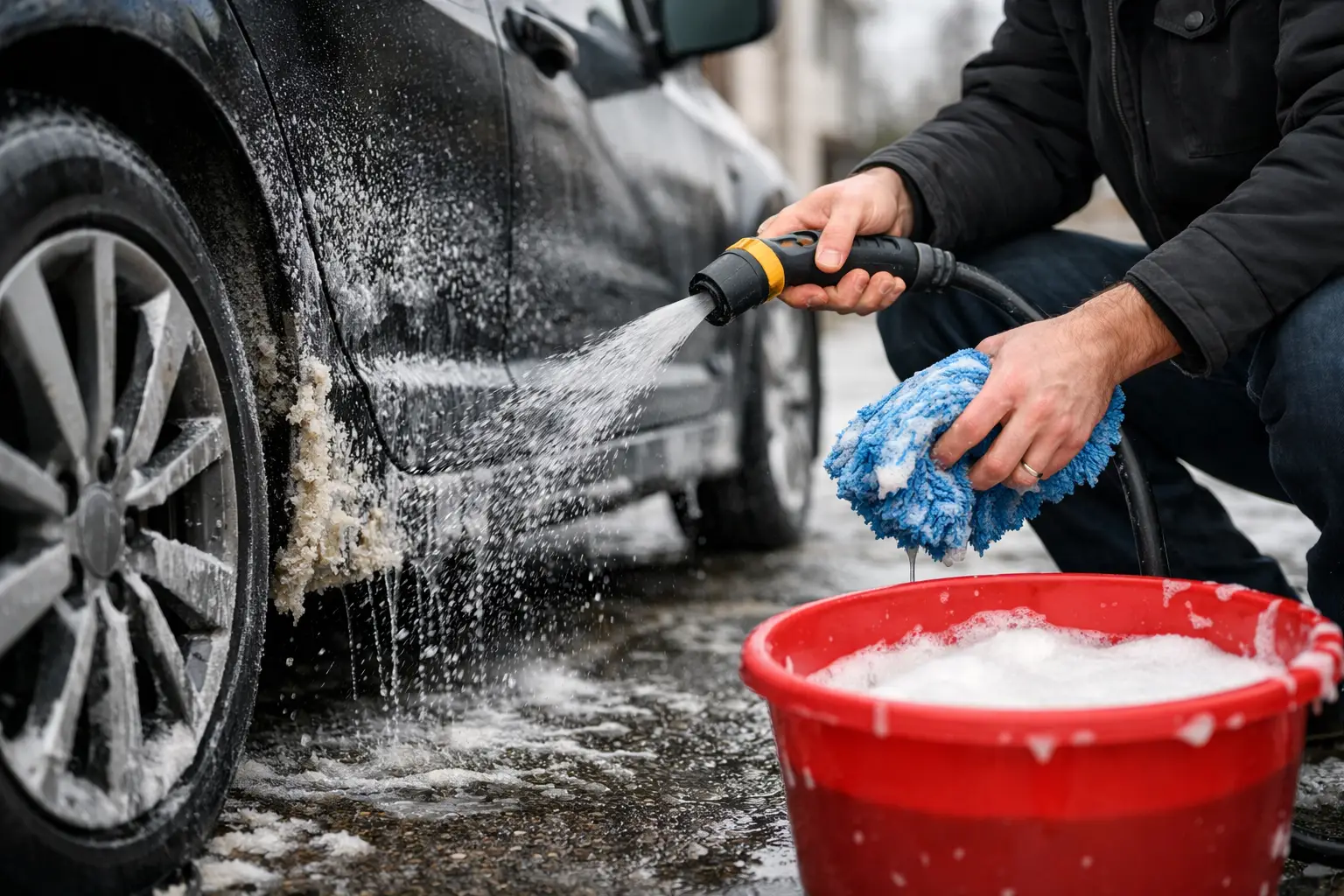
Focus first on the lower half of the vehicle. Rocker panels, bumpers, wheel wells, and behind the wheels usually carry the heaviest buildup. If you are washing at home, use a hose with decent pressure. If buildup is thick, let water run over the area for a minute before doing anything else.
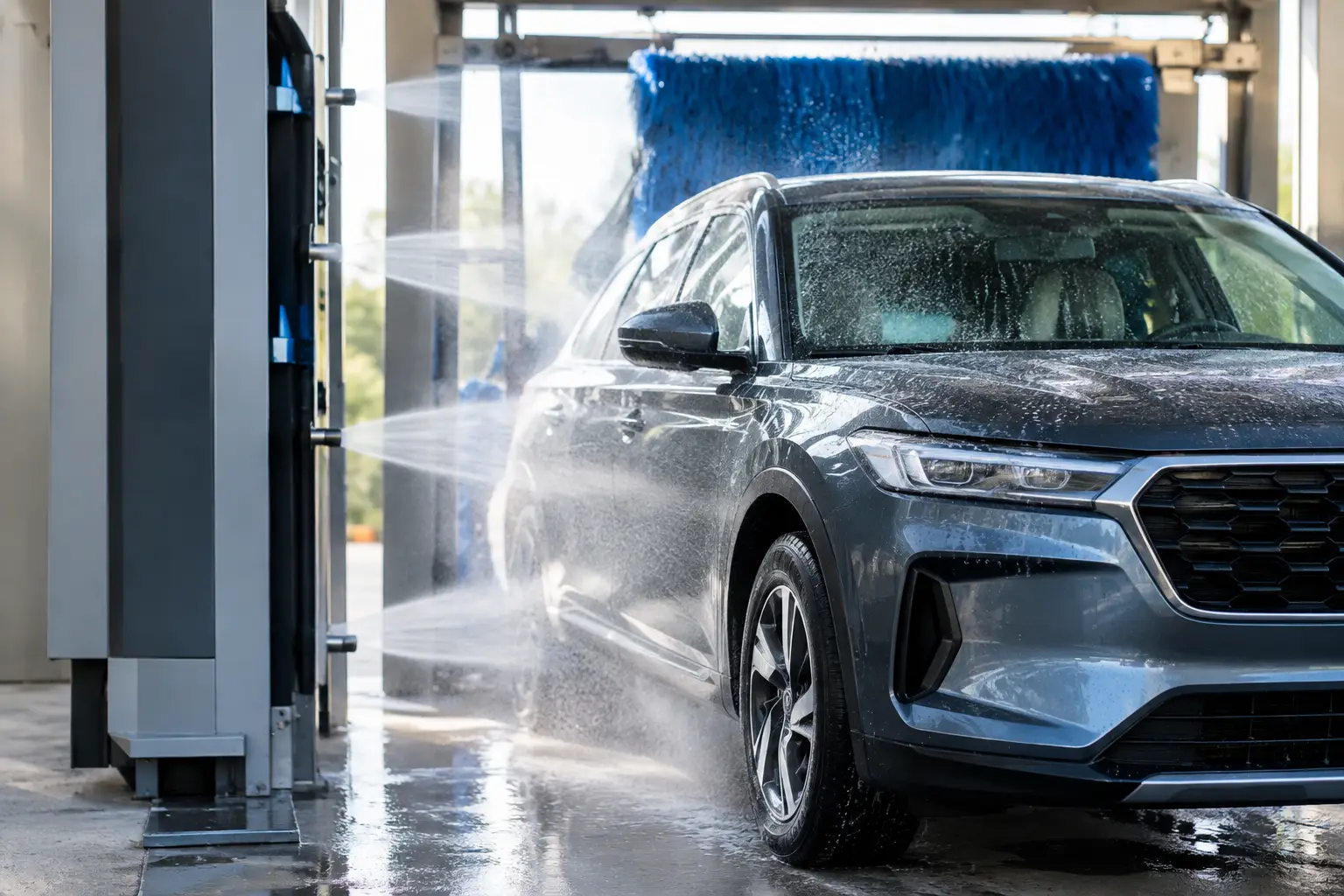
Cold weather changes the process a bit. If temperatures are near freezing, home washing can be frustrating fast. Water freezes, hands go numb, and a quick rinse often turns into a partial job. In those conditions, a touchless wash is usually the better move because it gives you more pressure, better coverage, and an easier way to clean the vehicle top to bottom.
Do not skip the undercarriage
This is the part many people miss, and it is where the damage starts. Knowing how to remove road salt from a car means understanding that the undercarriage matters just as much as the paint.
A basic driveway rinse will not always reach deep underneath. You need strong underbody flushing to knock loose the salt and grime packed into hard-to-reach areas. That is especially important after storms, long commutes, or any stretch of driving when roads were heavily treated.
If you have to choose between making the hood shine and getting the undercarriage clean, choose the undercarriage. Every time.
Use car wash soap, not dish soap
Once the loose salt is rinsed away, wash the exterior with a soap made for vehicles. Dish soap can strip protection and dry out surfaces, which is not what your paint needs in winter.
Work from the top down, but spend extra time on lower doors, fenders, and rear panels where slush tends to collect. A soft wash mitt is fine for painted surfaces, but the key is not grinding grit into the finish. Rinse often so you are lifting contamination away instead of dragging it across the paint.
Clean the wheels and wheel wells
Wheels take a beating in winter. Brake dust, slush, and salt all build up there fast, and wheel wells hold onto grime longer than most people realize.
Use a wheel-safe cleaner if needed, especially if the salt has dried into a stubborn film. If your wheels have a delicate finish, check that the cleaner matches it. Some stronger products work well on heavy grime but can be too aggressive for certain surfaces. This is one of those it-depends situations where gentler is usually smarter unless buildup is severe.
Rinse again and dry what you can
After washing, rinse thoroughly. Any soap or loosened residue left behind just gives grime another chance to stick. Drying helps too, especially around door jambs and seams where water can linger and freeze.
You do not need a perfect hand-dry every time in winter, but removing excess water is helpful when temperatures are low. It can also reduce spotting and keep doors from freezing shut later.
How often should you wash off road salt?
More often than many people do. If roads are actively being treated, a weekly wash is a good target. After a major storm or a stretch of messy commuting, sooner is even better.
You do not need to wait until the car looks filthy. Salt often stays behind after slush dries, and that thin chalky residue is enough to cause problems over time. A quick, regular wash beats an occasional deep clean when it comes to winter protection.
For drivers who commute daily, park outside, or log a lot of highway miles, consistency matters. Salt buildup is easier to remove when it is fresh. Once it cakes on, every wash takes more effort.
Can you remove road salt at home?
Yes, but there are trade-offs. If the weather is mild, you have access to good water pressure, and you can reach underneath the vehicle effectively, home washing can work. It gives you control and lets you focus on problem spots.
The downside is that many home setups are not ideal for winter. Weak hose pressure, frozen driveways, and limited undercarriage access make it harder to do a complete job. That is where a touchless wash can make life easier. You get strong rinse power, better underbody coverage, and a safer clean for the finish without physical brushes touching the vehicle.
For many New Hampshire drivers, convenience matters almost as much as technique. If a wash is easy to fit into your routine, you are much more likely to stay ahead of salt instead of reacting once damage starts.
What not to do when removing road salt
A few shortcuts cause more trouble than they solve. One is wiping dry salt off a dirty car with a rag. That can grind abrasive grit into the paint and leave scratches.
Another is assuming one warm day means the risk is over. Salt stays on roadsides, in puddles, and underneath your vehicle long after the last snowfall. Winter grime has a way of hanging around.
It is also not a great idea to ignore the underbody because the exterior looks clean. A shiny hood does not mean the vulnerable parts underneath are protected.
Extra protection helps, but it does not replace washing
Wax, ceramic products, and other paint protection can help road grime release more easily. They are useful, especially before winter starts, but they are not magic. Salt still needs to be removed.
Think of protection as making cleanup easier, not making cleanup optional. If your car already has some surface protection, great. Keep washing it anyway. If it does not, regular touchless cleaning still goes a long way toward reducing buildup and keeping the vehicle in better shape through the season.
A practical winter routine that works
The best approach is not complicated. Wash after storms, keep the undercarriage in the rotation, and do not wait for perfect weather. Even a fast, well-timed wash can make a real difference when salt is fresh.
For local drivers trying to stay ahead of winter grime without turning car care into a project, a dependable touchless wash is often the simplest answer. Black Dog Car Wash gives New Hampshire drivers an easy way to rinse away salt, protect the finish, and keep moving without the hassle of a long stop.
Road salt is part of winter here, but long-term damage does not have to be. Stay consistent, rinse it off before it settles in, and your car will have a much better shot at coming out of the season looking like itself.