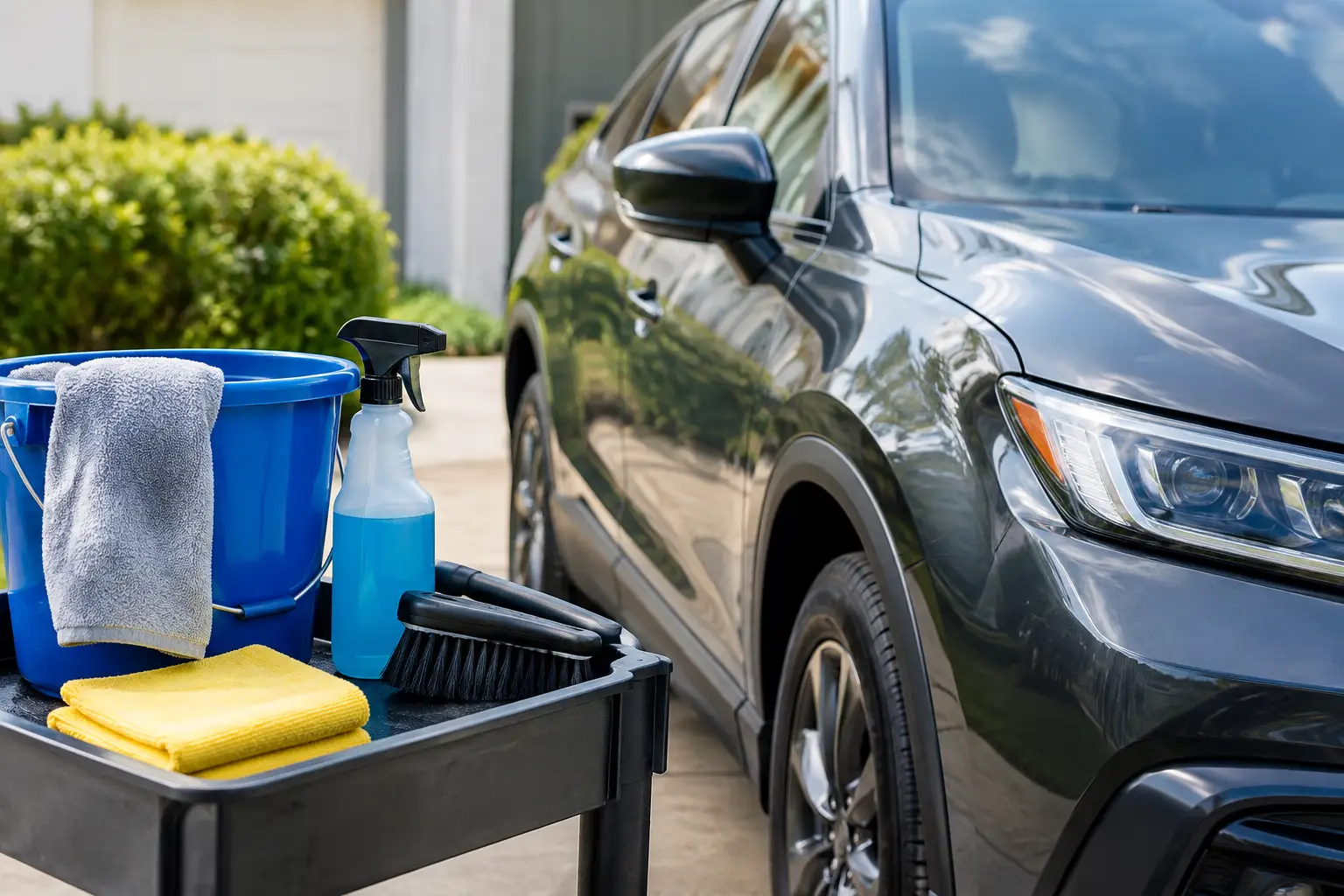
That brown crust under your car is not just ugly. In New Hampshire, it is often a mix of salt, sand, slush, and road grime that sticks around long after the roads look clear. If you are wondering how to clean car undercarriage areas properly, the goal is simple - flush out what causes corrosion before it has time to settle in.
The undercarriage does not get much attention because you rarely see it. That is exactly why it gets neglected. Through winter and mud season especially, buildup under the vehicle can trap moisture against metal parts, coat suspension components, and make rust more likely over time. A quick rinse helps, but a smart undercarriage cleaning routine works better.
Why undercarriage cleaning matters
Most drivers focus on paint, glass, and wheels. Fair enough - those are the parts you see every day. But the underside of your vehicle takes a beating from salted roads, wet pavement, gravel, and oily grime. If that layer sits there week after week, it can wear away at protective coatings and speed up corrosion.
This matters even more for daily drivers, commuters, and family vehicles that see all kinds of weather. Salt is the biggest problem in colder months, but spring mud and summer road film are not harmless either. They hold moisture and dirt in places that do not dry quickly.
A clean undercarriage will not make a vehicle immortal. It will, however, reduce the kind of buildup that leads to expensive problems later. Think of it as basic maintenance, not cosmetic extra credit.
How to clean car undercarriage safely
The safest approach depends on your setup, your vehicle, and how much grime is packed underneath. For most drivers, the goal is not to scrub every inch by hand. It is to rinse thoroughly, avoid damaging components, and clean often enough that buildup never gets too heavy.
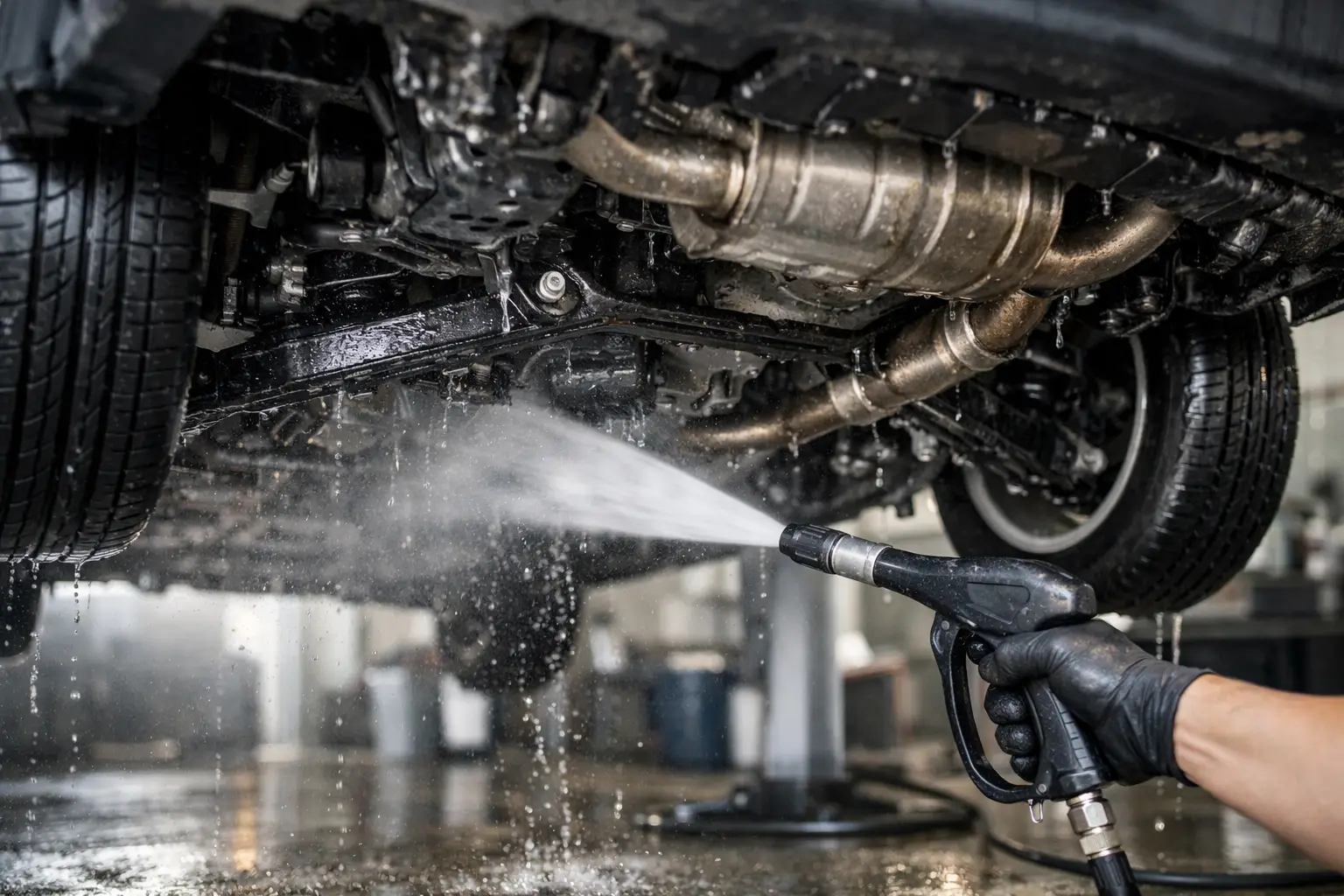
If you are cleaning at home, start by parking on a level surface with good drainage. Let the vehicle cool if you have been driving. You do not want to spray cold water onto very hot exhaust parts. Use a hose, pressure washer on a moderate setting, or an undercarriage attachment designed to spray upward beneath the vehicle.
Keep the water moving. Focus on wheel wells, frame rails, suspension areas, and the spaces behind tires where salt and mud collect. Work from front to back and then back to front if possible. You are trying to flush debris out, not force it deeper into tight spots.
Do not get too aggressive with pressure. More force is not always better. Very high pressure used too close to the surface can strip coatings, push water into sensitive areas, or damage aging parts. If the vehicle already has rust, be especially careful around flaky sections.
The easiest method for everyday drivers
For a lot of people, the most realistic answer to how to clean car undercarriage buildup is not a driveway setup with specialty tools. It is using a wash that includes effective underbody rinsing as part of a regular routine. That is usually faster, easier, and more consistent than waiting until the grime gets bad enough to notice.
A touchless wash can be a good fit because it cleans the vehicle exterior without brushes contacting the finish, while also helping remove grime from the lower body and underside areas. That matters if you want safe, convenient cleaning without turning a simple wash into a weekend project. Beau would probably say your back will thank you too.
The key word here is regular. One undercarriage rinse in March after a full winter of salt is better than nothing, but it is not the strongest plan. Frequent washing during salt season gives contaminants less time to stick and spread.
What you need if you wash at home
You do not need a garage full of equipment. A basic hose can help if you stay consistent, though a dedicated undercarriage wand or pressure washer attachment makes the job easier. If you use a pressure washer, keep it on a sensible setting and avoid blasting seals, boots, or exposed wiring from inches away.
Some drivers use ramps to gain more access, but that adds risk if not done correctly. If you are not comfortable lifting the vehicle or working underneath it, skip that part. There is no prize for turning routine cleaning into a safety issue.
Soap is usually not necessary for light to moderate undercarriage cleaning. Water does most of the work when the goal is removing salt and loose grime. If there is heavy grease or oily buildup, that is a different job and may call for a specific degreaser and more caution around drainage and runoff.
When to clean your undercarriage
Timing matters more than many people think. Winter is the big one. If roads have been treated, your undercarriage is collecting salt even on days when the vehicle looks fairly clean from the outside. A rinse every couple of weeks during active salt season is a solid target for many drivers. If conditions are especially messy, weekly is even better.
Spring deserves attention too. Mud season packs grime into wheel wells and lower components, and leftover salt does not magically disappear once temperatures rise. A thorough cleaning at the end of winter helps clear out what has been building for months.
Summer and fall are usually lower risk, but not risk-free. Rain, dirt roads, construction zones, and tree debris still create buildup. You may not need the same frequency as winter, but occasional undercarriage cleaning still makes sense.
Common mistakes to avoid
The biggest mistake is waiting too long. Once grime hardens and salt has been sitting for months, cleaning becomes harder and the damage may already be underway. Routine beats rescue every time.
Another mistake is spraying sensitive areas too aggressively. Modern vehicles are built to handle wet conditions, but that does not mean every connector, seal, or aging component should take a close-range pressure blast. Controlled rinsing is the better move.
It is also easy to assume one wash solves everything. It depends on the season and your driving habits. If you commute daily on treated roads, a one-time rinse will not keep up. The same goes for trucks and SUVs that see dirt roads, job sites, or frequent wet conditions.
And then there is the understandable but unhelpful habit of focusing only on what looks dirty. The undercarriage can be carrying the worst of it while the body panels look fine.
Signs your undercarriage needs attention
You do not always need to crawl under the vehicle to know it is time. If your rocker panels and wheel wells are caked with grime, there is a good chance the underside is worse. White salt residue, heavy mud splatter, and dirty runoff after a rinse are all clear signs.
You might also notice musty moisture trapped in packed debris around wheel wells or lower edges. In older vehicles, visible rust on exposed metal underneath is another cue to stay more consistent. Cleaning will not reverse corrosion, but it can help slow what comes next.
How often is enough?
There is no one schedule that fits every driver. It depends on mileage, weather, road treatment, and where you park. A garaged vehicle driven occasionally in dry weather needs less attention than a commuter car on salted highways five days a week.
For New Hampshire drivers, the practical answer is to increase frequency in winter and early spring, then scale back when road conditions improve. If you want a simple rule, wash before buildup becomes obvious. That usually means staying ahead of the mess instead of reacting to it.
A practical routine that actually works
The best cleaning plan is the one you will keep doing. For some drivers, that means a quick underbody rinse at home when weather allows. For others, it means using a convenient touchless wash on a regular schedule, especially during the months when salt and slush are nonstop.
If you are near Londonderry or Belmont, Black Dog Car Wash makes that routine easier with touchless wash options and 24/7 access, which is handy when your schedule is packed and the roads are filthy. Convenience matters because the easier it is to wash, the more likely you are to stay consistent.
Protecting your vehicle underneath is not glamorous, but it is one of the smarter habits you can build. A clean undercarriage gives salt, mud, and grime less time to do their worst - and that is a pretty good trade for a few minutes well spent.