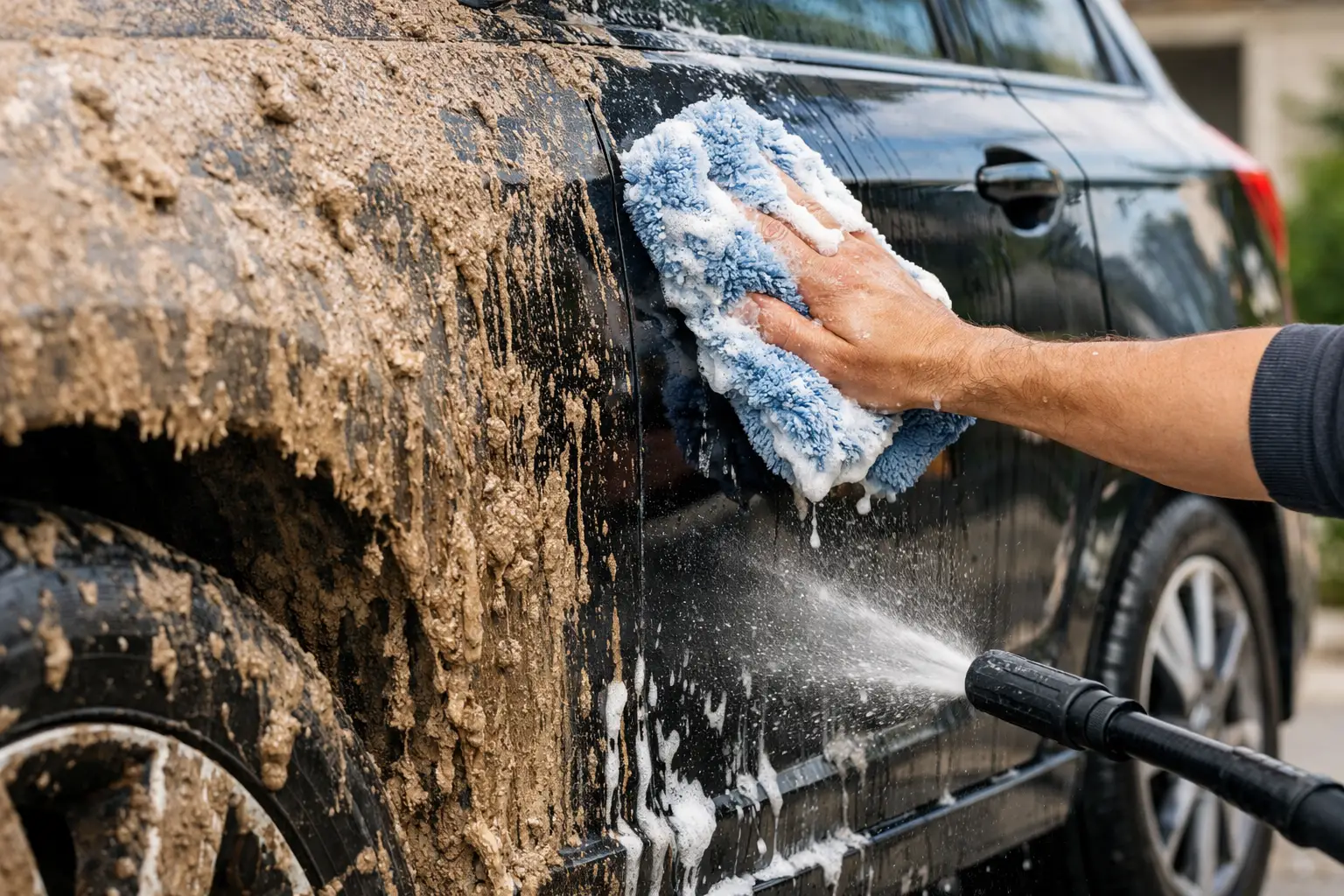
Mud is not just a cosmetic problem, especially after a wet New Hampshire commute, a muddy driveway, or a weekend near the trails. Once it dries, grit can cling to paint, pack into wheel wells, hide on the undercarriage, and turn a quick cleanup into a scratch risk. Knowing how to clean a muddy car properly means removing that abrasive dirt before anything rubs across the finish.
The rule is simple: rinse first, wash second. Trying to wipe or scrub thick mud off a dry vehicle can drag sand and small stones across the paint. A little patience at the beginning helps preserve the finish and gets better results at the end.
How to clean a muddy car safely
Start by choosing the right time and place. If the mud is still wet, it will usually release more easily. If it has dried into a heavy crust, give yourself extra time for a thorough pre-rinse. Avoid washing in direct hot sun when possible, since water and cleaning products can dry too fast and leave spots behind.
Before you begin, close all windows, check that the trunk and fuel door are secure, and remove loose items from roof racks or truck beds if they could hold mud. If your vehicle has a damaged seal, loose trim, or an area you know leaks, take care around it during the rinse.
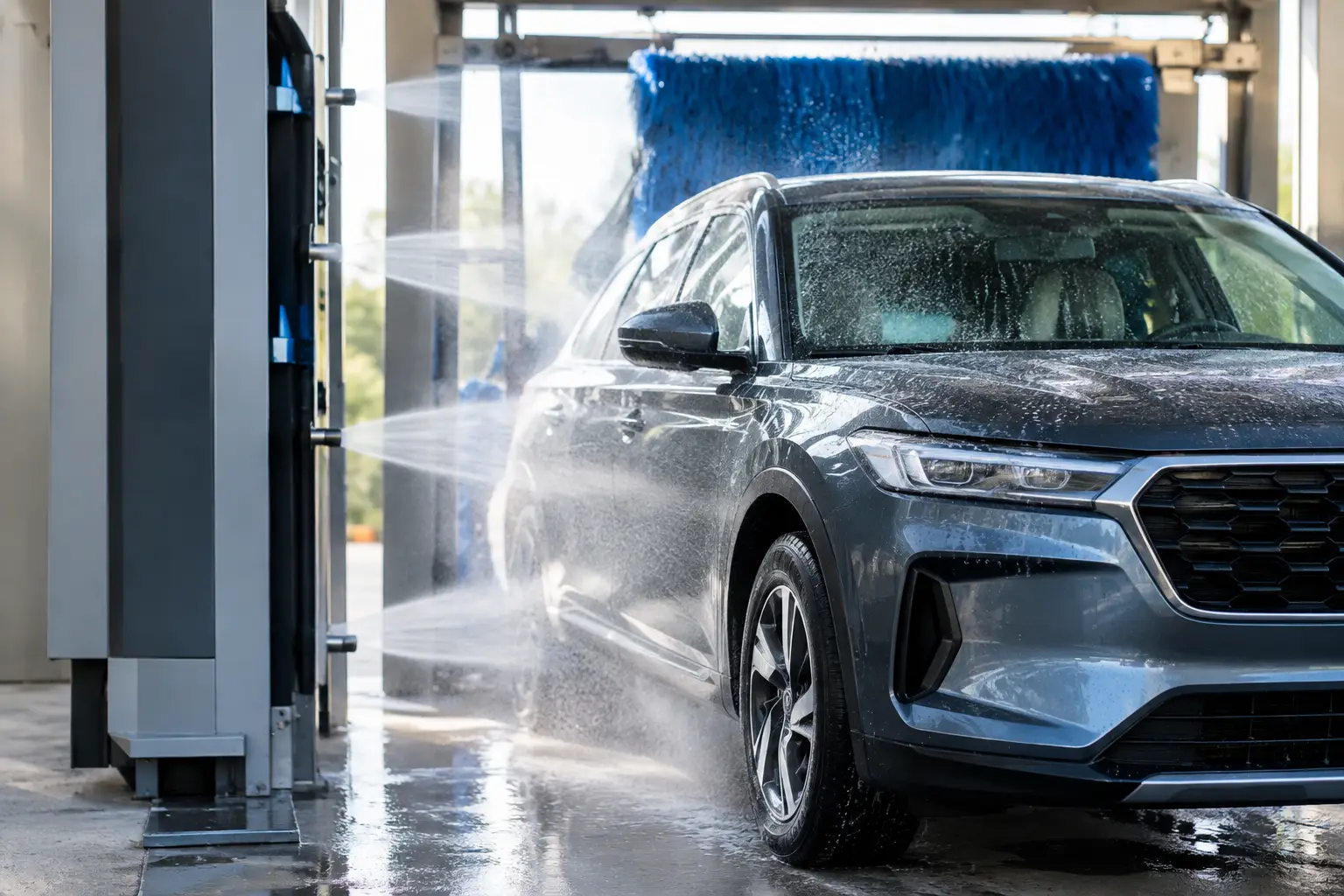
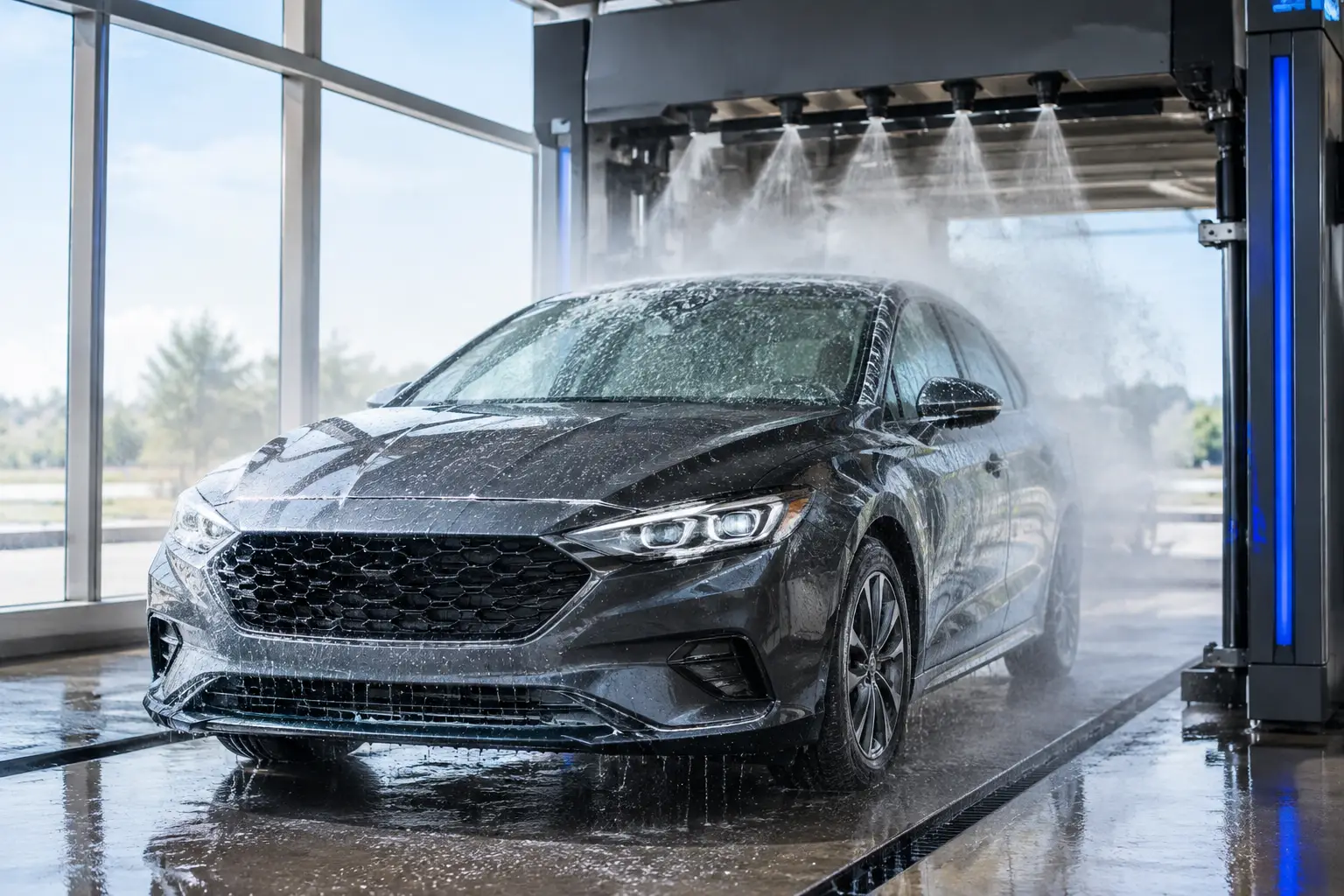
A touchless wash is an especially practical choice when mud is heavy. High-pressure water and cleaning solution can break down grime without brushes making contact with the dirty surface. That matters because mud contains more than soil. It often includes sand, road grit, salt, and small pieces of gravel that do not belong between a brush and your clear coat.
Start with a complete pre-rinse
Give the entire vehicle a generous rinse before applying any wash product. Work from the top down so dirty water runs toward the ground rather than back onto clean panels. Spend extra time on the lower doors, rocker panels, bumpers, wheel arches, and behind the tires. Those areas collect the thickest buildup.
Do not rush the wheel wells. Mud can accumulate around liners, suspension components, and the inside edges of the fenders. A steady rinse helps loosen it without requiring aggressive scrubbing. If you can still see clumps after the first pass, rinse again rather than attacking them with a towel or sponge.
Pay attention to the grille, windshield wiper area, side mirrors, door handles, and license plate frame. These small gaps trap muddy water, which can drip out later and streak a freshly cleaned car. A careful pre-rinse is what separates a decent wash from a car that looks dirty again five minutes down the road.
Clean the wheels and lower panels carefully
Wheels and tires are usually the dirtiest part of a muddy vehicle. They also face the biggest mix of contaminants: mud, brake dust, road film, and, in colder months, salt residue. Rinse the wheels thoroughly first so you are not rubbing loose grit into the finish.
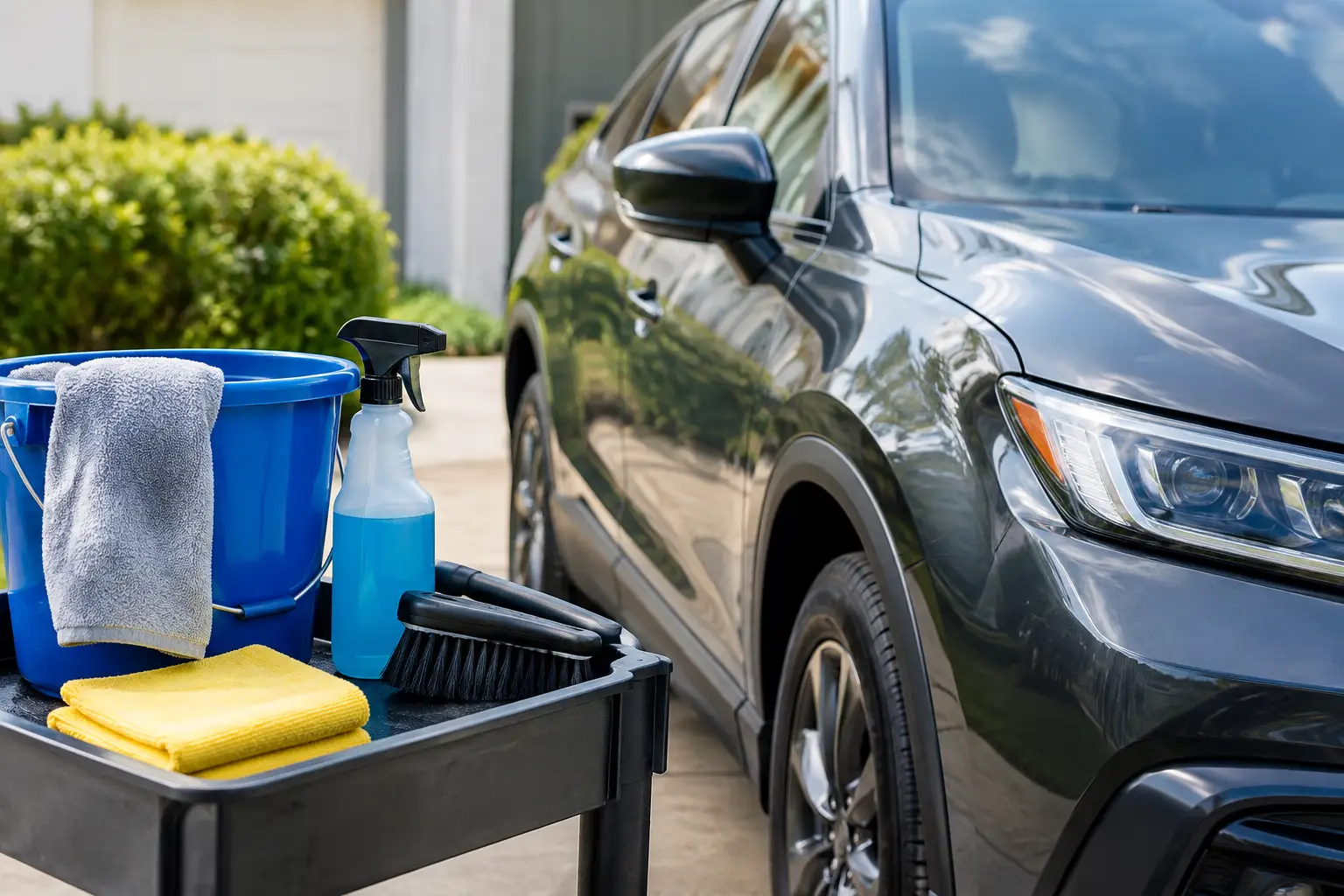
Use a wheel cleaner only if it is appropriate for your wheel type and follow the product directions. Some finishes need more caution than others. If you use a dedicated wheel brush at home, keep it separate from anything used on painted body panels. The tool that cleans the wheels should never move up to the paint.
The lower third of the vehicle deserves the same care. Muddy rocker panels and lower doors are common scratch zones because people tend to wipe them quickly. Let water and soap do the hard work. If a spot remains, soften it with another rinse and gentle cleaner before touching it.
Let soap loosen what water cannot
After the pre-rinse, apply a quality vehicle-safe wash solution. The purpose of soap is not simply to make the car smell clean. It helps lift oily road film and loosen the fine dirt that remains after rinsing. Give the solution a short dwell time, but do not let it dry on the surface.
This is where the weather changes the approach. On a cool, cloudy day, you may have more time to let the cleaner work. In warm sun, move faster and rinse panel by panel if needed. The goal is always the same: keep the surface wet enough for contaminants to release safely.
A touchless wash can handle most routine muddy-car cleanup efficiently, particularly when you need to get salt, slush, or road grime off after work. For stubborn deposits, a second wash cycle or a focused rinse may be better than adding pressure with a brush. More contact is not always more cleaning.
Rinse underneath, not only on top
A muddy exterior gets the attention, but the underside of your vehicle needs it too. Water, mud, and winter road treatment can collect under the chassis, around suspension parts, and behind plastic shields. You may not be able to see every area, but regular underbody rinsing helps prevent buildup from sitting where it does not belong.
This is particularly worthwhile after driving on treated winter roads or through deep puddles. Salt can accelerate corrosion, while packed mud holds moisture against metal and components. If your vehicle has been through heavy mud, make underbody rinsing part of the same visit rather than an afterthought.
You do not need to crawl under the vehicle or try to reach every component by hand. Use the appropriate undercarriage rinse option when available, then let the vehicle dry normally. If you notice unusual noises, a vibrating wheel, or mud packed so heavily that it affects driving, have the vehicle inspected rather than trying to force debris out yourself.
Dry the car without bringing grit back to the paint
Once the vehicle is clean, drying prevents water spots and makes it easier to see anything you missed. The safest approach is to use clean, soft drying towels or a touch-free dryer. Never use an old bath towel, a dirty rag, or the same towel that cleaned your wheels.
If you dry by hand, use light pressure and unfold the towel often to expose a clean side. Blotting is safer than dragging the towel over the paint. Check around mirrors, door handles, the fuel door, and the trunk seam, where water often collects and drips after you leave.
Do not forget the inside edges of the doors and hatch. Muddy shoes and wet weather can leave grime along those jambs, and a quick wipe with a clean microfiber towel can make the whole vehicle feel more finished. Just make sure the towel is clean and that the area has been rinsed first if it is gritty.
Finish with the interior and vacuum areas
A muddy car often has a muddy cabin. Remove floor mats and shake off loose dirt before vacuuming. If the mats are rubber or all-weather style, rinse them and let them dry before putting them back. Fabric mats may need more time, especially if they are soaked.
Vacuum the carpets, seats, cargo area, and tight spaces along the door sills. Start with the biggest debris, then move slowly around pedals and seat tracks where small stones tend to collect. Avoid soaking interior carpet unless you have a way to dry it fully. Damp carpet can create odors that are harder to solve than a little leftover dirt.
For drivers who need a dependable cleanup after rain, construction-zone commutes, or a messy family outing, Black Dog Car Wash offers touchless washing and high-powered vacuum stations at its Londonderry and Belmont locations. The 24/7 access makes it easier to clean up when your schedule finally allows it.
When mud needs more than a normal wash
Most muddy vehicles clean up well with a thorough rinse, wash, and dry. But there are a few cases where you should take a closer look. Thick mud lodged behind wheels can affect balance. Mud around brakes or suspension should be rinsed promptly. If you drove through floodwater, deep clay, or water with an unusual odor, a more detailed cleaning may be worthwhile.
Also inspect paint after the vehicle is clean. If you find scratches, chips, or areas where mud may have rubbed against the finish, address them before the next stretch of wet weather. Small paint chips can become larger problems when water and salt repeatedly reach exposed metal.
A muddy car does not need a complicated routine. It needs plenty of water before contact, attention to the lower panels and undercarriage, and a clean finish that does not reintroduce grit. The next time the roads leave their mark, give the mud a proper rinse before it gets comfortable.