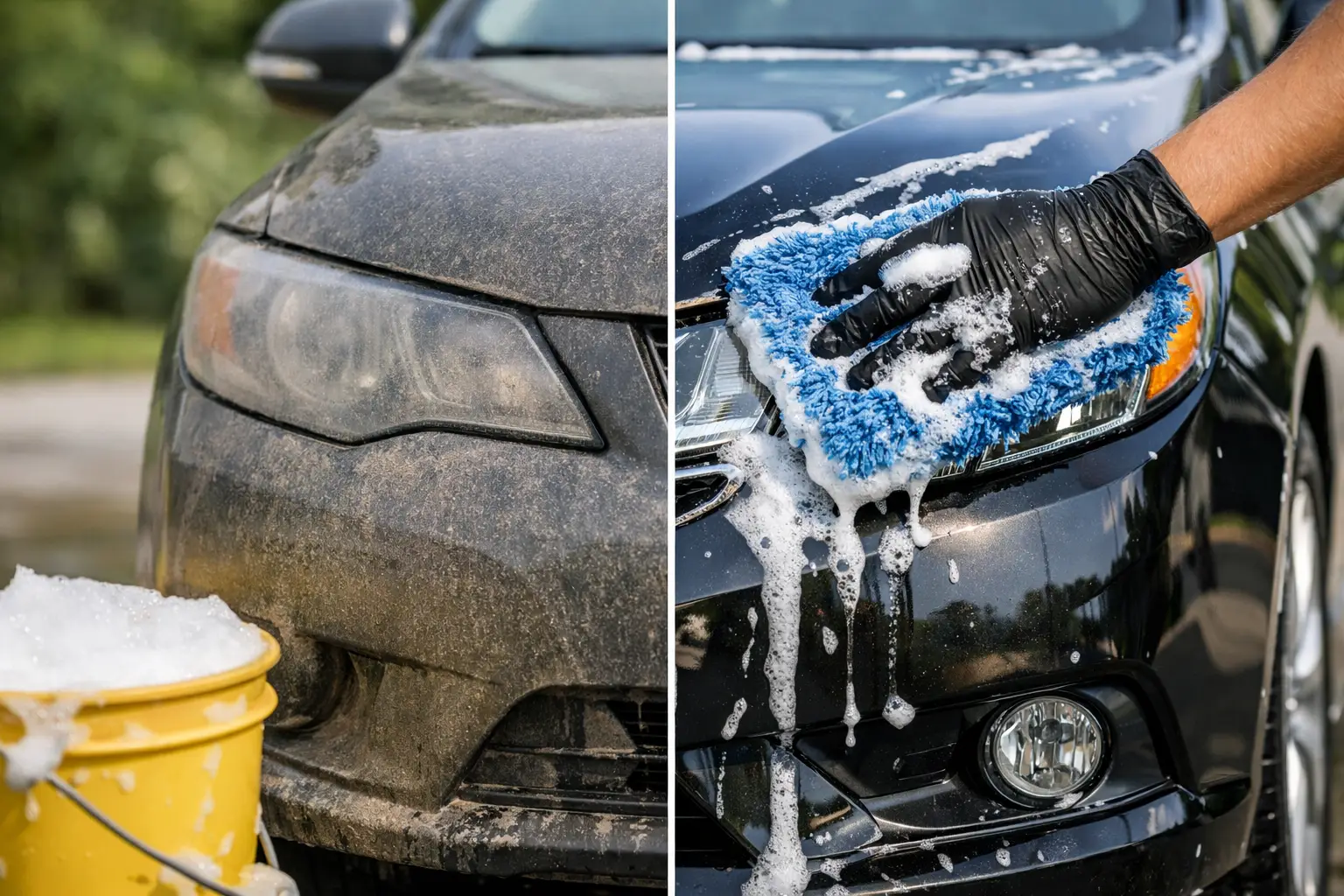
Road film is the dull, gray-brown layer that seems to return the moment you leave the driveway. In New Hampshire, it can be a mix of winter salt, wet sand, tire residue, exhaust soot, pollen, and oily spray kicked up from the pavement. This guide to cleaning road film explains how to remove it safely without turning a quick wash into a scratch-filled afternoon.
A clean-looking vehicle is not just about appearance. Road film can hide glass haze, coat lights, make wheels look permanently dirty, and leave contaminants sitting on paint longer than they should. The good news is that regular, careful washing is usually enough to stay ahead of it.
What Road Film Is and Why It Clings
Road film is not one single substance. It is a stubborn blend of fine dirt, mineral deposits, oil, brake dust, road salt, and moisture. As you drive, heat from the road and your vehicle can help that grime bond to painted panels, lower doors, bumpers, mirrors, and the rear of the car.
The lower half of the vehicle usually takes the worst of it. Behind the wheels, along rocker panels, and around the rear hatch or trunk are common trouble spots because those areas catch spray from your tires. After a slushy commute or a rainy highway drive, the whole vehicle may develop a hazy finish that plain water will not fully remove.
The key is to loosen the grime before trying to wipe it away. Rubbing dry road film with a towel or brush can drag abrasive particles across the clear coat. That is how a quick cleanup can leave swirl marks behind.
Start With a Rinse, Not a Scrub
If the vehicle is heavily coated, begin with a thorough rinse. Focus on the front bumper, grille, wheel wells, lower doors, rocker panels, and rear panel. Give the water time to work. You are trying to flush away loose sand and salt before using any cleaning product or touching the surface.
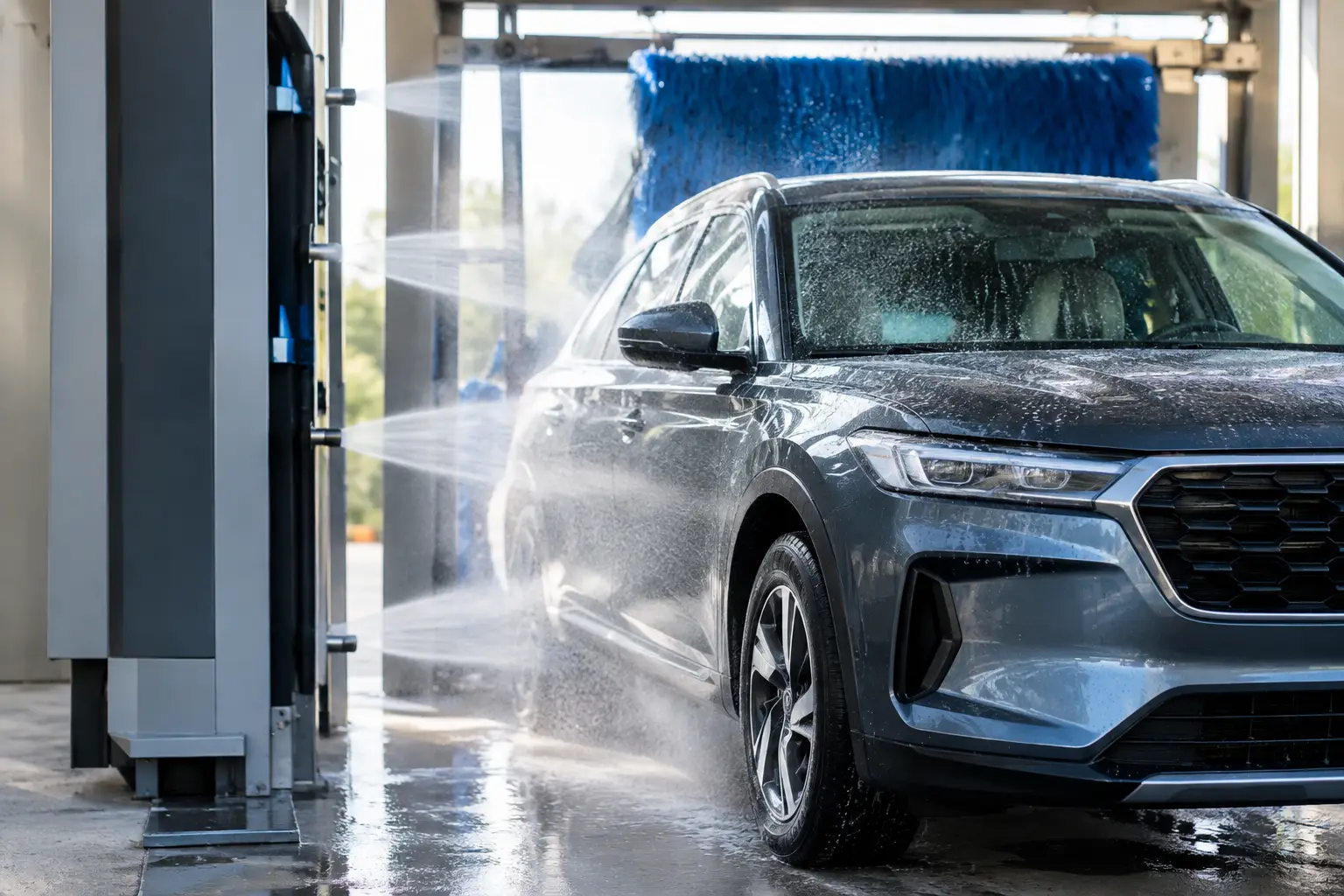
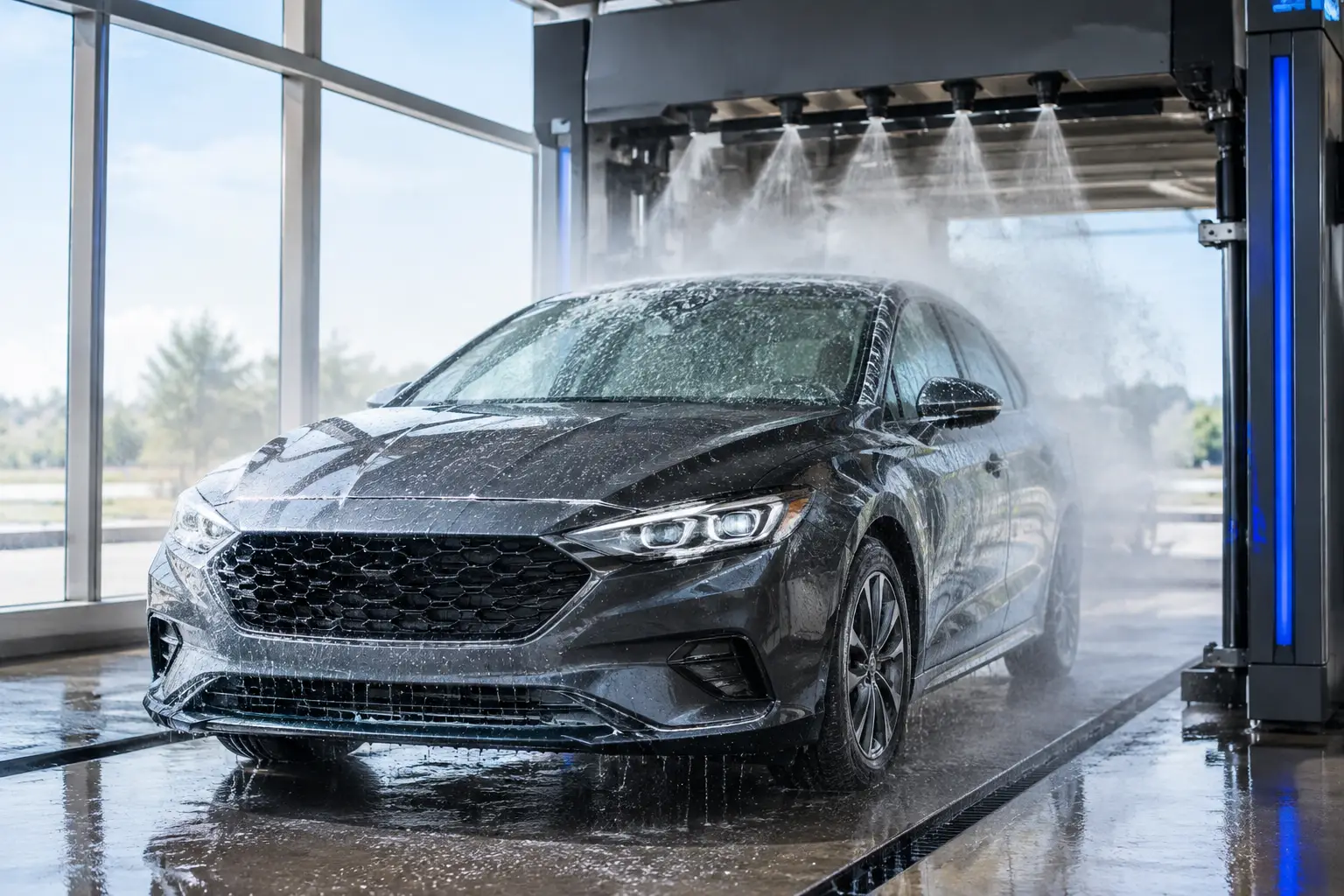
A touchless wash is a practical starting point because high-pressure water and cleaning solutions can remove a large amount of road film without brushes contacting the paint. That matters when the vehicle is carrying gritty winter debris. At Black Dog Car Wash, touchless equipment provides a convenient way to rinse away the heavy buildup before it has a chance to sit on your finish.
Do not rush directly to drying if the car still feels grimy or looks dull. A fast rinse can remove surface dirt while leaving an oily layer behind. If the water does not sheet cleanly across the paint, or if the lower panels still look gray, the vehicle needs another cleaning pass.
Pick the right time to wash
Avoid washing in direct hot sun when possible. Heat can cause soap and cleaning products to dry too quickly, leaving streaks or spots. It also makes road film harder to work with because the moisture you need for rinsing and cleaning evaporates faster.
Cold weather requires a different kind of timing. You do not need to wait for a warm spring day, especially after roads have been treated with salt. Instead, wash when temperatures are safely above freezing or when you can drive long enough afterward to clear water from door jambs, mirrors, and seals. A wash after a major storm is often more useful than waiting until the car looks filthy.
Use Chemistry Before Friction
Road film responds best to a cleaner designed to break down traffic grime, not to more elbow grease. Quality car wash detergents are formulated to lift oily residue and loosen dirt so it can be rinsed away. Household dish soap is not the best substitute. It can strip protective waxes and may dry out rubber and trim when used repeatedly.
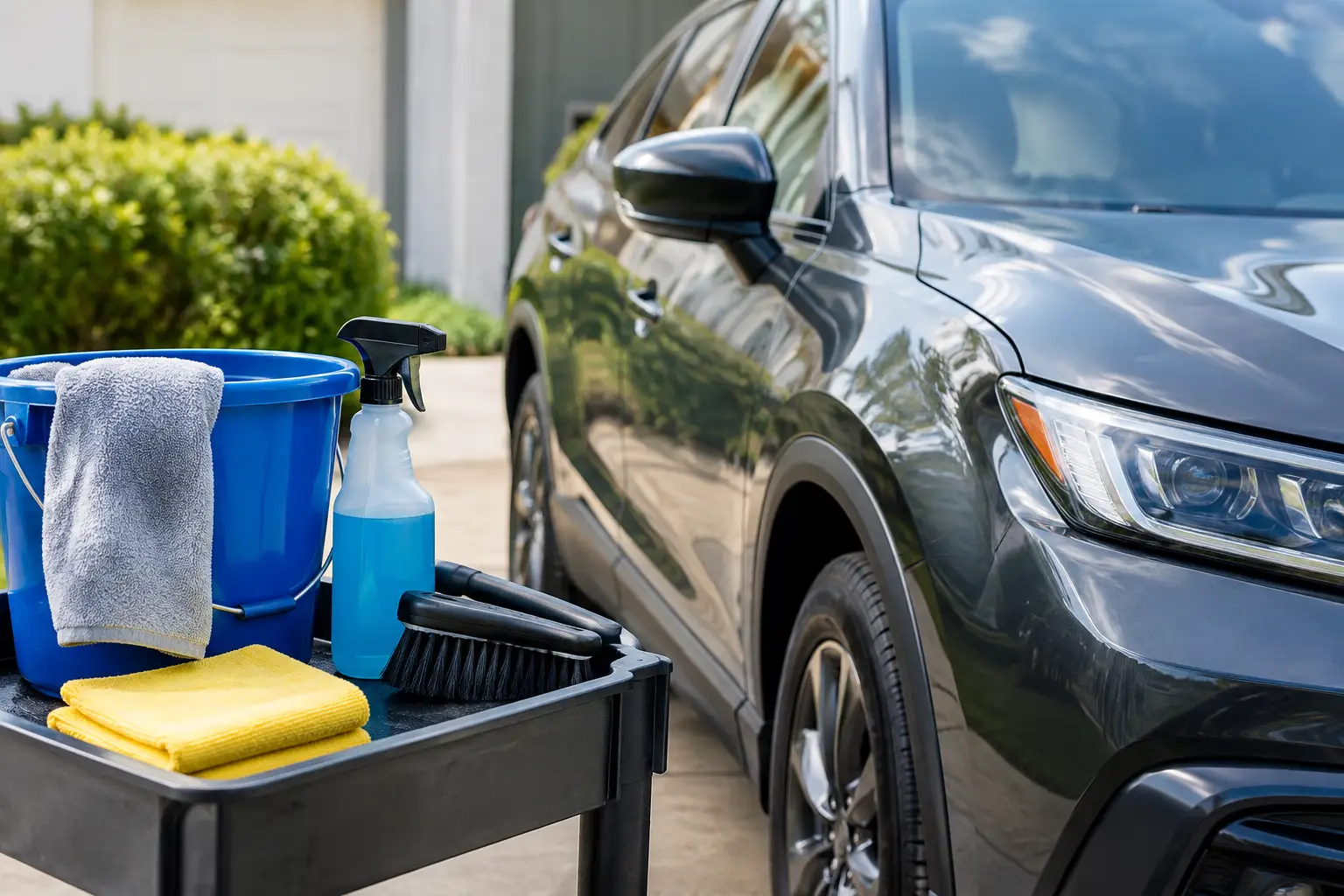
For a do-it-yourself wash, use a car-safe soap mixed according to the label. Apply it to a wet, cool vehicle, starting near the bottom where buildup is heaviest. Let it dwell briefly, but never let it dry on the surface. Then rinse thoroughly.
If you need to hand wash after the initial rinse, use a clean microfiber wash mitt and plenty of lubricating soapy water. Work from the roof and upper panels down toward the dirtiest areas. Rinse the mitt often. The goal is to keep grit out of the mitt instead of moving it from the rocker panels onto the hood.
A touchless wash may be all many daily drivers need for routine road film removal. A hand wash can offer extra attention when residue has been sitting for weeks, when the vehicle has heavy grime behind the wheels, or when you are preparing the paint for wax or sealant. It depends on the condition of the vehicle and how long the contaminants have been left in place.
Give Wheels, Tires, and Wheel Wells Extra Attention
Wheels collect a different kind of buildup than painted panels. Brake dust, road salt, and wet grime can bake onto wheel faces and settle into tight areas around lug nuts and spokes. Tires and wheel wells also trap mud and sand that can make a freshly washed vehicle still look unfinished.
Use a wheel cleaner that is appropriate for your wheel type, and follow its directions carefully. Do not use the same mitt or towel on wheels that you plan to use on painted surfaces. Even when wheels look clean, they can hold gritty particles that should stay far away from the paint.
For wheel wells, a strong rinse is often the most useful first step. If you are washing at home, use a dedicated brush only after the loose debris has been flushed away. Keep the pressure and cleaning product away from any damaged paint, loose trim, or exposed wiring.
Do Not Forget Glass, Lights, and the Rear View
Road film on glass can be easy to miss until the sun hits it at the wrong angle. It can create glare, make wipers skip, and leave nighttime driving less clear than it should be. Clean exterior glass with an automotive glass cleaner and a clean microfiber towel. Finish with a second dry towel to remove haze.
Headlights, taillights, cameras, and sensors deserve the same attention. A cloudy layer on these surfaces can reduce visibility and affect how clearly backup cameras or driver-assist sensors see their surroundings. Use gentle products and soft towels. Do not scrape residue off lenses with a dry paper towel or a rough brush.
The rear window, rear camera, license plate area, and hatch handle are often overlooked. They are also some of the dirtiest parts of the vehicle after wet-road driving. A few extra seconds here makes a noticeable difference.
Dry Carefully and Protect the Finish
Drying is where clean paint can become marked paint if the towel is dirty or the car was not rinsed well. Use clean, high-quality microfiber drying towels and blot or gently glide them across the surface. Do not press hard. If you feel grit, stop and rinse that area again.
A wax, sealant, or other paint protectant can make future road film easier to remove. Protection does not prevent a car from getting dirty, but it can reduce how strongly grime clings to the surface. Water will bead or sheet more effectively, and regular washes can feel faster.
There is a trade-off: protection products work best on a properly cleaned surface, and no product replaces routine washing during salt season. If you drive daily on treated roads, think of wax or sealant as an assist, not a force field.
Make Road Film Cleanup Part of Your Routine
The best schedule depends on how and where you drive. A garage-kept car used for short trips may need less frequent washing than a commuter traveling highways every day. During winter and early spring, washing every one to two weeks is a sensible target for many New Hampshire drivers. After a snowstorm, thaw, or long wet commute, an extra rinse can be worthwhile.
Pay attention to the underbody and lower panels, especially when road crews are using salt and sand. You do not have to wait until the whole vehicle looks dirty. Removing fresh buildup is generally easier than tackling a neglected layer that has had time to dry, bake on, and collect more debris.
If road film keeps returning, that is not a sign you are washing incorrectly. It is simply part of driving through four real seasons. Keep the process simple: rinse the grit away, use car-safe cleaning chemistry, avoid aggressive scrubbing, and wash often enough that grime never gets too comfortable. Your car will look better on the road, and cleaning it next time will be a lot easier.