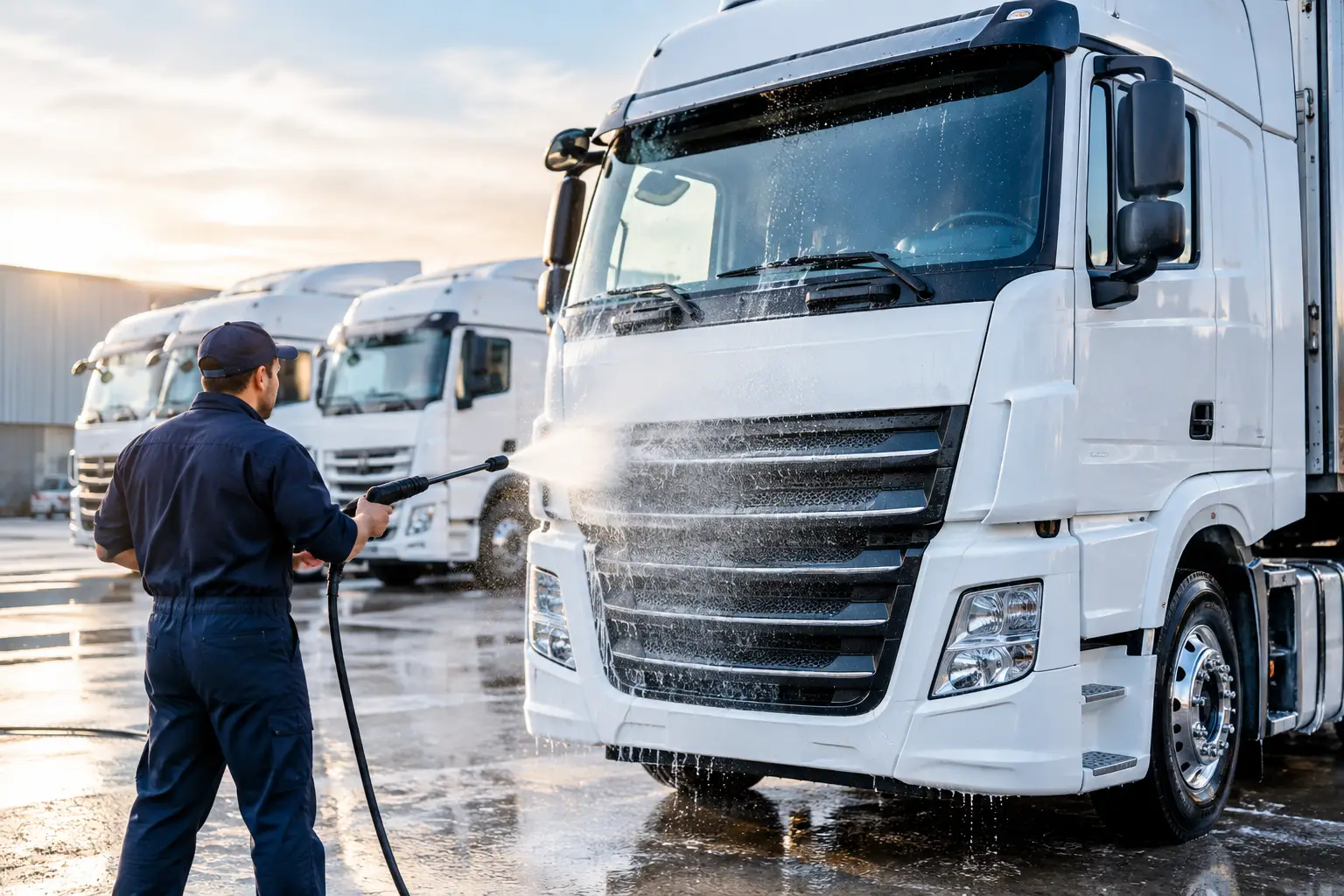
A clean fleet does more than make a good first impression at a customer’s driveway or job site. Strong fleet wash results help drivers see clearly, make vehicle checks easier, and remove the road film that builds up fast on New Hampshire routes. From winter salt and slush to spring pollen, summer dust, and fall mud, a vehicle that looks clean at first glance can still be carrying grime where it causes trouble.
For a working fleet, the goal is not a showroom finish every day. It is a dependable wash routine that leaves vehicles presentable, improves visibility, and helps crews spot the wear, damage, and buildup that should not be ignored.
What Good Fleet Wash Results Look Like
The best result is a vehicle that is genuinely clean where it counts, not just shiny across the middle of the doors. Windshields, mirrors, headlights, cameras, license plates, and rear doors all need attention. On vans, pickups, and SUVs that spend the day on the road, these are the places that affect safety, identification, and customer confidence.
Look at the lower body panels, wheel areas, rocker panels, and rear of the vehicle as well. Road spray collects there first, especially after wet weather. In winter, salt residue can cling to these areas long after the rest of the vehicle looks acceptable. A regular exterior wash will not replace professional mechanical maintenance, but it does remove the grime that can hide developing issues and make inspections less useful.
Good fleet wash results also mean fewer missed spots. A clean windshield with dirty side mirrors is not a complete result. Bright headlights covered in film do not provide their best output after dark. And a clean cargo van with an unreadable rear plate or dirty company lettering still looks neglected to the people following it in traffic.
Touchless Washing Makes Sense for Working Vehicles
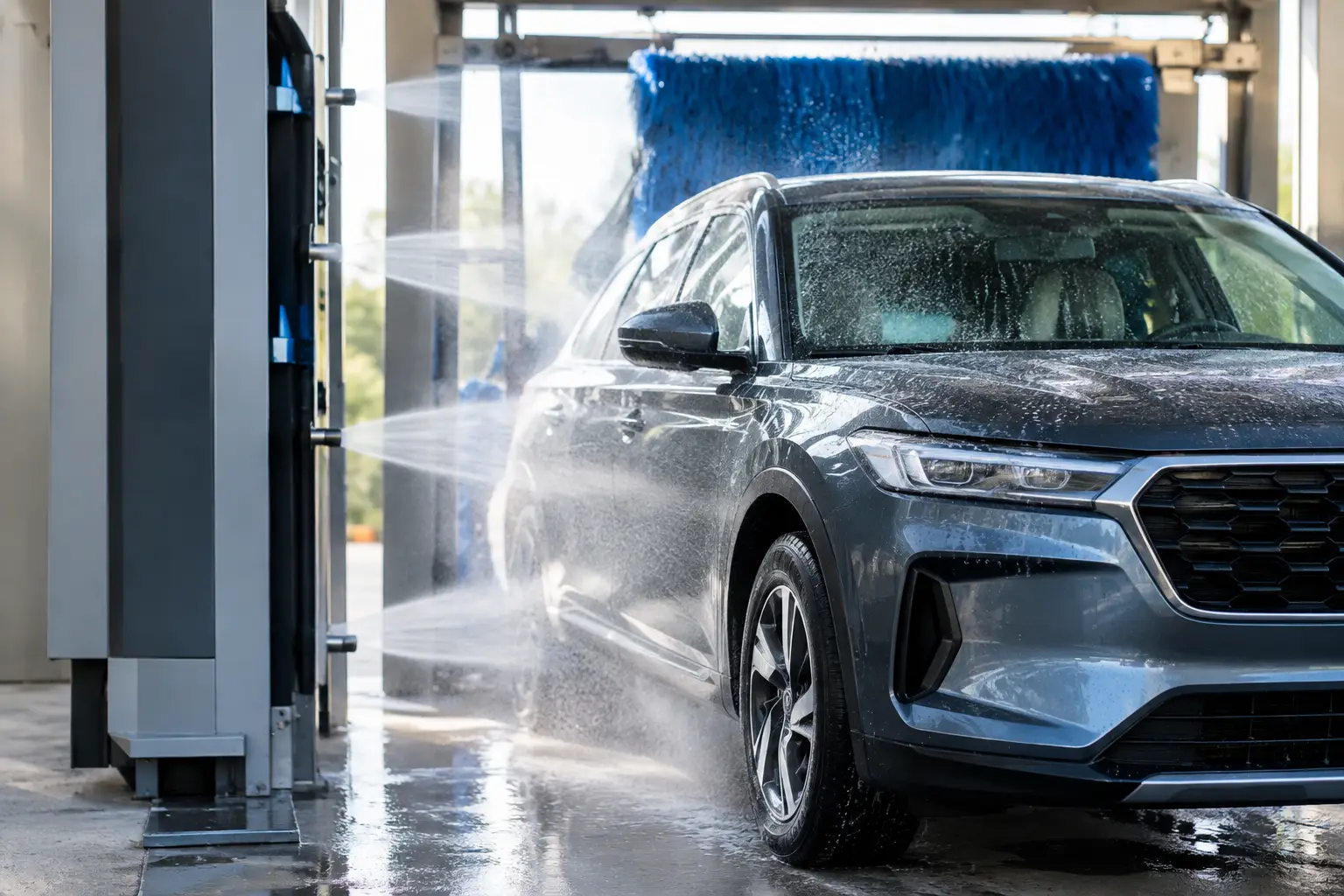
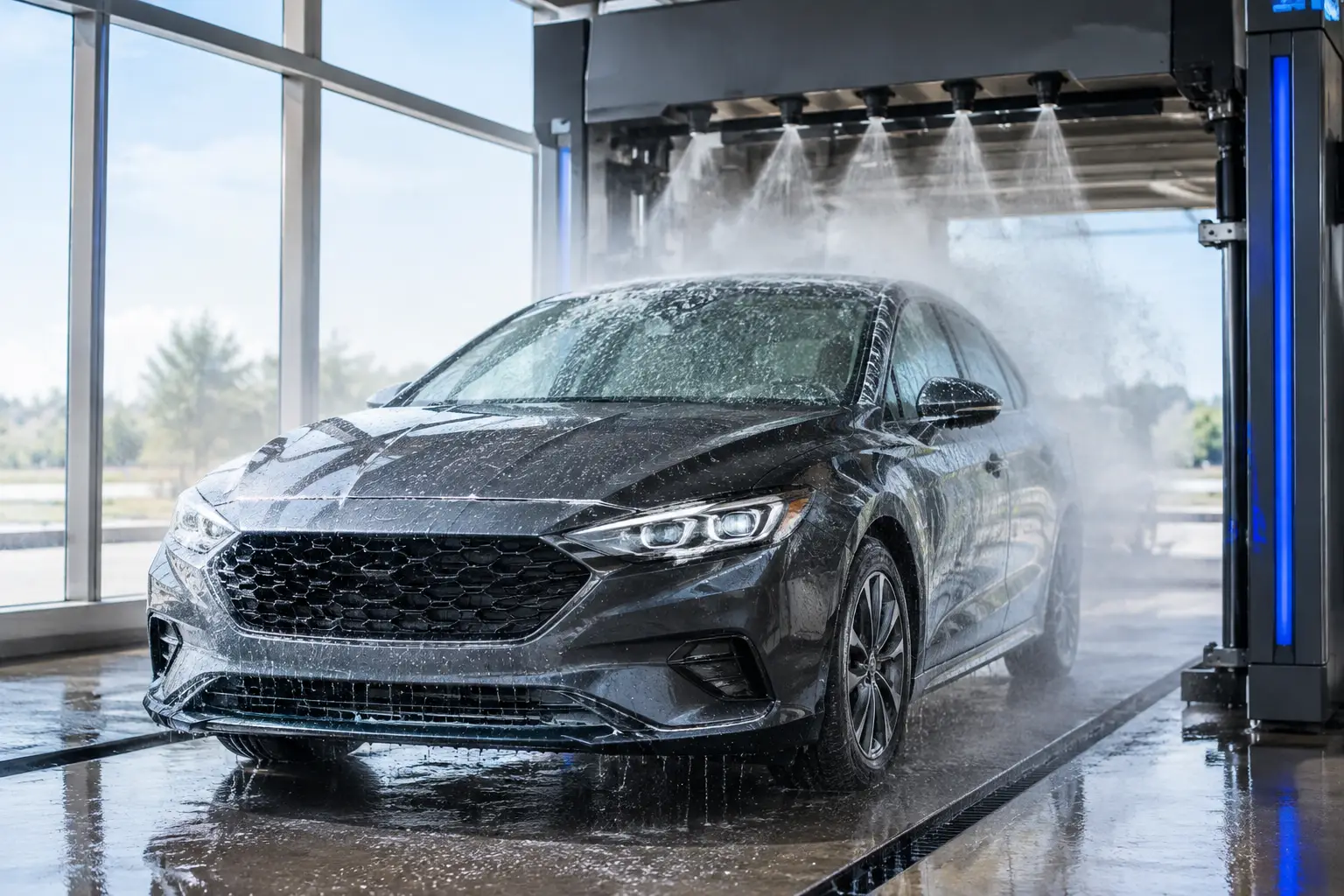
Fleet vehicles tend to rack up miles, encounter different road conditions, and return at different hours. A touchless wash can be a practical fit because high-pressure water and carefully applied cleaning solutions do the work without brushes contacting the vehicle’s exterior.
That matters for fleet managers and drivers who want a consistent exterior clean without added friction against paint, trim, decals, and other surfaces. Touchless equipment is especially useful when a vehicle has collected sand, salt, or gritty mud. Brushing a dirty surface can create unnecessary friction, while a properly designed touchless process focuses on loosening and rinsing away that debris.
There is a trade-off. Heavy caked-on mud, old bug residue, or neglected wheel grime may need more than one wash or some targeted attention. No wash method can make months of buildup disappear perfectly in a single pass. The answer is usually not to wait longer between washes. It is to wash often enough that grime never gets the chance to become stubborn.
Start With the Conditions Your Fleet Faces
A fleet that makes short, local trips has different wash needs than one that runs highways all day. A contractor’s pickup may deal with mud and dust. A delivery van may pick up road film and bug residue. A family transportation vehicle may need cleaner windows, door handles, and exterior surfaces more frequently because passengers notice them right away.
In New Hampshire, the calendar matters just as much as mileage. Winter calls for more frequent washing because salt and brine can accumulate quickly. Spring brings pollen and wet roads. Summer adds bugs, dust, and construction-zone grime. Fall can mean leaves, tree debris, and muddy shoulders.
Instead of treating washing as an occasional cosmetic task, connect it to real conditions. Wash after a salt-heavy storm cycle, after repeated travel on wet roads, or before a vehicle heads into a customer-facing week. A simple routine is easier to follow than a vague instruction to clean vehicles when they look dirty.
Check These Areas After Each Wash
Drivers and supervisors do not need a long inspection process at the wash exit. A quick walk-around can confirm whether the wash delivered the result the vehicle needs. Pay attention to five areas:
- Glass and mirrors: Windshields, side windows, mirrors, and backup cameras should be clear enough for safe visibility.
- Lights and plates: Headlights, taillights, turn signals, and license plates should be free of road film and easy to see.
- Lower panels: Check rocker panels, wheel wells, bumpers, and the rear of the vehicle, where salt and spray often linger.
- Branding and identification: Vehicle numbers, decals, and company markings should be readable and professional.
- Damage or maintenance concerns: A clean surface makes dents, loose trim, tire wear, leaks, and cracked lights easier to notice.
This quick check gives a wash routine a second benefit: it creates a regular opportunity to notice problems before they become a roadside headache or an awkward conversation with a customer.
Frequency Beats the Occasional Deep Clean
For most working vehicles, a consistent wash schedule produces better results than an occasional all-out cleanup. The right frequency depends on vehicle use, storage, weather, and how visible the vehicle is to customers. A lightly used office vehicle may need a wash every couple of weeks. A service van, delivery vehicle, or contractor pickup that runs through winter road conditions may need attention weekly or even more often after storms.
The key is to avoid making the driver guess. Set a simple expectation based on conditions. For example, wash after major snow and salt events, after prolonged rain that leaves road film, or on a designated day each week. If drivers can use a wash location at any hour, fitting a wash into an early start, late return, or shift change becomes much easier.
Convenience is not a small detail for fleets. A wash program that requires a narrow appointment window often gets skipped when schedules tighten. Access that works around real work hours is more likely to become part of the routine.
Do Not Forget the Interior Finish
Exterior cleaning does the most for a vehicle’s public appearance and protection from road grime, but the interior still affects how the fleet performs. Vacuuming dirt, gravel, food wrappers, and debris from floors and cargo areas keeps the vehicle more usable for the next driver. It also reduces the chance that customers, passengers, or crew members step into a cab that feels neglected.
For fleets with shared vehicles, keeping a small set of expectations helps: remove trash at the end of the shift, vacuum as needed, and report spills or damage promptly. This is less about perfection and more about accountability. A vehicle treated as shared equipment usually stays in better shape than one treated as someone else’s problem.
Measure Fleet Wash Results in Practical Terms
A clean vehicle should lead to visible, usable results. Ask whether drivers can see better at night, whether your team can read plates and vehicle numbers, whether customer-facing vehicles look cared for, and whether routine checks are catching more small issues early.
You can also track the simple operational side. Are drivers actually using the wash consistently? Are some routes creating more grime than others? Does winter weather require a temporary increase in wash frequency? Small adjustments based on real conditions will do more than a rigid plan that no one follows.
For organizations with multiple vehicles, prepaid wash options or stored-value accounts can make routine washing easier to manage. The best setup is the one that gives approved drivers a clear process and avoids turning every wash into a reimbursement question.
A Clean Fleet Is a Working Fleet
There is no need to chase perfection after every mile. The goal is a fleet that looks ready, drives safely, and makes a reliable impression wherever it stops. When road conditions get rough, wash sooner rather than waiting for grime to become a bigger job. Your drivers, your vehicles, and the people who see your name on the road will notice the difference.