Road grime has a way of hiding where you cannot easily see it. Mud, sand, slush, and winter road salt collect behind the tires, then stay there long after the rest of the vehicle looks clean. So, should you clean wheel wells before washing? Usually, not as a separate chore. But when buildup is heavy, a little targeted attention can help your wash perform better and keep seasonal grime from lingering.
For New Hampshire drivers, the answer changes with the weather. A dry summer commute may leave a light film that a quality touchless wash can handle. After a muddy back road, a week of slush, or repeated trips on salted winter roads, the wheel wells may need more than a standard rinse. The goal is not to make every hidden surface look showroom-perfect. It is to remove the material that traps moisture, makes a mess, or can fall back onto clean paint later.
What Counts as a Wheel Well?
The wheel well is the curved space above and around each tire. It includes the plastic liner, painted metal edges, suspension-area components farther inside, and the lower areas behind the tire. Because the tires constantly throw debris upward, these spaces take more abuse than almost any other part of a vehicle.
They are also easy to overlook. You might wash the exterior, clean the wheels, and still notice dirty streaks around the lower doors after the first drive. That often happens because packed debris or dirty water has remained in the wheel wells.
When to Clean Wheel Wells Before Washing
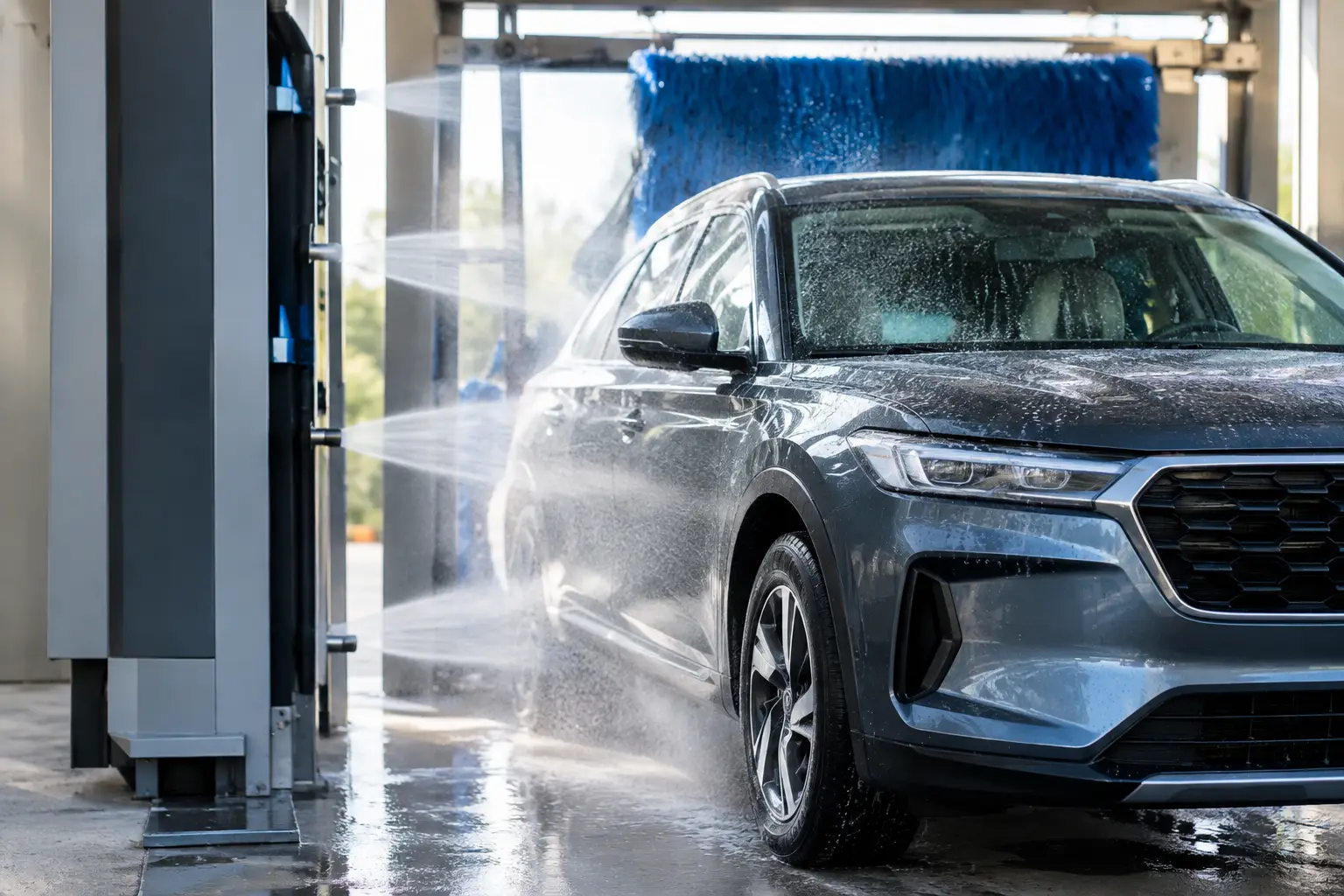
Most routine wash visits do not require a pre-cleaning session. If the wheel wells have ordinary dust, light salt residue, or rain grime, let the wash do its job first. A modern touchless wash is designed to apply cleaning solutions and high-pressure water without brushes contacting the vehicle's finish.
Pre-cleaning makes more sense when debris is packed in place. Think of thick mud around the liners, leaves caught behind the tire, chunks of frozen slush, or a crusty layer of salt after a long stretch of winter driving. That material can block the water spray from reaching the surface underneath. It can also break loose after the wash and leave a fresh mess on your driveway.
A quick visual check is enough. Turn the front wheels slightly when parked, look inside the front wheel wells, and check behind the rear tires. If you see loose buildup that is ready to fall out, remove it before or during your next cleaning. If it is simply dirty, there is no need to turn a fast car wash into a full detailing project.
Why Winter Salt Deserves Extra Attention
Salt is the main reason New Hampshire drivers should think beyond the visible paint. Road treatments help make winter travel safer, but salt spray reaches the undercarriage, wheels, wheel wells, rocker panels, and lower body panels. It attracts moisture and can remain active even after the road looks dry.
No wash can reverse existing corrosion, and cleaning wheel wells is not a substitute for proper vehicle maintenance. Still, regular rinsing helps reduce how long salty residue sits on those areas. This matters most after snowstorms, thaw-and-freeze cycles, and extended periods of wet, treated roads.
The timing matters more than perfection. Washing within a few days of heavy salt exposure is better than waiting until the whole vehicle looks dirty. If temperatures and road conditions allow, a touchless wash after a storm can be one of the simplest habits for protecting the lower half of your vehicle.
How to Remove Heavy Buildup Safely
Start with a cool vehicle whenever possible. Avoid spraying cold water directly onto very hot wheels or brakes after highway driving. Give the vehicle time to cool down, especially in warm weather.
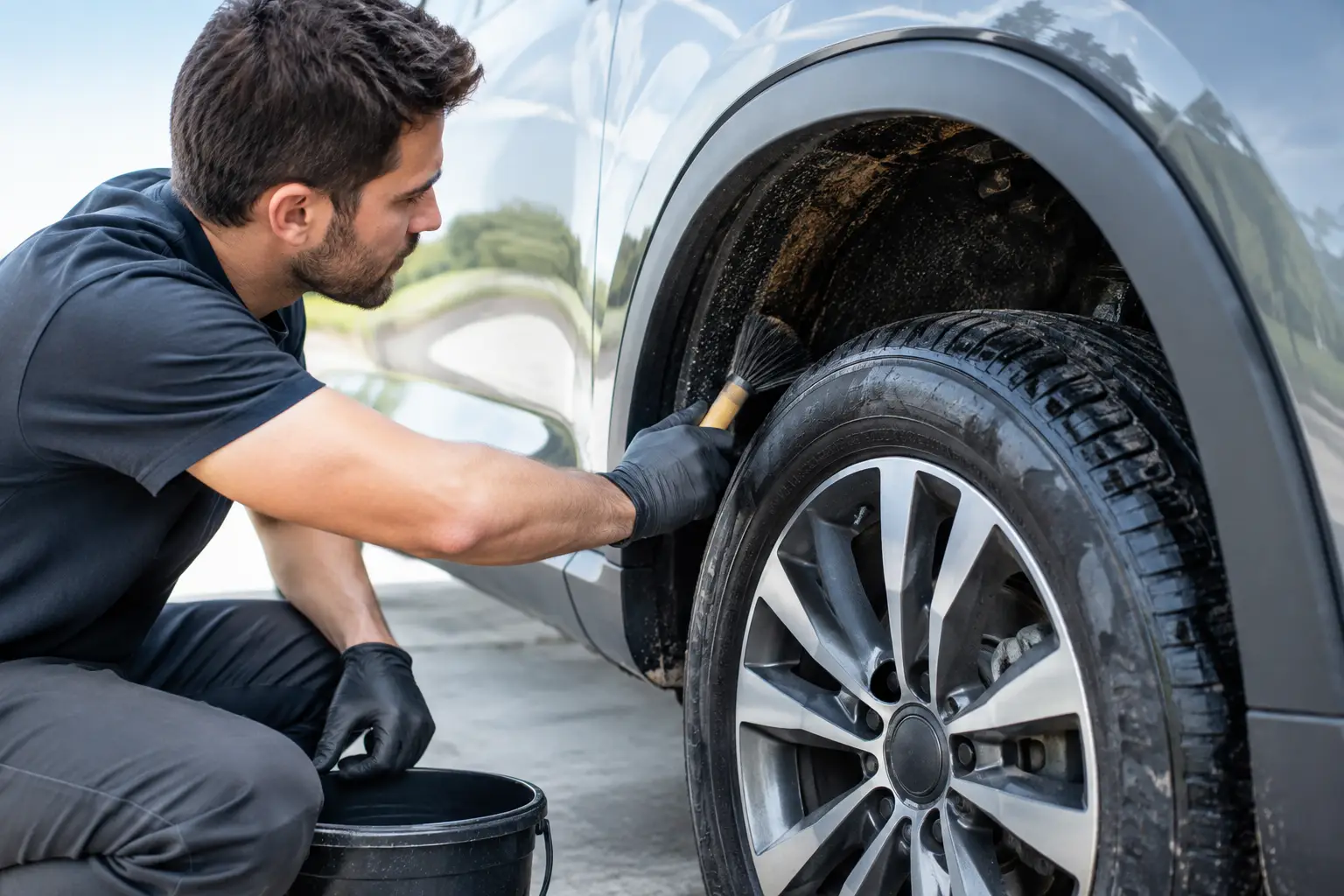
For loose mud, leaves, or snow, use a gloved hand or a soft plastic tool to remove the material you can reach without forcing anything. Do not poke deeply around brake lines, wiring, sensors, or suspension parts. You are clearing debris, not taking apart the wheel well.
If you are using a pressure washer at home, keep the nozzle moving and give the surface some distance. High pressure can be effective, but it should not be aimed aggressively at electrical connections, damaged liners, or seals. Work from the top of the wheel well downward so the debris has somewhere to go. A broad fan spray is generally more useful than a narrow, concentrated stream.
Skip harsh household cleaners. Wheel wells do not need kitchen degreasers, bleach, or anything that can damage rubber, plastic, painted surfaces, or nearby metal. Automotive-safe cleaners are the better choice if regular water is not enough, but in many cases a thorough rinse handles the job.
Let the Touchless Wash Handle Routine Grime
There is a trade-off with any wash method. Hand cleaning can give you more control over a heavily soiled wheel well, but it takes time and is not always practical when you are heading to work, picking up kids, or trying to get ahead of the next storm. A quality touchless wash is the practical choice for routine grime because it cleans without physical brushes rubbing against your vehicle.
At Black Dog Car Wash, the touchless process gives drivers a convenient way to remove the road film that builds up through daily driving. For normal wheel-well dirt, arrive, wash, and move on with your day. There is no reason to spend 30 extra minutes chasing every speck of dirt in an area most people will never see.
For especially muddy conditions, knock off the thickest debris first if you can. Then let the wash clean the exterior, wheels, and lower vehicle surfaces. That approach keeps the process efficient while giving the wash a better chance to rinse away what remains.
Do Not Confuse Clean With Damaged
Wheel wells are exposed to rough conditions, so they may not look polished even when they are clean. Plastic liners can fade. Painted metal can show staining. Older vehicles may have surface rust, worn undercoating, or clips that have loosened over time. More aggressive spraying will not fix those issues, and it may reveal a repair need that deserves professional attention.
After washing, take a quick look for anything unusual: a hanging liner, a loose splash shield, fresh fluid drips, exposed wiring, or an area where rust appears to be spreading. Cleaning gives you a clearer view of what is happening around the wheels, which is useful, but it is not a repair service.
A Better Year-Round Wheel-Well Routine
For most drivers, the best routine is simple: wash regularly, increase frequency during salt season, and address packed mud or debris before it becomes a bigger cleanup. You do not need to clean wheel wells before every wash. You do need to avoid letting winter residue and heavy buildup sit for weeks.
During spring, rinsing away the last of the road salt is especially worthwhile. In summer, mud, dust, pollen, and construction debris are usually the bigger concerns. Fall brings wet leaves and organic debris that can collect around the lower vehicle. Winter calls for the most consistent washing because every slushy trip can add another layer of salt and grime.
Beau would probably tell you that mud is a fine accessory for paws, not for wheel wells. He has a point. Keep the routine realistic, wash after the messy days, and let your vehicle head into the next commute looking cleaner and better cared for.