Road grime is not just dirt. It is a stubborn mix of salt, sand, oily road film, brake dust, mud, pollen, and whatever the New Hampshire weather dropped on your drive home. The best way to remove grime is to loosen and rinse it away thoroughly before anything has a chance to grind against your vehicle’s finish.
That matters year-round, but especially after winter storms, spring thaw, muddy back roads, and long commutes. A clean vehicle looks better, of course. More importantly, regular washing helps remove the buildup that can cling to paint, wheels, trim, and hard-to-reach areas underneath your car.
The Best Way to Remove Grime Without Scrubbing It In
The safest approach starts with water pressure and the right cleaning solution, not a dry towel or a rough brush. When grime is sitting on your paint, rubbing it before it has been rinsed can drag fine particles across the surface. That is how a quick cleanup can become a swirl-mark problem.
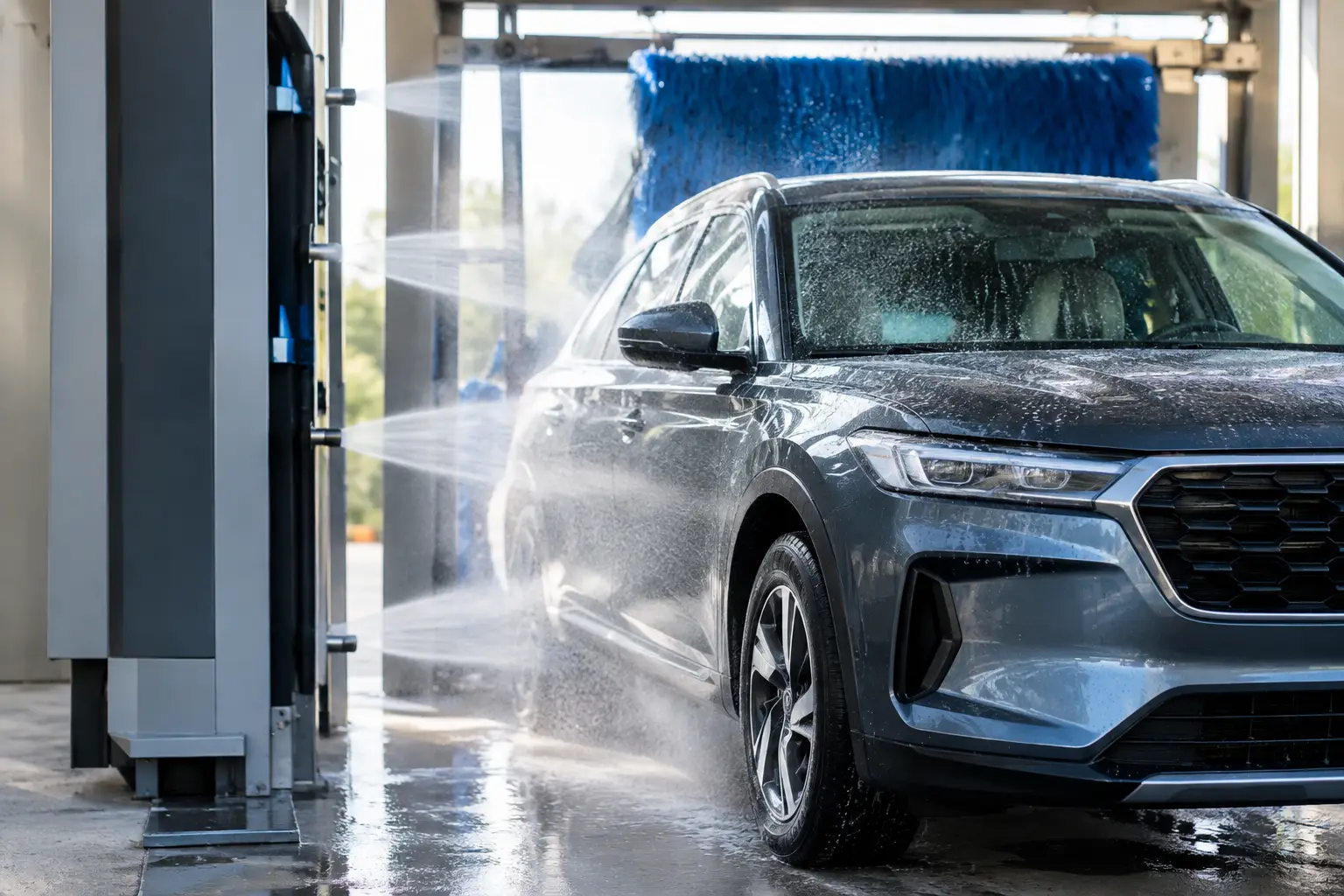
A quality touchless wash is built around this simple idea. It applies cleaning products designed to break down road film and then uses high-pressure water to carry loosened dirt away. There are no spinning brushes making physical contact with the exterior, which makes touchless cleaning a practical choice for drivers who want an effective wash with less friction on their vehicle.
For everyday buildup, a full touchless wash is usually the best answer. It is fast, consistent, and far more effective than waiting until grime has had weeks to bake onto the paint. Beau would probably call that a good excuse for a ride, but your car will call it routine maintenance.
Why Road Grime Needs More Than a Quick Rinse
A plain water rinse can remove loose mud and dust, but it may not fully handle the greasy film that collects during normal driving. Road spray can contain oil residue, exhaust particles, de-icing materials, and other contaminants that bond to the surface. That dull, hazy look on a darker vehicle is often road film, not just dust.
Cleaning solutions help separate that film from the paint so water can rinse it away. The process works best when the solution has enough time to work before the final rinse. This is one reason automated wash equipment can be more dependable than trying to spray down a dirty car in the driveway with a garden hose.
It also depends on the condition of the vehicle. Fresh mud is easier to remove than mud that has dried for days. Road salt should be washed away as soon as practical. Pollen may look harmless, but when it mixes with rain and heat, it can leave a stubborn yellow-green residue around trim, wipers, and door seams.
Salt Is the Winter Grime You Should Not Ignore
New Hampshire winters put a lot on the road, and much of it ends up on your vehicle. Salt and liquid de-icers collect behind wheels, along rocker panels, in wheel wells, and underneath the vehicle. Letting that buildup sit can be tough on metal components and finishes over time.
The goal is not to wait for a warm spring day. Wash after salty drives whenever conditions allow, including during winter. A touchless wash gives you a convenient way to remove surface salt without standing outside in the cold with a hose. Pay attention to the lower panels and wheels, where winter grime collects first and stays longest.
Mud and Sand Need a Patient First Pass
Mud can look simple, but it often holds sand and grit. If it is thick around the wheel wells, lower doors, or rear bumper, give it a chance to soften under the initial wash stages. Trying to wipe it off by hand while it is still gritty is a poor tradeoff for your paint.
For heavy mud, one wash may take care of most of it, while an extra rinse or a second pass may be worthwhile for stubborn areas. The right answer depends on how long the mud has been there and how heavily it is packed into crevices. Cleaning it sooner will always make the job easier.
A Smart Routine for Removing Car Grime
The best results come from cleaning before the buildup becomes a bigger job. You do not need a complicated detailing schedule, but you do need consistency. A regular wash removes contaminants while they are still easier to rinse away.
Use this simple approach:
- Wash after salt, slush, and muddy conditions. Do not let winter residue or packed mud sit longer than necessary.
- Choose touchless cleaning for routine exterior care. High-pressure water and wash solutions do the work without brushes contacting the vehicle.
- Give extra attention to wheels and lower panels. These areas take the most punishment from road spray.
- Vacuum the interior while you are there. Dirt on the floor mats has a way of becoming dirt everywhere else, especially with kids, pets, or snow-covered boots.
For many drivers, a weekly or every-other-week wash works well during messy seasons. During dry summer weather, you may be able to go longer. If your commute includes construction zones, dirt roads, or heavily treated winter roads, more frequent visits are worth considering.
What Not to Use on Automotive Grime
When grime is stubborn, it is tempting to reach for whatever cleaner is nearby. That can create more trouble than it solves. Household degreasers, abrasive powders, and rough scouring pads are not designed for automotive paint, clear coat, trim, or wheel finishes.
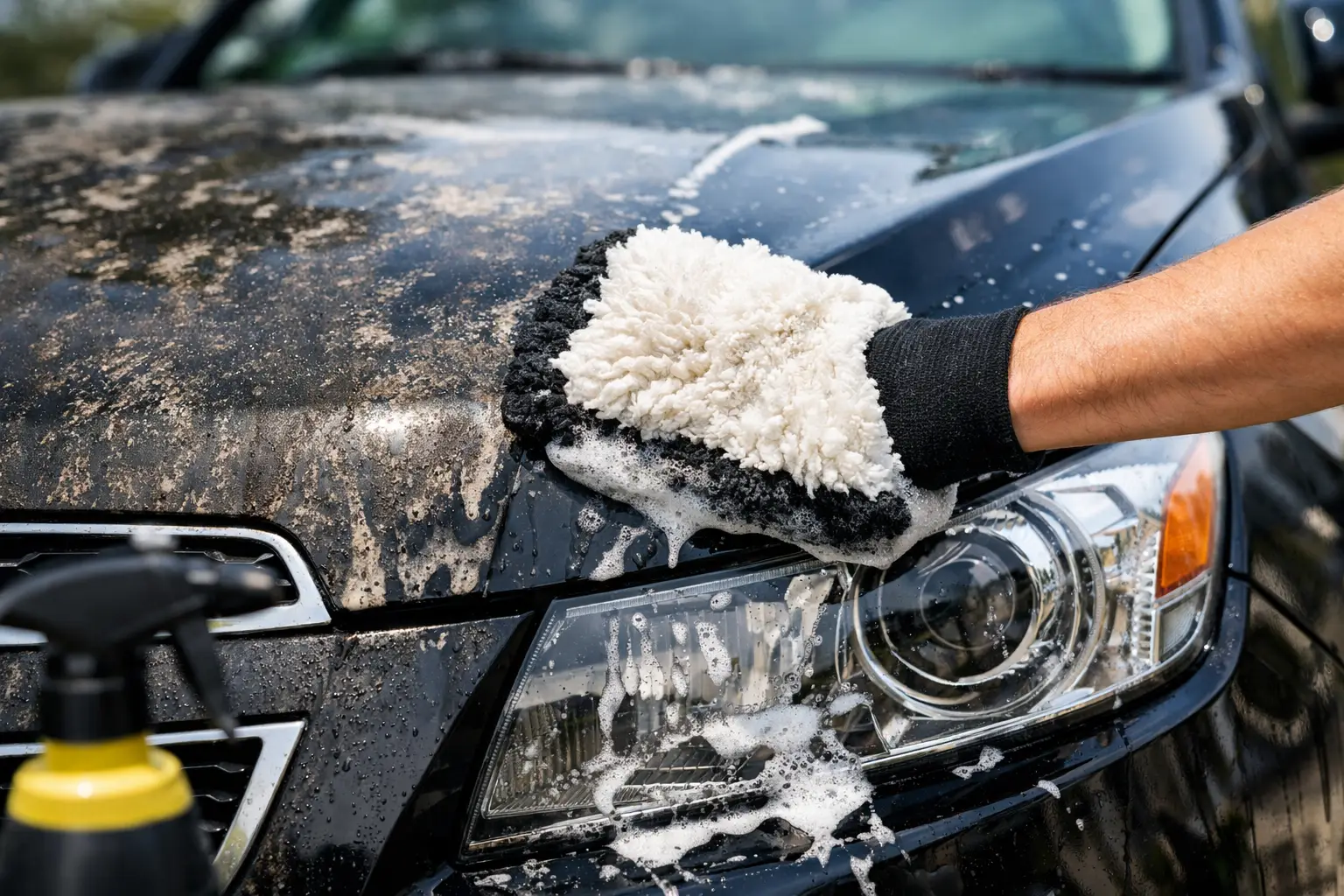
Avoid wiping a dusty or dirty vehicle with a dry rag. Even a soft towel can trap grit and move it across the surface. Also be careful with automatic washes that rely on brushes. Brushes can be effective at removing buildup, but they add physical contact. For drivers focused on minimizing friction against their finish, touchless equipment is the better fit.
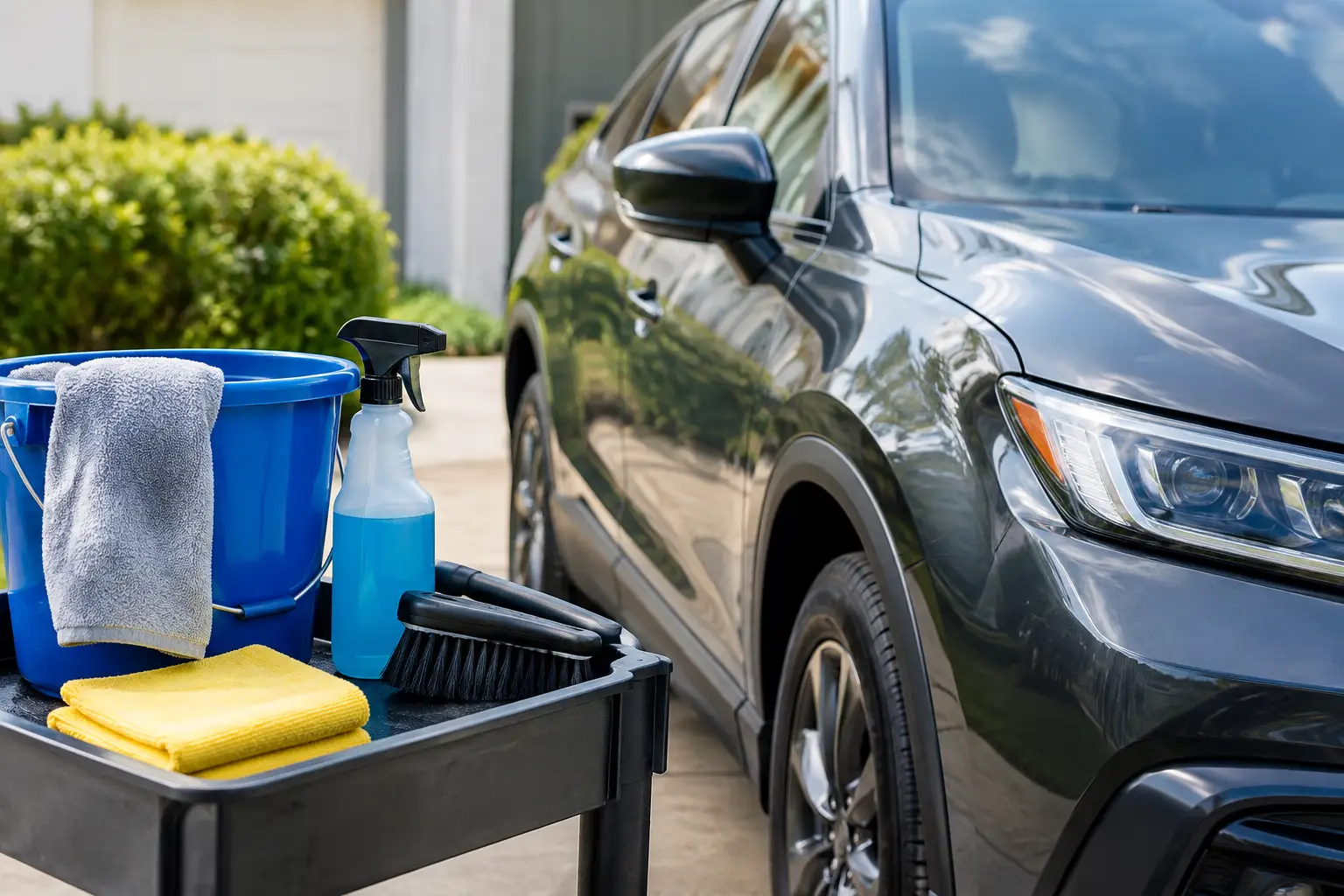
Hand washing can be a good option when it is done carefully with clean mitts, proper car wash soap, and plenty of water. The tradeoff is time, equipment, weather, and technique. If the wash bucket or mitt is dirty, the risk of rubbing grit onto the paint goes up quickly.
Do Not Forget the Places Grime Hides
The visible paint is only part of the job. Grime gathers around license plate frames, side mirrors, door jambs, hatch seams, fuel doors, and windshield wipers. Wheels and wheel wells are especially important because they catch brake dust, salt, slush, and road debris.
A touchless wash can do a strong job on these areas, though heavily packed mud may need more than one visit. Check your vehicle after the wash, particularly after a storm or off-road trip. If you see residue along the lower edges, washing again soon is better than letting it harden in place.
Inside the vehicle, vacuuming regularly prevents sand, salt, and small stones from getting pushed into carpets and mats. It is a small step that makes a vehicle feel cleaner every time you get in, not just when you see it from the outside.
Make Grime Removal Easy Enough to Keep Doing
The most effective car-care routine is one that fits your actual schedule. If washing your vehicle requires planning around business hours, dragging out supplies, or waiting for better weather, it is easy to put off. Then a little road film becomes months of buildup.
Black Dog Car Wash makes routine cleaning simpler with 24/7 touchless wash access in Londonderry and Belmont, along with high-powered vacuum stations for the inside of your vehicle. Stop in after a salty commute, a muddy weekend, or whenever your car needs a reset. Keeping grime from settling in is easier when a dependable wash is ready when you are.