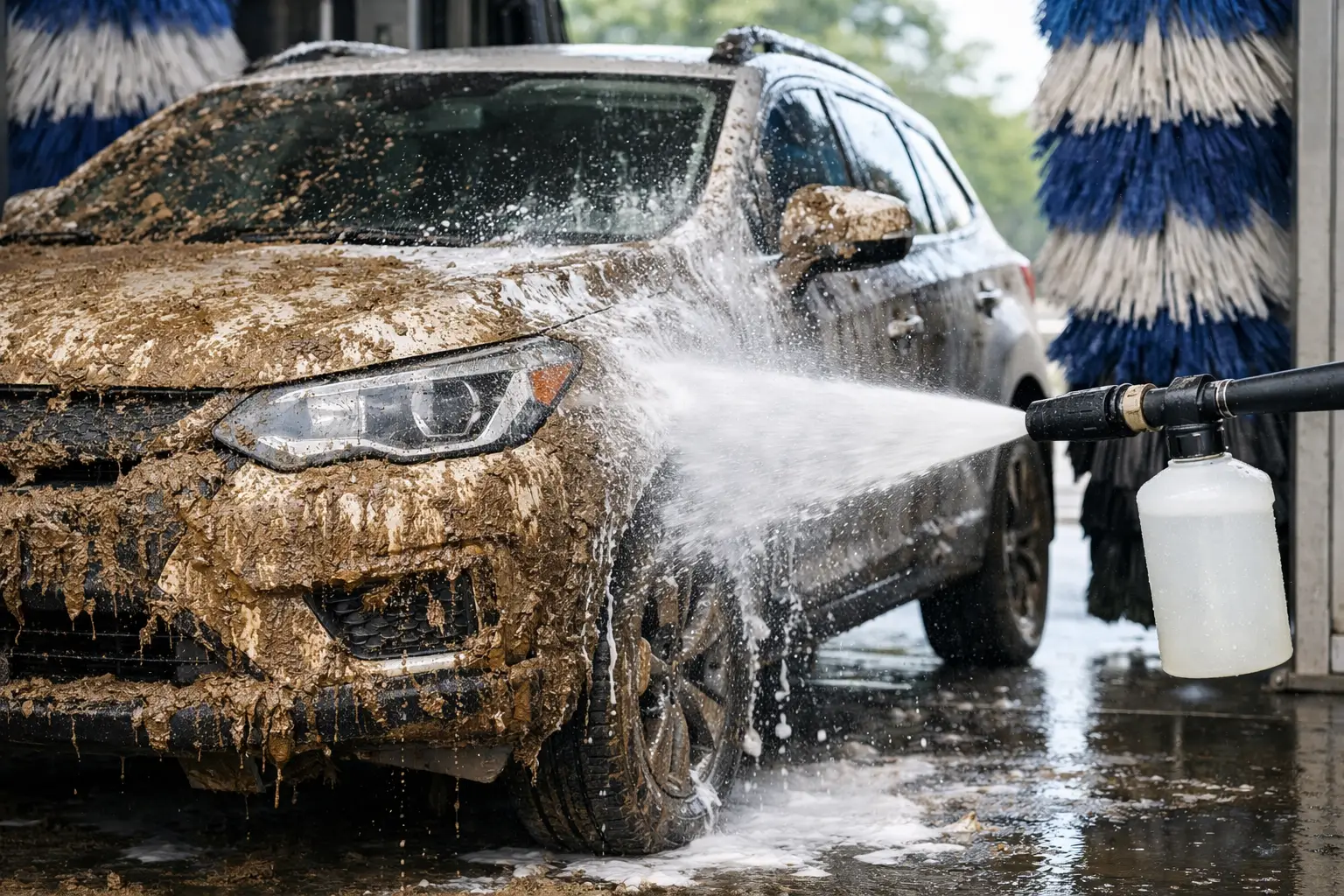
Mud does more than make a vehicle look neglected. On New Hampshire back roads, job sites, ball fields, and rainy commutes, it can pack into wheel wells, coat the underbody, hide lights and plates, and dry into a hard layer that is tougher to remove. The best car wash for mud is one that uses the right combination of water pressure, cleaning chemistry, coverage, and timing - without dragging grit across your paint.
For most drivers, that means choosing a wash that can loosen and rinse away mud thoroughly before any cleaning contact happens. A touchless wash is a smart choice for routine muddy buildup because it relies on high-powered water and cleaning solutions rather than physical brushes rubbing against a dirty exterior.
Why Mud Needs More Than a Quick Rinse
Fresh mud is usually easier to remove than dried mud, but both can cause problems if left on too long. Mud holds moisture against painted and metal surfaces. It can also contain sand, small stones, road grime, fertilizer, salt, and other abrasive material picked up along the way. When that mixture dries, wiping it off with a towel or running a dry brush over it can leave fine scratches behind.
The areas you cannot see matter just as much as the doors and hood. Mud collects behind tires, around rocker panels, inside wheel wells, and underneath bumpers. If you drive gravel roads, park near a construction site, or regularly deal with wet spring conditions, these spots can build up quickly.
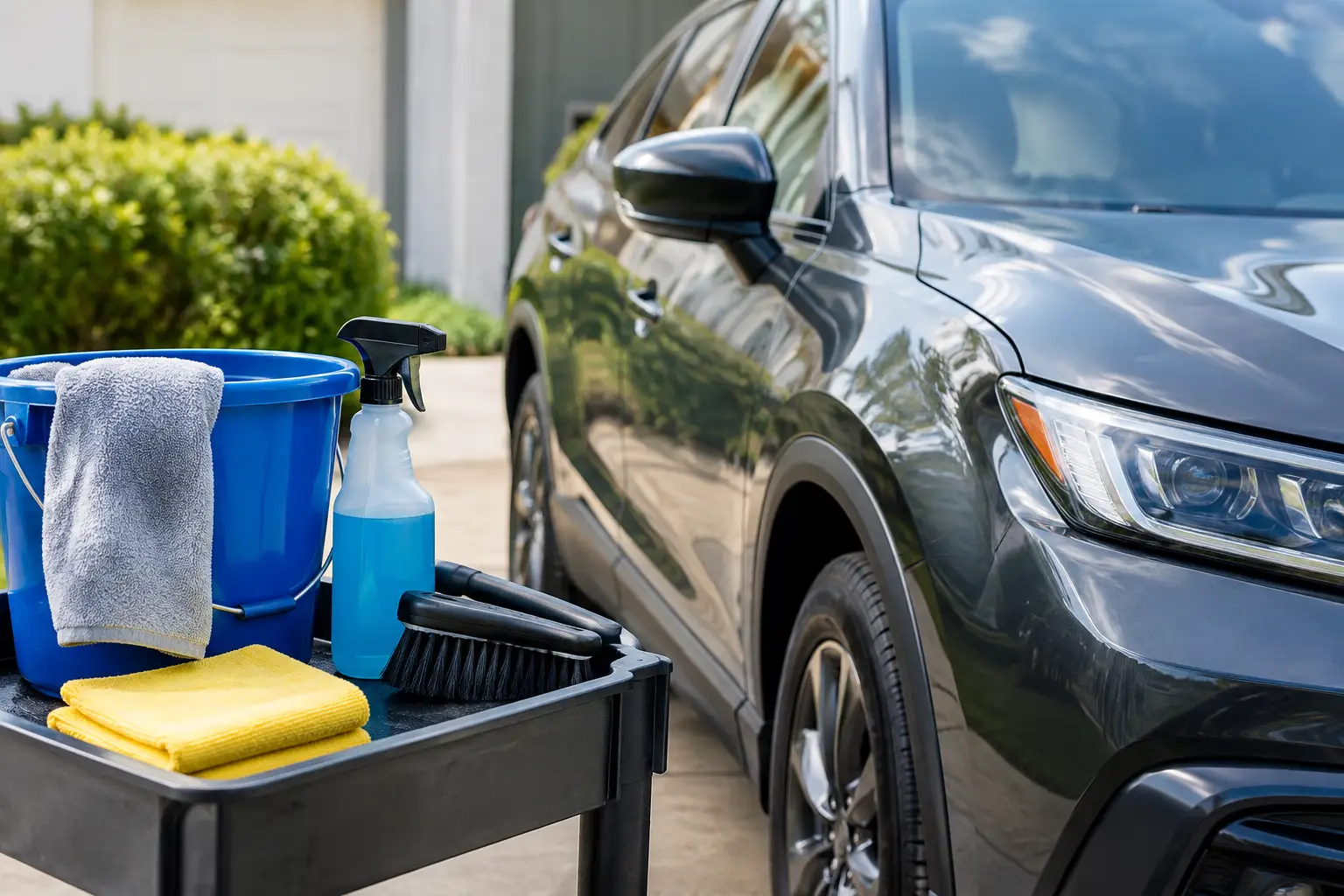
A simple rinse at home may improve the look of the vehicle, but it often does not provide consistent coverage or enough pressure to clear stubborn deposits. It can also leave you standing in the driveway with a hose when the mud has already hardened. A professional wash is faster, more practical, and easier to fit into a busy week.
What Makes the Best Car Wash for Mud?
The right wash is not always the one with the most foam or the fastest-looking tunnel. For muddy vehicles, the real question is whether the wash process safely breaks down grime and reaches the areas where mud clings.
Start with high-pressure cleaning
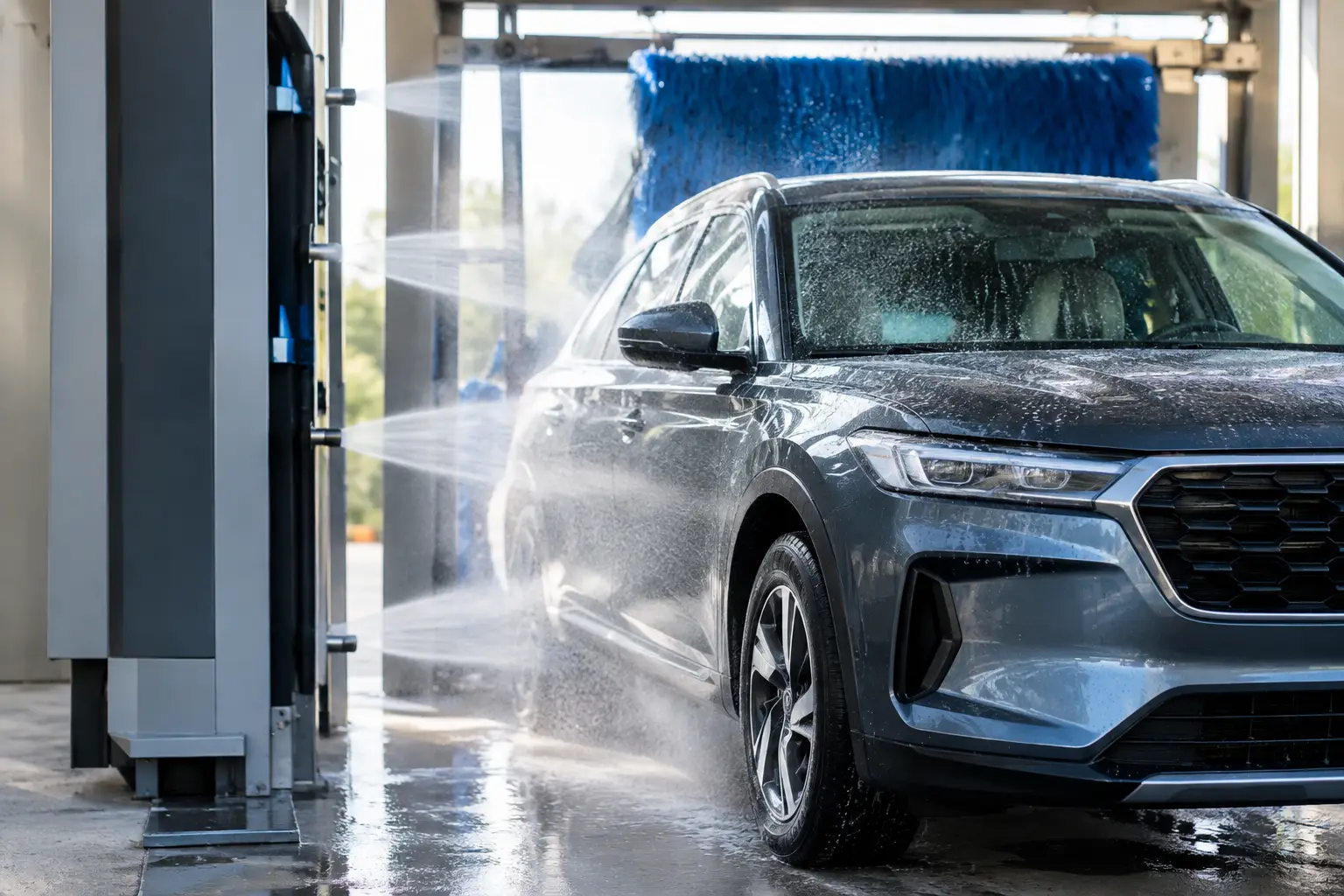
Mud needs water pressure to soften and release from the surface. A quality automated wash begins by applying water and cleaning products in a way that helps loosen the buildup before the main rinse. This step is especially helpful around lower body panels, tires, and wheel wells, where mud tends to dry thickest.
If your vehicle is covered in heavy, chunky mud, it may need a little preparation first. Knock off large clumps with a self-service pressure wand where available, or wait until the mud has softened after rain. No automatic wash can reliably remove a fist-sized clod of dirt wedged behind a tire. The goal is to let the wash handle the grime attached to the vehicle, not ask it to perform excavation work.
Choose touchless when paint safety matters
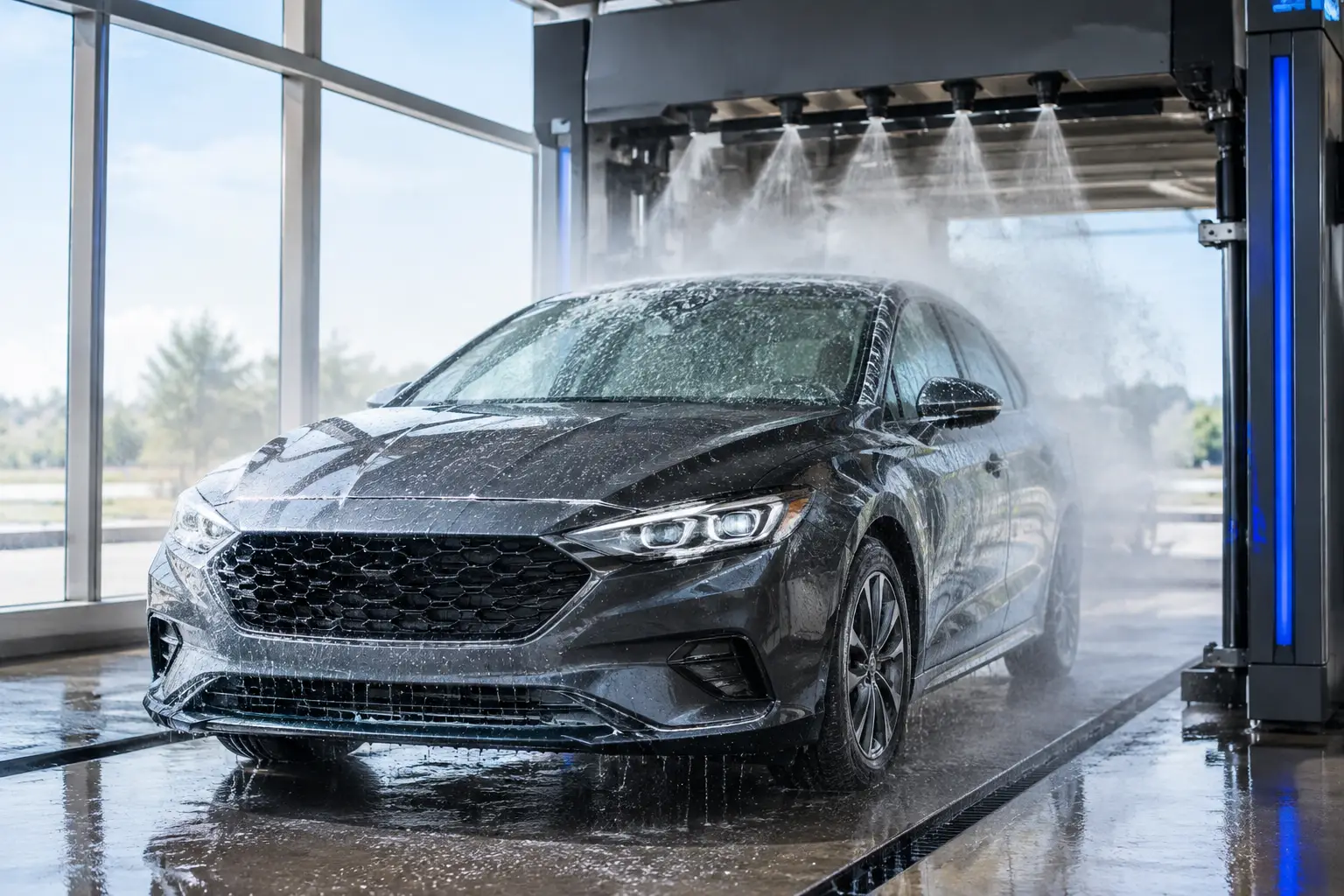
A touchless car wash uses cleaning solutions and high-pressure water rather than spinning brushes or cloth strips contacting the vehicle. That is a meaningful advantage when the surface is dirty. Mud often includes gritty particles, and direct friction can move that grit across the clear coat.
Touchless washing is not magic. Extremely baked-on mud may require a second visit or a targeted rinse in problem areas. But for regular muddy-road grime, it offers an effective, vehicle-conscious approach that helps reduce unnecessary contact with the finish.
Look for complete exterior coverage
A good mud wash should not focus only on the middle of the doors. It should reach the lower panels, wheels, wheel wells, front grille area, rear bumper, and underbody zones where conditions allow. These are the spots that take the worst of puddles, slush, gravel, and roadside runoff.
Coverage matters even more in winter and early spring. Mud in New Hampshire is often mixed with road salt and de-icing residue. Removing it sooner helps keep that mess from lingering on the vehicle between storms.
Do not forget drying and finishing protection
A thorough rinse is the priority, but a good finish matters too. Drying helps reduce water spotting and gives you a better look at anything the mud may have hidden, such as a loose trim piece, a scratched bumper, or a damaged license plate frame.
Wash options that include protective finishing products can help water and dirt release more easily on future visits. They will not make your vehicle mud-proof, and they are not a replacement for dedicated detailing protection. Still, they can make regular maintenance easier for drivers who face wet roads, pollen, salt, and mud all year.
When to Wash Mud Off Your Vehicle
The short answer is: sooner than later. You do not need to rush to the wash for a light splash after every rainy commute, but thick mud should not sit for weeks. Once it dries, it becomes harder to remove and is more likely to hold moisture and grime against the surface.
Wash as soon as practical after driving through muddy conditions if the vehicle has visible buildup on the lower panels, wheels, lights, mirrors, or license plates. It is also wise to wash after a weekend at the lake, a trailhead trip, a youth sports tournament, or a drive on unpaved roads. Those are the everyday moments when mud seems to multiply while you are not looking.
During winter, make a wash part of your regular routine whenever road conditions allow. Salt, slush, and dirty snow create a different kind of mess, but the same principle applies: regular removal is easier than letting buildup take hold.
A Better Mud-Wash Routine
For most vehicles, a consistent routine works better than waiting for the exterior to become completely coated. Visit after significant muddy driving, then return for regular maintenance washes as weather conditions demand. Drivers with long gravel driveways, outdoor work vehicles, or frequent rural routes may need to wash more often than someone commuting primarily on paved roads.
Before entering an automatic wash, take a quick look at your vehicle. Fold in mirrors if your owner's manual recommends it. Remove loose items from truck beds or roof racks. If there are large mud chunks hanging from wheel wells or packed behind tires, clear what you can safely before the wash. This protects your vehicle and helps the wash do its best work.
Afterward, use vacuum stations to finish the job inside. Muddy shoes, sports gear, work boots, and pet paws can turn a clean exterior into a dirty cabin quickly. A few minutes of vacuuming floor mats and cargo areas makes the entire vehicle feel reset.
Why 24/7 Access Makes a Difference
Mud does not arrive on a convenient schedule. It shows up after an early shift, a late game, a weekend trip, or a drive home through a storm. A wash that is available around the clock gives drivers the freedom to clean up when there is actually time to do it.
Black Dog Car Wash offers touchless washing and high-powered vacuum stations at its Londonderry and Belmont locations, giving local drivers a practical place to handle mud, salt, and everyday road grime on their schedule. For frequent visitors, wash bundles, gift certificates, and reloadable account options can make regular care even simpler.
The Bottom Line for Muddy New Hampshire Roads
The best choice is not necessarily the harshest wash. It is the one that loosens mud effectively, rinses it away with strong coverage, and avoids rubbing dirty grit across your vehicle. Touchless technology is a sensible fit for drivers who want a clean vehicle without adding unnecessary friction to the process.
The next time your wheel wells are wearing a coat of driveway mud, do not wait for it to become part of the paint job. Give your vehicle a proper rinse, clear out the cabin, and get back on the road looking like the mud lost.