Road salt gets into places you cannot see. Pollen settles on every panel. A single muddy parking lot can undo a clean car before dinner. The best car cleaning routine for New Hampshire drivers is not about chasing a showroom finish every weekend. It is about keeping grime from sitting too long, protecting the surfaces you rely on, and making the job easy enough to repeat.
For most drivers, that means a regular exterior wash, a quick interior reset, and a few seasonal adjustments. The schedule will look different for a commuter logging highway miles than for a family vehicle handling school drop-offs, dogs, sports gear, and weekend errands. Still, a practical routine beats waiting until the vehicle looks overdue.
Start With a Routine You Will Actually Keep
A car-cleaning plan only works if it fits your life. If a detailed two-hour wash sounds unrealistic, do not build your routine around one. A better approach is to separate frequent, fast maintenance from occasional deeper cleaning.
Think in terms of three levels. Your regular wash removes the road film, dust, salt, and pollen that build up outside. Your weekly or biweekly interior reset keeps clutter, crumbs, and dirt from becoming permanent. Your seasonal deep clean handles the neglected spots: floor mats, door jambs, cup holders, cargo areas, seat creases, and windshield interiors.
For many New Hampshire drivers, an exterior wash every one to two weeks is a sensible baseline. During winter, that interval may need to be shorter. Salt brine can coat the lower panels, wheels, wheel wells, and underbody quickly, especially after a storm or several days of wet roads. In dry summer weather, you may be able to stretch it a little longer, unless pollen, tree sap, or bird droppings show up.
The goal is not perfection. The goal is to remove contaminants before they have time to dull the finish, stain surfaces, or make the next cleaning job harder.
The Best Car Cleaning Routine, Step by Step
1. Clear the cabin before you clean it
Start by taking out trash, empty bottles, receipts, and anything that does not belong in the vehicle. This takes only a few minutes, but it changes the whole job. Vacuuming around clutter is frustrating, and leaving wet gear, food wrappers, or sandy bags in the car gives odors and stains more time to settle in.
Keep a small trash bag or reusable container in the vehicle if your car tends to collect daily clutter. Families may also find it helpful to give each child a small area for their things. A clean interior is easier to maintain when every item has a place or gets removed at the end of the day.
2. Vacuum from top to bottom
Vacuum the seats first, then the floor mats and carpets. Pull the mats out when possible so you can clean beneath them. Pay close attention to the edges of the seats, the space between the console and seats, and the cargo area. Those are the places where gravel, pet hair, snack crumbs, and winter sand tend to collect.
High-powered vacuum stations make this step quick, especially when you are already stopping for an exterior wash. You do not need to vacuum every square inch during every visit. A focused five-minute pass through the driver area and main passenger areas goes a long way.
If you carry pets often, vacuum more frequently. Pet hair becomes much tougher to remove once it works into fabric. Beau would probably argue that a little dog hair adds character. Your passengers may disagree.
3. Wipe the surfaces you touch most
Use a clean microfiber towel and an interior-safe cleaner for the steering wheel, door pulls, dashboard, center console, gear selector, and cup holders. These spots collect skin oils, dust, sunscreen residue, and everyday grime faster than the rest of the cabin.
Avoid soaking buttons, screens, vents, or switches. Spray product onto the towel rather than directly onto sensitive surfaces. For touchscreens and instrument panels, use a product made for those materials or a lightly dampened microfiber towel. Harsh household cleaners can leave streaks, damage coatings, or create a shiny glare on the dashboard.
Do not forget the inside of the windshield. Haze builds gradually and can become obvious only when low sun or nighttime headlights hit it. Clean interior glass with a dedicated glass cleaner and a fresh towel, then buff it dry with a second towel if needed.
4. Wash the exterior before grime piles up
Regular exterior washing is the backbone of the routine. It removes the visible mess, but its bigger value is preventative. Salt, road grime, bug residue, pollen, and bird droppings do not improve with time.
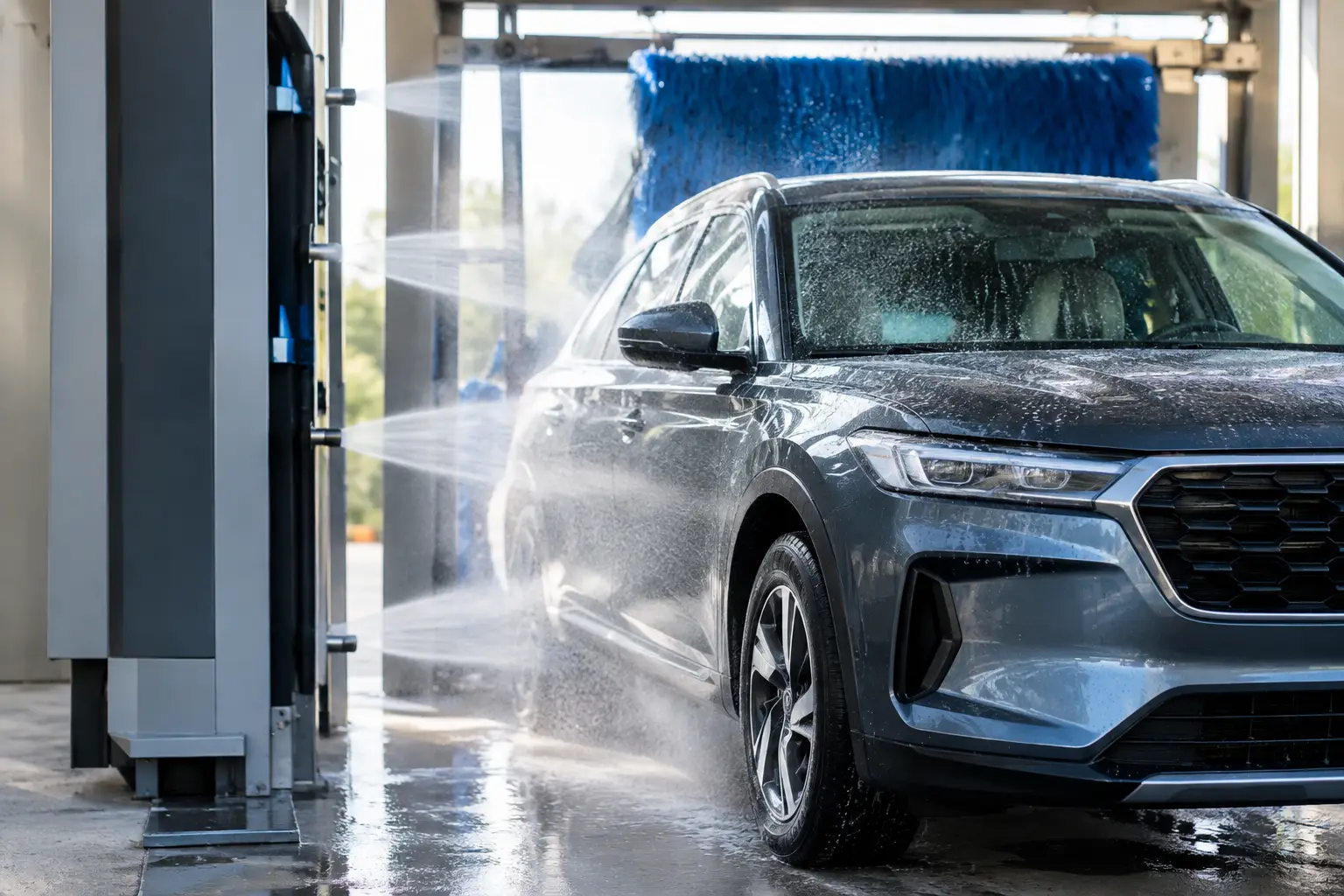
A touchless wash is a smart option for drivers who want effective cleaning without physical brushes contacting the vehicle. The equipment applies cleaning solutions and high-pressure water to lift away dirt, then rinses the surface clean. It is especially convenient when you need a reliable wash between work, errands, or weekend plans.
At Black Dog Car Wash, drivers in Londonderry and Belmont can use touchless wash equipment and vacuum stations any time of day or night. That matters when your car needs salt removed after a late commute or when a busy Saturday leaves no room for a long cleaning project.
For the best result, do not wait until heavy grime has baked onto the paint. If you have tree sap, bird droppings, or bug splatter, address it as soon as practical. A standard wash may remove fresh residue easily, while older spots may need gentle follow-up attention with the right automotive product.
5. Give wheels and lower panels extra attention
The lower half of your vehicle takes the worst of New Hampshire roads. Wheels, tires, rocker panels, and wheel wells collect salt, mud, slush, brake dust, and sand. These areas deserve attention year-round, but winter is where consistency matters most.
After storms and during salt season, wash the vehicle whenever road conditions allow. The exact timing depends on the weather. If roads are still covered in fresh slush, waiting until the next day may make more sense. But do not postpone cleaning for weeks just because winter is messy. That is the season when routine washing earns its keep.
If your wash includes an underbody rinse, use it during winter. It is not a substitute for mechanical maintenance, but rinsing accumulated road treatment from underneath the vehicle is a sensible part of seasonal care.
Adjust Your Car Cleaning Routine by Season
Spring brings pollen, mud, and leftover winter residue. This is the time for a more thorough interior vacuum, mat cleaning, and wash of door jambs and lower panels. Check the windshield wipers, too. Winter grit can wear them down, leaving streaks when spring rain starts.
Summer brings dust, insects, sunscreen, and tree debris. Wash bird droppings and sap promptly, particularly if the vehicle sits outdoors. Heat can make residue harder to remove and may leave marks on the finish if it stays there too long. Keep a microfiber towel and interior-safe wipes handy for small spills, but use them gently rather than scrubbing dry dirt across a surface.
Fall is about leaves, moisture, and preparing for winter. Clear leaves from around the windshield cowl and hatch or trunk seams. Damp leaves can trap moisture and clog drainage areas. Vacuum the interior before heavy jackets, boots, and holiday travel add another layer of mess.
Winter calls for frequency, not fuss. Prioritize exterior washing, especially the underbody, wheels, and lower panels. Shake out mats often so melted snow, sand, and salt do not soak into the carpet. Rubber or all-weather mats can make winter cleanup easier, but they still need regular rinsing.
Use the Right Products, Not the Most Products
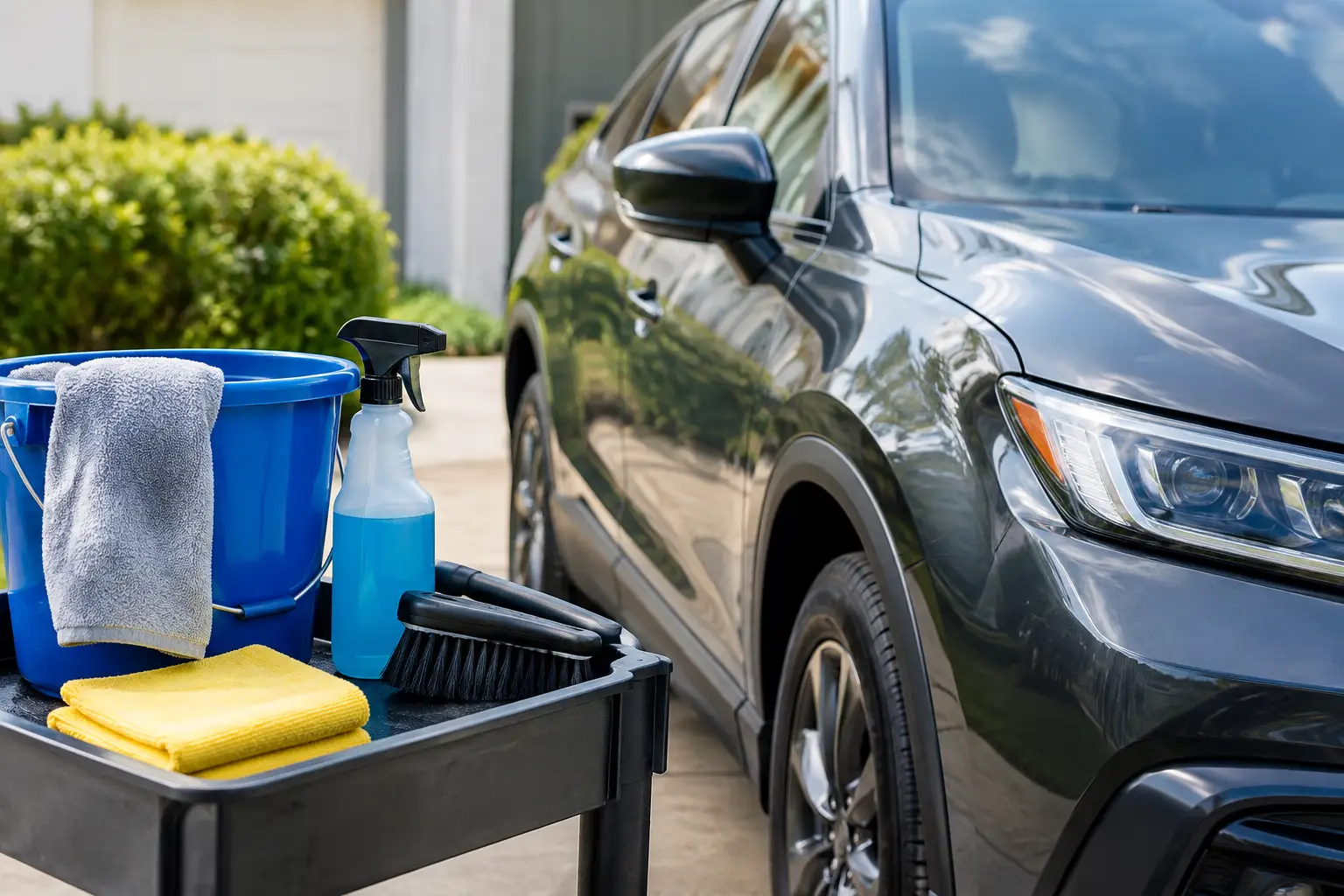
You do not need a shelf full of detailing bottles for a clean, well-kept car. A few basics are enough for most routines: clean microfiber towels, an interior-safe cleaner, glass cleaner, a small trash bag, and a product appropriate for any stubborn spot you regularly encounter.
Be careful with strong degreasers, abrasive pads, and household cleaners. A product that works well on a kitchen counter may not be safe for clear coat, leather, screens, or plastic trim. When in doubt, use an automotive product intended for the material you are cleaning and test it in a less visible area first.
There is also a trade-off between speed and detail. A quick touchless wash and vacuum may not produce concours-level results, but it will keep a daily driver looking cared for with far less effort. Save intensive detailing for when it is truly needed, such as before selling a vehicle, after a long winter, or when you want to refresh a car that has been neglected.
Make Cleanliness Part of the Drive
The easiest routine is attached to places you already go. Wash after a stretch of salty roads, vacuum while you are already out running errands, and clear the cabin before clutter turns into a weekend project. Keeping a vehicle clean is less about finding extra time and more about using a few minutes consistently.
A clean car feels better to drive, makes it easier to spot small issues, and helps protect the surfaces that work hard every day. Start with the next wash, not a perfect plan.